Also see https://presumed-guilty.blogspot.com/ and https://mbolombotongo.blogspot.com/
Britain's Health Minister Matt Hancock spoke quite frequently with Bill Gates in 2019. A favorite topic of theirs was “infection control”. (Gates was also “good friends” with Penny Mordaunt, Minister of Defence.) In mid-March 2020, the East Asian trace-and-test method for containing SARS-CoV-2 (known as ‘Containment’ in Taiwan) was abandoned in the UK on the day after the WHO declared a pandemic. This suited Gates because he preferred that countries invested in vaccine only, not in trace-and-test operations. It meant, in effect, that Britain’s government would stop trying to avoid lockdowns, which meant that the economy was going to be hit very hard: 1. Economic output dropped to its "lowest in 300 years", quoting Boris Johnson in February 2021. 2. There were a million “business deaths” between 2020 and 2022. (Figures are from the ONS website.) 3. The national debt rose from £1-trillion in March 2010 to £2.5-trillion in March 2023, explained in good part by the borrowing done to set up furlough for salaried workers. [][][][] On 12 March 2020, Sir Chris Whitty had said on BBC One that there were “four stages” to the pandemic response; “and the Contain, finishes from today”. Gov.uk had it in black and white the next day without adding any detail: Britain was “moving out of the Contain phase and into Delay". A PHE boss later said that a team of "just under 300 staff" had been containing SARS-CoV-2 with the method borrowed from South Korea, but that “tracing was scaled back” because “the UK moved to the ‘delay phase’ of tackling coronavirus in mid-March”. At the same time, testing for the novel virus was discontinued except at hospitals. [][][][] Sir Whitty did not say why the alleged ‘second stage’ had been given the name, Delay. It seems, in hindsight, that he believed the spread of COVID-19 would be ‘delayed’ if a country-wide lockdown was imposed. He had been fleshing up his narrative to create an illusion of detail when he said, “As we’ve always said, from the beginning, there were four stages to this: Contain, Delay, Research and Mitigate, and the Contain, finishes from today”: He didn’t mention that the third and fourth phases would not occur in any particular order: “Research” and “Mitigate” were activities which would occur during the “Delay” phase. In reality, there had simply been a decision to stop containing the disease in the way that democratic East Asians were doing it. Nationwide lockdowns were to be used instead while waiting for vaccine. The first lockdown began on 23 March and vaccine became available on 8 December. [][][][] "Health expert" Bill Gates (not qualified in medicine or biology) had given a long TED Talk in 2015 about the likelihood of future virus outbreaks. He never spoke of S. Korea’s novel and effective method for containing MERS-CoV that same year. (China, a country which received constant support from the WHO, later failed to make a similar system work.) In January 2020, Gates could see that the expanded ‘Trace, Test and Treat’ strategy in S. Korea was not going to make big money for investors. In fact, the Koreans were discouraging companies from making profits out of the situation. Global vaccine supply, on the other hand, was certain to make some people rich. (Oxfam reported that at least nine vaccine billionaires were made.) Gates had increased his influence over the WHO by helping them when Trump cut their funding, and he maintained his silence about the approach taken by S. Korea and Taiwan. This was the first time that a vaccine was to be developed for a respiratory coronavirus, and he had made its global promotion his ‘baby’. He wanted governments to prioritize its financial support: He didn’t want them to use public money on containment strategies. (Spending on containment might, in small ways, have slowed the big-pharma gravy train slightly.)
Get link
Facebook
X
Pinterest
Email
Other Apps
From online commentary in August 2026:
The second half of a two-minute video clip of Jeremy Hunt MP in 2022 provided something new. Somehow, it was mostly ignored in the news media and not reported on TV programs: facebook.com/watch/?v=1392415111237527.
The UK Covid Inquiry has never put emphasis on what the former Health Secretary was telling people to think about. They have simply concluded that locking down could "probably" have been avoided. (There's error in what a recent BBC report says is one of the Inquiry's latest conclusions: explained three paragraphs below, after "In 2025, ".)
It is worth remembering that, for the first time in world history, a respiratory coronavirus was to be met with a vaccination response in 2020. It's also worth mentioning that it was people in Bill Gates' sphere of influence who wanted such a response to be widespread: Politico. In order to safeguard the funding of Gates' plans, most countries (all but two being WHO members) wouldn't be encouraged to copy the East Asians who'd acted fast and slowed the virus' spread with a trace-and-test method. Simply put: If many countries had copied South Korea, Taiwan*or Indonesia, they each would have used public funding for such activity, when Bill Gates only wanted to see such money being spent on vaccines. It didn't concern him that S. Korea had experienced what lockdowns did to businesses in 2015 during the MERS-CoV outbreaks.
*Taiwan is not recognized as a country by the WHO, which ignored early warnings from a Taiwanese expertabout the high contagion he'd witnessed in Wuhan (yahoo, bbct.)
Having responded with innovation to MERS-CoV in 2015, South Koreans could see in 2020 that there was value in developing a vaccine against SARS-CoV-2. They knew that other G8 countries would be able to provide one at some stage. In the meantime, they worked hard to keep the pandemic R-value* down by expanding the trace-and-test strategy, a strategy which didn't put their economy under extreme pressure. Taiwan was responding in the same way. * 'R' represents the average number of people becoming infected through contact with one infected person.
Gates, however, made sure that western governments didn't adopt the 'bali bali' ('quick, quick') slogan. He'd decided to become a top organiser of vaccine supply, was practically in control of the WHO because he'd fixed their finances when Trump cut them, and he didn't care what lockdowns would do to anybody. He even called himself a "health expert": bbc.co.uk/news/av/world-52233966.
In 2025, the UK Covid Inquiry said that the UK pandemic response had been wasteful, and that lockdowns could have been avoided:Covid inquiry: Lockdown could have been avoidedHowever, the report errs in saying that "steps" which would have provided containment of the disease, "should have been introduced earlier than mid-March". Public Health England had, in fact, assembled a 300-man contact tracing team in February which was they were planning to expand with 5,000 trained council workers (see REHIS.)
There's never been a satisfactory explanation for the fact that the tracing team was shut down by Chris Whitty on 12 March 2020: youtu (begin at 13:15 mins) and gov-uk.
It's not noticed much that Bill Gates was chatting with Matt Hancock quite frequently in 2019. Tories had set up a partnership between Gates and the MHRA in 2017 (use Ctrl+F to find 'MHRA' below.) Since his TED talk in 2015, Gates had showed no interest in seeing governments spend money on anything but vaccines, and he didn't show concern for what lockdowns would do to anyone's economy. After controlling distribution of vaccines globally in 2020 (Politico), he spoke in front of Donald Trump about his "second career": He'd wanted his new ventures as a "health expert" to seem as exemplary as anything Microsoft had done, and that involved persuading governments to contribute generously (use Ctrl+F for 'covax'.) He would have supported the UK government for shutting down PHE's contact tracing team on 12 March 2020 (youtu, start at 13:10mins), even if he knew that Boris Johnson was going to pledge £548-million for his COVAX plan (govcov.)
Patrick Vallance and Neil Ferguson had walked all over Mr Johnson. Johnson didn't want to see lockdowns damaging the economy but Vallance said that his reluctance to impose lockdown only meant that he was unable to grasp the 'science' behind lockdown. (It was "difficult" to get Johnson "to fully absorb concepts central to Covid" - VallGuar.) Vallance had his way and the PM later suggested that he should be knighted.
Johnson should have made the top advisors talk about what Taiwan and S. Korea were doing and why, but mentioning those countries or their achievements had become taboo. No MPs ever said "South Korea" on BBC TVafter 12 March 2020 (when Chris Whitty said, "the Contain, finishes from today": youtuat 13:15 mins, and gov-uk.) All non-BBC media channels were boycotted by the MPs: gove and pmorg.
Bill Gates was also never caught talking about containment. He'd kept silent about that option since 2015 (the year of his big TED Talk) when S. Korea managed to contain the MERS coronavirus inside hopsitals. This time, there'd be a vaccine and much money would be made, and vaccine logistics were what he wanted most countries to focus on to the exclusion of anything else.
Use Ctrl+F to find key words, e.g. u-turn, factsheet, the fines, 9 million jobs, health care system, natint, businesses, CNN, copying South Korea, Resolution 2758, ten-times more Brits, Li Wenliang, shipped, BBC, whole country, high street, 2% and 3%, video, shedding, 300 years, business deaths, billionaires, refuseniks, WHO's extra funding, Moderna, good effect, whistling, boycott, Copenhagen, New Zealand, Jenner, health expert, blog intro, GAVI, commercially, restaurant, the cover-up, progeny virus, Biden, hypothetical, 27 December, 09/2022, from Taiwan, Nature, Johns Hopkins, Event 201, equilibrium, JCVI, the plod, thermal, screening, Sridhar, Spanish, instruction book, NERVTAG, Omicron, THRCC, vaccination began, LSHTM, stayed away, slow down on, scramble, bali bali, surprising development, Dickensian, malhotra (Tip: highlight a word/phrase, press Ctrl+F and hit Enter)
Dr Xand on BBC Morning Live, 11 May 2026, said that he once worked for the WHO and that the Hantavirus is not like SARS-CoV-2: "Rather worry about crossing the road carefully than about catching hantavirus", he said. Early in 2020, the WHO were acting as though SARS-CoV-2 was simply another respiratory coronavirus like MERS-CoV: Halfway through January, they backed China with a tweet which relayed that there was no evidence of human-to-human infection (busii), something which they had been saying about MERS since 2012. (They admitted reluctantly in 2015 that human-to-human transmission of MERS might occur inside hospitals, but they also said it wouldn't occur "unless there is close contact": Reu2015.)
In 2020, WHO made no comment about the difference in the case fatality rates of the two coronaviruses: The chance of dying with SARS-COV-2 infection was below 3% for most people, but MERS patients had faced a 56% chance of dying (nejm.) Furthermore, MERS made people feel ill quite soon after infection, causing them to retreat and take to a bed or be hospitalized. That explained, in part, why it wasn't spread at very alarming rates. MERS-CoV clearly did have human-to-human infectivity but the WHO remained intent on pushing their suspicion that most cases were a result of animal-to-human transmission.
WHO didn't help people to understand that the low CFR of COVID-19 was key to its ability to spread rapidly. Carriers often felt well enough to work 9-to-5 as normal. WHO also didn't read/acknowledge the 2015 Nature review paper which states that MERS patients developed harsh symptoms before their bodies began to shed progeny virus, often causing containment of the progeny virus because the patients had already become hospitalized (Natur, 4th key point.) It was the other way around with COVID-19: People could be breathing out progeny virus before they even noticed that they were developing signs of pneumonia.
Two people visiting the UK from Wuhan had tested positive for SARS-CoV-2 on 29 January 2020. Testing kits were not yet being produced, so contact tracing wasn't going to begin for some time: There's no online record of when contact tracing began, only items which reveal that it was to be "finished" on 12 March, e.g. youtu and gov-uk. The WHO did not provide detail about South Korea's trace-and-test response, or that the emphasis there was on speed of response ("bali bali".) On 12 March, BBC television stopped talking about S. Korea altogether: Its success story was held back until 11 December when the first of two in-depth BBC documentaries was screened.
The 'second' UK tracing operation launched on 28 May and given the name "NHS Test and Trace" (mentioned above)only recorded visits that people made to cafés, pubs and restaurants. A text message was sent to someone if they'd been in one of such venues when a known COVID-19 case had been there at about the same time. No-one receiving such a text message was obliged to go to a testing centre unless they wanted to return to the venue mentioned, because that venue would require proof of a negative result for COVID-19. Therefore, the system was very limited scope, i.e. in where it did surveillance and in what it could encourge to people to do in response to the information it gave them. Anyway, by 28 May, the disease would have been well spread and very difficult to contain through any type of contact tracing. It was reported that the costly project had no effect on case numbers, and therefore it did not stop government from imposing a second Draconian lockdown.
The above image is from bbc+. At the end of April 2020, Dominic Raab MP denied that any 'sudden surge' could be seen in the data because, he said, the cumulative deaths total on 29 April, "included deaths since 2 March". It was true that data from as far back as 2 March had been studied, but he was wrong to imply that anything had been misinterpreted: A total of 579 deaths had been recorded by 26 March (bbc-), therefore at least 25,519 had died in the following 34 days. (The government had shut down PHE's contact tracing team on 12 March, and stopped all testing 'except in hospitals' - although it was soon to be seen that patients were shipped from hospitals to care homes without being tested first.)
Britain's economic output dropped to its "lowest in 300 years", quoting Boris Johnson in February 2021. It was the result of a u-turn in March 2020 which terminated the PHE operation which had begun to trace out the virus as South Korea and Taiwan were managing to do. Long lockdowns ensued and a million UK businesses had decided to quit by the end of 2022.
In December 2021, Britain's Office for National Statistics provided data which reveals that 650,055 businesses had been shut down in less than two years (onsgov.) Another 345,000 were folded in 2022. It's why the S. Koreans had been very keen to avoid subjecting their economy to lockdowns, of which they'd had experience in 2015.
By March, Public Health England had assembled a team of "about 300" contact tracers, but their work was stopped when it was realized that some hospitals were seeing severe cases of the pneumonia. On 12 March. the day after the WHO finally declared a pandemic, an ominous press conference was given (youtu). A countrywide lockdown began thirteen days later, in spite of the fact that some regions had virtually no cases. BBC One was, somehow, made to play along, i.e. to stop talking about the success of containment strategies in S. Korea, Taiwan, Indonesia and a few other countries in the region.
In 2024, the BBC reported that "25,000" businesses had become insolvent, "the highest number since 1993" (bbc.co.uk/news/business-68140635?). BBC did not mention the roughly 1.3 million "business deaths" on record since lockdowns had begun (as shown on the ONS website), the business owners mostly not waiting to become insolvent before they ceased trading. Owners had realized that their companies wouldn't survive the disruption of supply chains and the sudden shrinking of demands for their goods?
All of the above introductory facts are backed with links to online references in further discussions below.
February 2026: There is a new pandemic scare-story about 'dogs spreading a new strain of COVID-19'. This story, like China's pandemic cover-up, is based on what the WHO wrote and said about MERS-CoV from 2012 onwards, i.e. that the respiratory coronaviruses were caught mostly by handling animals. It was this bias in the WHO's guidance which gave China the confidence to say in 2020 that SARS-CoV-2 was only being caught by people who worked with animals in the Huanan Seafood Market.
Widespread misunderstanding was perpetuated by what was visible on the WHO's website in 2020. People were reading that 'zoonotic viruses' are ones which transmit regularly from animals to humans.
Only the rabies virus, which the WHO also describes as 'zoonotic', can move from one species to another as a normal part of its 'life cycle'. Rabies is a DNA virus which has infected many types of vertebrate animals for thousands of years, and no mutation is needed before it transmits from one species to another. It rarely infects humans nowadays because of the way our lifestyles have changed, and it cannot spread quickly enough to cause 'epidemic' outbreaks in any organisms.
The WHO should have been letting people know that respiratory coronaviruses, being RNA viruses, are known for high rates of mutation: In other words, it's conceivable that a coronavirus which ordinarily infects an animal species might give rise to a human-infecting strain, as follows: A solitary coronavirus particle might, by chance, have a mutation event during its replication phase, and the result might be that its progeny have human infectivity. Given the right circumstances, those progeny could give rise to a viable, human-infecting strain (labeled as a 'zoonotic virus' simply because of the way it came into existence.)
It's not the same thing to define a zoonotic virus as one which, "is transmitted between animals and people", but that is what WHO had as a 'Key fact' at the top of their MERS factsheet for years (until 11 December 2025):
The WHO's description of MERS-CoV in 2012 led to a habit of saying that a novel respiratory coronavirus will tend to transmit routinely "between animals and people". This assumption was evident at Bill Gates' Event 201 conference in October 2019 which was chaired by a WHO executive.
At the 'Event 201' conference, the WHO's Executive Director Michael Ryan made it implicit that the source of future virus outbreaks would be animals: He asked people to imagine, "a SARS-like virus, germinating quietly among pig farms in Brazil before spreading to every country in the world": wikispoo - see at the top directly under, 'Content'.
Just a couple of months after the conference, cases of viral pneumonia were being detected in Wuhan! Boy was Gates excited.
Never mentioned, there was no physical proof that MERS transmitted from camels to the men who handled them. There was just an anecdotal report that a man who had died was shown to be carrying a virus which was "virtually identical" to samples taken from his sick camel (Wikiped, find '4 June'):
After years of scare-mongering, it was obvious at the Event 201 conference that the WHO was predicting more outbreaks in which animals would be passing deadly viruses on to people.
Most important: Even if there was some animal-to-human transmission of theMERS coronavirus, the WHO were ignoring ample proof of human-to-human infection (proof which was reported as early as 2013: NEJM).
In 2015, WHO conceded that some human-to-human transmission of MERS might occur, but they asserted that it would not do so "unless there is close contact" (Reu2015.)
There seemed to be a motive for making human-to-human transmission of respiratory coronaviruses seem to be rare or peripheral events, and for doing so again in 2020. First, the creation of scare stories can lead to an increase in research funding and political cooperation. It could help the WHO and other scientists to obtain research money if they exaggerated the possibility that animals might become a serious source of health threats to humans. However, the most obvious motive for pushing their interpretation of the word 'zoonotic' (i.e. transmitting "between animals and people") for eight years was that a scarcity of human-to-human transmission would be grounds to argue that China shouldn't be made subject to travel restrictions (which was an assertion which WHO had made during the MERS outbreaks when nobody had even suggested restricting travel between S. Korea and China). There never seems to have been any proof that anyone caught COVID-19 from an animal.
Online references for all stated facts above are given in further discussions below. (Other recent comments are in a separate page which can be reached at the bottom of this page.)
In Facebook on 21.12.2025:
The poster above suggests an explanation for the following: Britain's MPs shut down the country's Korean-style trace-and-test operation on 12 March 2020, the day after the WHO declared a 'pandemic', and there had been a multi-national silence about progress made in South Korea and Taiwan. Unlike the East Asians, most WHO member states made use of big lockdowns, killing great numbers of businesses (while at least nine people were to become vaccine billionaires.) See what the consequences were in the UK: Fintim300.
Donald Trump had reacted to the WHO's involvement in China's cover-up by cutting all US funding. Soon however, he was mouthing denialism and focussing on his re-election campaign: He gave the pandemic job to Anthony Fauci, who also ignored the rationale/success of lockdown-free responses in democratic parts of East Asia (guaT).
"One grant recipient was Professor Neil Ferguson, one of the biggest advocates for vaccines and whose advice to Prime Minister Boris Johnson led to the UK lockdown in March 2020, and who famously resigned as a government adviser two months later after it emerged he broke rules to meet his married lover."
In summary:
1. Twenty-six SAGE Covid-19 advisors had received millions from top pharma people who would make money from the vaccine.
2. SAGE told Johnson's government to forget the original advice (i.e. 'copy South Korea and keep the UK out of lockdown')? Aligning with unqualified Bill Gates, the WHO, Davos and the CCP, the UK government would now terminate "the Contain phase", use Draconian lockdowns and put all resources into the vaccine program.
Previously in July 2022 (re. the original SAGE advice):
Boris Johnson and Donald Trump acted similarly in 2020: They both ignored the urgent approach being seen in democratic countries close to China. Johnson eventually ridiculed the East Asian trace-and-test method in an email to Dominic Cummings, more than a month after it had been terminated in the UK. He said that it would have been "whistling in the dark" to believe that the containment workers would have helped Britain to control COVID-19. (Perhaps, he didn't know that Taiwan had a "health care system recently ranked No. 1 in the World, for the second year in a row": natint.) Donald and Boris just didn't want to get involved much, and they shunned the responsibility of setting up a lockdown-avoiding strategy when there were scientists who argued forcibly in favour of lockdowns, e.g. Sir Patrick Vallance and Neil Fergusson.
A recently made medley of video clips shows Trump insulting a journalist in April 2020 for trying to query why testing kit production had not been increased as promised, and hospitals not prepared: facebk/BrutIndia.
Bill Gates with Britain's Health Minister in 2019.
In the first six seconds of the following video of 12 April 2020, Bill Gates refers to himself as a "health expert":Bill Gates: Few countries will get 'A-grade'. His longstanding influence on the Tories encouraged them to reject the East Asian strategy for slowing the spread of SARS-CoV-2. Tories shut down the considerable PHE operation which was using the Korean trace-and test method. They imposed business-destroying long lockdowns instead, and accumulated furlough-sized national debt.
Once again, they were supporting Gates with Britain's public money: Boris Johnson pledged £548-million for the WHO to set up ‘COVAX’, which was Gates' key project of 2020, directed by GAVI in collaboration with the EU: Govcov. (British care homes, meanwhile, had gone into debt in order to buy imported PPE.)Also see that the WHO was giving China more influence after sensing that US funding was likely to be withdrawn: DWcom.
"Penny Mordaunt MP (Britain's Minister of Defence) with her good friend Bill Gates"
Summary: According to Jeremy Hunt MP, Mr Johnson's "great plan" on 2nd March 2020 was not what Britain's emergency scientists had advised. The plan prevented the PHE's contact tracing team from working beyond 12 March, and a lockdown was imposed which triggered the folding of businesses in their hundreds-of-thousands. There was an historic level of borrowing to create furlough, and MPs "conspired" to keep the consequent debt under the radar. It's said that the plan delivered one of the highest COVID-19 death rates, "in the developed world" (nih/nlm) while reducing economic output to a 300-year low: Fintim.
"I know that this week the British prime minister – while announcing a revised lockdown policy that could only have been transliterated from a spilled tin of Alphabetti Spaghetti – claimed that we had avoided catastrophe, but, in the face of more than 40,000 dead, a flailing, heartsick populace and looming economic meltdown, this is a) not true and b) not beating the virus."
The official statistics for "business deaths" were not mentioned on TV or even in Facebook.
Nobody on British TV ever seemed to mention the ONS report of 6 December 2021 which showed the quarterly figures for "business deaths" since the first quarter of 2020: ons.gov.uk.The 23-month total was 650,055 companies permanently closed. ONS lets the reader do the summation:
It got worse: The number of businesses closing down in 2022 was even higher than in 2021: 345,000 (inde, parl.)
See the 2023 total below:
The 'latest release', clickable in the website, shows 310,000 in 2023 (ONS23.)
Since the pandemic, the BBC has played down this disastrous aspect of Britain's response. For example, it reported in 2024 that "25,000" businesses going bust in the 2023 financial year was, a "30-year high, the highest number since 1993":bbc.co.uk (the ONS had been reporting on businesses being closed before they'd become insolvent.)
BBC didn't mention that there were 309,000 business deaths in 2023. They only mentioned the "25,000" which had become insolvent.
There was an historic loss of confidence: The vast majority of business terminations (about 1.3 million between 2020 and 2024) shut up shop before the unfolding effects of the lockdowns could make them insolvent. Even in 2020, many could see straight away what lockdown was going to do to their long-term prospects.
Considering what was reported by ONS in 2021, the above BBC report of 2024 is giving people the wrong impression of the country's economic state, and what follows must be a lie?: "More than 25,000 company insolvencies were registered in 2023, the highest number since 1993, as firms struggled with rising costs and interest rates" (bbc24). Not lying, the BBC is simply making use of a statistic to help conceal the fact that there were 309,000 "business deaths" in the same year (2023.) For the fourth year in a row, businesses were folding (to avoid insolvency) because they could see that they were not going to survive the long-term effects of Draconian lockdowns. ONS23.
In 2019, the Retail Gazette had reported a very much smaller loss of "85,000 jobs" in a year.
There must have been business owners in 2020 who foresaw terrible losses arising from a country-wide lockdown? Did many give up straight away, rather than facing a slow ruination later? (Did the government communicate directly with any of them beforehand?)
A February 2023 report from the Institute of Chartered Accountants in England and Waleskilled any notion that only "25,000" businesses stopped trading across the financial year: ICAEW:
2023 saw a downturn in the number of businesses closing down, but it was a year in which big concerns closed many branches, not excluding the banks: Forbb.
(In reference to the poster above) how were so many new businesses being set up? Only essential workers could go to workplaces for long periods in 2020. What's more valuable to a society? 345,000 long-established businesses, or 337,000 work-from-home startups?(Indep)
The first signs of a novel 'SARS' in 2019.
On 6 February 2020 the BBC reported that Li Wenliang, an ophthalmologist in Wuhan, had died of COVID-19: bbcLi. A year later they called him, "the Wuhan Whistleblower" (bbcw) but all he had done on 30/12/2019 was tell his university alumni contacts, in a WeChat group, that he'd been privy to a diagnostic report of a suspected case of 'severe acute respiratory syndrome': Wiki. All he was doing was warning friends to wear PPE in workplace situations.
On the same day, people at local hospitals had been alerted to the SARS report by the Wuhan CDC: Wiki. They were also soon using PPE against viral infection at work. However, two months and a week later in the UK (06/03/2020), Mr Johnson was offering handshakes to people at a meeting of vaccine scientists (facb.) He had bragged about doing the same thing at a hospital three days before: teno. He was rejecting PPE and playing down the health risk because he anticipated a long wait (it would turn out to be 40 weeks) before vaccine would be available, and he had no intention of scaling up a 'trace-and-test' response as S. Korea and Taiwan had done.BMA was a very readable report from S. Korea in July 2020.
Mr Johnson had his cabinet ministers in tow, e.g. Dominic Raab insisted that the number of deaths in the UK by 29 April 2020 did not indicate that a surge in cases was taking place: bbc+. He argued that the BBC's figure of "26,097" included deaths since 2nd March, ignoring the well-reported fact that there had been 759 deaths by 27 March, meaning that 25,338 had died between then and 29 April.
Find more about this below by using Ctrl+F for 'raab'.
Also see that Raab rejected WHO advice about facemasks, simply because Mr Johnson was flouting the advice.
The "great plan" of March 2020.
On 2 March, a "very, very confident" Mr Johnson said: "we do have agreat plan,a plan to tackle the spread of coronavirus": stndrd. (A PHE spokesperson later said that there had been "a contact tracing response team" of "just under 300 staff" working to get the virus contained: rehis.) Mr Johnson's words in a children's BBC report on 3 March depicted a response like those in S. Korea and Taiwan: "that for the vast majority of the people of this country, we should be going about our business as usual"(cbbc).
Nobody was told that the 'first stage/phase' of the great plan, i.e. "Contain", was going to end abruptly in nine days time. (Chris Whitty announced that the tracing of disease contacts "finishes today" on 12 March, saying that the time had arrived for the "Delay phase" to begin: yout at 13:10 minutes.) Any further spread of the virus was going to be 'delayed' by a lockdown from 23 March onwards. Britain's "fantastic testing systems and fantastic surveillance of the spread of disease" (sprep, 2 March) were already a thing of the past. All further use of testing equipment was to be inside hospitals from 12 March onwards.
In Boris Johnson's official satement which announced the national lockdown on 23 March, the fourth line says: "And I want to begin by reminding you why the UK has been taking the approach that we have." However, he then says nothing more about any approach and doesn't mention any of the information given above: PMgov-uk.
The launch of 'NHS Test and Trace' on 28 May gave the impression of a resumption of the original containment efforts done before 12 March. However, the new service was only an advisory one, telling people by SMS if they had been in a café, pub or restaurant when a known COVID-19 case had also been present recently. The new system couldn't force anyone who was considered likely to be a COVID contact to get into a car and drive to a distant testing centre. (More about this can be found with Ctrl+F for, '17 April'.)
Very important:
"A former director of the WHO told the hearing that contact tracing, testing and isolation could have continued for longer across the UK and would have enabled the government to lock down London while leaving other areas of the country with fewer restrictions. - Prof Anthony Costello, the head of the Institute for Global Health at University College London, pointed out that Yorkshire had fewer than 10 cases identified in 300,000-400,000 people around the time that contact tracing and community testing were halted and, as such, could have avoided a complete lockdown." - Matt Hancock "declined to comment on why the UK did not isolate or trace people arriving in the country from overseas, while adding that this policy could potentially change in the future: “We’ve always said that we don’t rule out taking steps if that’s what the science advises.” ReferenceGua (N.B. Genuine 'trace-and-trace' was not resumed at the end of April as implied by the title. This is explained further below.)
The UK government provided the WHO with £548-million for COVAX, which was the largest amount given by any country. ("548-million" is quoted in govcov, "April 2020" appears in hoccov - use Ctrl+F.)
COVAX was directed by GAVI, which was founded by unqualified Bill Gates in combination with the WHO and Unicef.
When a separate £55-million had been sent directly from Britain to the WHO in April 2020 (RT: the article was blocked when Russia invaded the Ukraine), it was reported that UK care homes couldn't afford what PPE was available from overseas at exorbitant prices.
This year (2025), Donald Trump clawed back $2.6-billion from GAVI, which unqualified Gates had persuaded Joe Biden to make available: bmjGav.
Gates was sharing ideas about "infection control" with Matt Hancock in 2019. Neither man showed an interest in S. Korea's trace-and-test response to MERS-CoV in 2015, because vaccine supply was Gates' only preoccupation.
In reiteration, 650,055 British businesses were closed permanently between the first quarter of 2020 and 6 December 2021: ONSlkdn. Another 345,000 were folded in 2022 (inde), and the national debt reached £2.537-trillion in March 2023: Wikd.
In 2024, CNN reported that the Institute for Fiscal Studies had decried a "conspiracy of silence" between Tories and Labour over "the poor state of public finances". When the MPs argued publicly in 2025 about a "black hole" in the budget, they were keeping quiet about the UK's latest national debt of £2.7-trillion.
(In March 2010, the UK's national debt was £1076.6-billion: Use Bing to find, 'government borrowing'.)
Deadly flu outbreaks had come and gone for decades without any vaccine response, and S. Korea had beaten MERS-CoV without a vaccine. However, Bill Gates was now making it seem that only vaccine and PPE were important, regardless of the need to safeguard economies while an effective vaccine was being developed (which could take the better part of a year.) In hindsight, it can be seen that he was wrong to think that containment could not be more effective in restricting case numbers than lockdowns and vaccination programs were: Find 'surprising' below (with Ctrl+F).
Above is from CNN, see under 'Conspiracy of silence'.
Note: A July 2025 article makes it clear that a child vaccinated against measles is not safe from infection in a society where many other people are not getting their children vaccinated: Ipaper.
In its website page about COVAX (see whocov), the WHO borrows the pandemic slogan, "No one is safe until everyone is safe". That slogan was used first in South Korea to encourage the trace-and-test teams who were working flat out to restrict the spread of SARS-CoV-2 (kas-de, stage). The slogan washijacked by WHO for use in articles which completely omit the S. Korean story, thus creating the impression that vaccination was, exclusively, the important tool of 2020/21. (Also see UNGA.)
The WHO doesn't mentiontrace-and-test explicitly in its online documents. WHO acted as though such containment strategy wasn't worth talking about until well into March 2020, at least six weeks after S. Korea and Taiwan had begun it as the key part of their prevention strategy: Alja, yahoo (both news reports are dated 18/03/2020.)
The UK had lost 71,000 people infected with SARS-CoV-2 before the end of 2020, while S. Korea had lost ca. 600 (all the more remarkable because their population density is 88% higher, and they'd had migrant labour commuting to and from Wuhan.) Before S. Korea restricted travel in January 2020, they'd proved that a commuter from China had brought the virus, but the WHO's Director-General spoke out against such travel restrictions on the basis that there was 'no proof of human-to-human transmission'.
In truth, there was no proof of animal-to-human transmission either. WHO were assuming that, if the transmission of MERS-CoV was mostly animal-to-human (also not a proven fact), then that would be the case with this novel coronavirus. Ghebreyesus complained that the travel restrictions would hurt China's economy: voa.
Taiwan had no lockdowns at all: jfma. (S. Korea had a short one in the southeast city of Daegu.) Thus, the democratic countries in East Asia didn't set the stage for the level of economic strife which has developed in the UK.
The WHO didn't make comparisons between the deaths totals in S. Korea (or Taiwan and Indonesia) with the very much higher human losses in other G8 countries. Those countries began to align solely with Bill Gates' ideas, and WHO never suggested in clear terms that copying S. Korea could help anyone to avoid using lockdowns. (See Hunt, esp. the second 50 seconds.) On 20 July 2020, a very readable report about S. Korea was showing how much better off many western countries could have been if their governments hadn't overlooked the WHO's ineptitude: BMA.
April 2020 was when Russia Today reported that the UK government had sent the WHO a 'bonus' of £55-million only days after Donald Trump had terminated its American funding. (The RT article hasn't been viewable since the invasion of the Ukraine.) At that time, no journalists seemed to know that Mr Johnson was going to pledge £548-million for WHO's 'COVAX' project (govcov.)
Britain's response was one of many which, through practiced ignorance of the "bali bali" (quick, quick) operation in S. Korea and Taiwan, became a watching and waiting game for two months. Then, the WHO's belated pandemic declaration was taken as the signal to 'stop mass testing' on 12 March, and to begin a lockdown on 23 March. (Only after that were facemasks available in the supermarkets.) Officially, there were two lockdowns before vaccine was available about nine months later (on 8 December.) Matt Hancock had been listening to Bill Gates (now practically in control of the WHO) since January 2019, and Hancock's boss (Mr Johnson) also didn't care for the Korean strategy, in spite of his confidential SAGE advice which told him copy it.
A big US study calculated that lockdowns kill a lot more people than do the virus outbreaks for which they are imposed: NLoM. Many were lost through cancelled medical treatment:
Something that's never been spoken of explicitly although it can be easily seen in published data: When the lockdown-avoiding countries, Taiwan and S. Korea, halted their virus containment activities early in 2022, both found that Covid-19 cases and deaths multiplied alarmingly in spite of the fact that their vaccination targets had been surpassed. (Details and references are in sections further below.)
*It helps the Tory Party today that the BBC continues to play down the bad, long-term effects of the lockdowns used in 2020/21, e.g. More BBC 'error' was seen in August 2025:
"Britain has lost more than 1,100 pubs"
v.s.
In the same week: "more than 2,200 pubs lost since the start of 2020" was said on ITV's Good Morning Britain, 18 Aug 2025. Heaven forbid anyone discuss what Jeremy Hunt revealed in a video in 2022: that lockdowns could have been avoided if "government" had followed their confidential SAGE advice.
Watch Tom Kerridge and ask yourself, 'Were those tories really right to kill the South Korean approach in March 2020 and lock everything down instead?' He mentions that a junior 40 hrs hospitality worker before the pandemic would cost a company £17,000 a year, but now costs £29,000.
p s. When they created 'NHS Test and Trace' at the end of May, it achieved almost nothing, because:
1. It only traced people who visited pubs, cafés and restaurants. (There was no COVID surveillance in supermarkets, petrol stations, or on public transport.) 2. All the system did was send a text message to a patron of a pub, café or restaurant if they'd been in such a venue at roughly the same time that a known case might have spread the virus there.
3. NHS couldn't make anybody get on a bus and go for a COVID test: They only needed to provide proof of a negative test result if they wanted to return to the same venue which had informed them that they might have been exposed to the virus there.
Animals were culled on the assumption that any mammalian species would transmit the novel coronavirus. There were no grounds for this assumption:
For more than a decade, the CCP had heard the WHO insist that the MERS coronavirus was not seen to transmit human-to-human. Camel herders only caught it from the camels, they said.
In 2021, the CCP killed people's small pets while they were in quarantine for COVID-19:NPR. After all, the WHO's website factsheet for MERS still said that "zoonotic" viruses are "transmitted between animals and people”:
Note the last Key fact (above) as it appeared on the WHO's website since before 2019 until the revision of 11 December 2025. (The factsheet is very different today: factsheet.)
The WHO's insufficient definition of zoonosis in the context of respiratory coronaviruses might have made it seem reasonable of Denmark to cull millions of mink in 2020: Gurd. After all, SARS-CoV-2 had been designated, 'zoonotic'.
The Gates-funded 'Event 201' conference at Johns Hopkins University in October 2019, chaired by WHO Executive Director Michael Ryan, had proposed that the source of future virus outbreaks would be animals: Ryan asked people to imagine, "a SARS-like virus, germinating quietly among pig farms in Brazil before spreading to every country in the world":wikispooks.com/wiki/Event_201. It was scare-mongering dressed up as science and it caused alarming cruelty to animals.
Bill Gates misled the World on pandemic preparedness
In a late-evening US talk show: "Will the World still need humans?"
Gates met with Matt Hancock a few times in 2019 (their photo is in Hancock's tweet of 24 January.)
His powerful GAVI alliance didn't suggest to any countries that S. Korea and Taiwan had a system which would make it possible to avoid lockdown. Those two countries were not counting deaths in the tens-of-thousands by December 2020. The many countries who chose lockdowns are now substantially worse off, and government debts are vast:cnn/global-debt-crisis(see the section under 'Conspiracy of silence'.)
As mentioned above, more than 650,055 UK businesses were folded between 2020 and 2021(ONSlkdn.) In 2019, the Retail Gazette had reported a very much smaller loss of "85,000 jobs" in a year.
It can be shown that Gates (e.g. at his Event 201 conference) helped the WHO to propagate the belief that people usually contract respiratory coronaviruses "directly". (They didn't often say it explicitly, but what they meant was "directly from animal to human in each case".)* To anyone believing them, the tracing of human-to-human contagion would seem pointless. The hidden message was: 'Until you can prove human-to-human transmission for any of these novel viruses, do nothing. - If the situation turns bad, just lock down and wait for vaccine'.
Expecting that the WHO would guide them with expertise, countries turned away from what they'd heard about S. Korea and Taiwan. The WHO have never made any correction to their "infamous tweet" of 14/01/2020 (busii) and they never said explicitly that S. Korea and Taiwan were doing well without locking down.
Trump stopped America's funding of the WHO again in 2025, and he also clawed back $2.6-bn from GAVI, which is Bill Gates' vaccine-pushing organization.
*e.g. It was claimed that Event 201, which was a Gates-funded conference at Johns Hopkins University, had "illustrated areas where private/public partnerships" could, "diminish large-scale economic and societal consequences" of a coronavirus outbreak,such as one escaping from "infected pig farms": Event 201 | Johns Hopkins Center for Health Security (In fact, the subsequent actions of Gates and some of his conference attendees caused enormous "economic and societal consequences", beginning in 2020.)
~~~~~~~~~~~~~~~~~~
In September 2025, the BBC screened a documentary about 'Disease X'. They consulted with academics at Johns Hopkins University, where William H. Gates Snr. founded an institute. You can bet that Gates Jr. was behind the eerie excitement in the BBC documentary. There was no mention of trace-and-test, S. Korea or Taiwan. With Gates, the focus is always entirely on vaccine. Johns Hopkins University was named after a philanthropist, something which Gates wants people to think he is. His father's institute there was recently renamed: WHGjhu. The WHO had the privilege of renaming the Johns Hopkins Centre for Health Security in 2022: WHOgets-to-namethings. Remember that the WHO made everyone call India's variant, 'Omicron', and they told countries, "Please don't politicize this virus".
Britain 'had no other choice'
In May 2020, Boris Johnson ridiculed the trace-and-test method which South Korea continued to apply until the end of 2021, e.g. "whistling in the dark" and "legions of imaginary Clouseaus" (LBCcum.) It's no coicidence that the BBC kept the success of East Asian containment strategies out of its daily conversations*.
*Between 12 March and 11 December 2020, the BBC's TV news programmes and BBC Breakfast never let anyone mention that S. Korea and Taiwan were probably the two countries in the World most driven to avoid lockdown. Who in those countries would have been happy to stay at home for "weeks and months", watching things "evolve", while knowing that North Korea or the PRC is always watching them? (Find 'boycott' below by using Ctrl+F)
Gates and Matt Hancock chatted about "infection control" in 2019. Gates must have mentioned his plans for control of global vaccine supply. By having a few small partners in every 'alliance', it wouldn't be obvious who the main player was: Politico.
It's not known exactly how many weeks and days "the Contain Phase" (sometimes referred to as, "Track and trace") lasted before Chris Whitty said, "and the Contain finishes from today" on 12 March 2020: youtube (at 13:10 mins).Lockdown was announced eleven days later.
Gates never wanted trace-and-test operations to get money from governments. He wanted the ethos to be that, apart from the provision of PPE, nothing should use up government funding which could go to vaccine logistics. Lockdowns weren't going to hurt his plans:In fact, lockdowns would make his pandemic plans easier to implement: Politico.
Britain's 'NHS Test and Trace' didn't prevent a second national lockdown from occurring in November. Apart from being launched so late (on 28 May), the NHS system had no way to force people to travel to testing centres, one person per car: UKparl (discussed further.)
Somehow, a great number of Brits were happy to go into lockdown. They were encouraged to be fearful: This virus was a "mugger" (Gif.)
In 1578, a family would be locked in its London home if someone who showed signs of the plague was known to live at their address (pmc.ncbi.) It was horrific, and most wealthy people escaped to the countryside. But lockdown on 23/03/2020 was on a scale never imagined before.
There was to be a pause of 11 days after Mr Johnson told the country on 12 March that "loved ones are going to die before their time" (and Chris Whitty said, "As we've always said, from the beginning, the Contain phase finishes from today".) The eleven-day pause made it less obvious that the MPs had waited for the WHO to make a declaration, which it did on 11 March.
While full-blown lockdown was bound to hit trade and commerce extremely hard, Mr Johnson had said as recently as 1st March: "there is always the potential for an economic downside" to a "mass epidemic" but "we are ready for that": Reut0. He'd gone on to shake hands "with everybody" in a hospital two days later (teno), and then at a meeting of scientists on 6 March (Ledby.)
The MPs had seven parties in December, by which time the country had lost almost 71,000 people. S. Korea had lost 587 by 14 December and Taiwan hadn't lost many more. Mr Johnson had written in May that the non-Draconian trace-and-test method from East Asia was, "whistling in the dark", "legions of imaginary Clouseaus", Guar, LBC.
He'd said on 2 March 2020: "There's always a potential for an economic downside" to a "mass epidemic, .. and we are ready for that" (Reu2/3). He'd also said: "that for the vast majority of the people of this country, we should be going about our business as usual" (cbbc.) Ten days later, Brits were shut down the trace-and-test operation which PHE says it had put together, and for which 5,000 council staff had been trained but not yet deployed (rehis). There had obviously been a u-turn of historic proportion, one which has never been admitted to, explained or excused. By the end of 2022, a million British businesses will have shut down, and Mr Sunak will have borrowed many hundreds of billions to give furlough to those who were forced to languish at home.
More background facts: (An online reference is given for each point in this summary, or in other text below it.)
In 2017, Britain's MHRA was "awarded over £980,000 for collaboration with the Bill and Melinda Gates Foundation and the World Health Organization" (Govuk.) In 2015 Bill Gates had said that, while the WHO did monitor disease outbreaks, it was “not funded” to help countries prepare for them (see his TED talk, at 02:59.) At some stage, Gates would have told Health Secretary Matt Hancock that most countries weren't ready to do a serious amount of "infection control". However, he wouldn't have mentioned S. Korea's success with containing the Middle East Respiratory Syndrome coronavirus in 2015.
MERS was known to kill up to 56% of the people it infected: nejm. A nucleic acid test (NAT) had been used in S. Korea to detect which people were infected inside four hospitals not far from Seoul. The paths of infection were traced back to a man who had visited each hospital (wikM, NYT.)
The Gates Foundation made a contribution in 2018 when ‘chaebols’ in S. Korea pooled resources to create RIGHT: 'Research Investment for Global Health Technology' (Schwak.) In 2020, their private sector was funding a ‘Trace, Test and Treat’ strategy for slowing the spread of SARS-CoV-2. At the time, Gates was busy raising money for the WHO after Donald Trump had ended America’s membership. Gates didn't talk about S. Korea's 'TTT', because he saw the outbreaks of another respiratory coronavirus as a great moment for GAVI, an alliance which he'd founded with the WHO to gain control of global vaccine distribution (gavi.) Also, the timing of his 'Event 201' conference in New York had been perfect, where the WHO executive director (Ryan) had spoken hypothetically of novel virus outbreaks emanating from pig farms in S. America (wspoo, see at the top directly under "Content".) Boris Johnson pledged £548-million for the WHO to set up ‘COVAX’, which was directed by GAVI in collaboration with the EU (Govcov.) Mr Johnson had also sent WHO a ‘bonus’ of £55-million directly in April 2020, showing solidarity against Trump (the RT reference hasn't been accessible since Russia invaded the Ukraine.)
~
The WHO’s website factsheet for MERS had said foremost that a “zoonotic” virus “is transmitted between animals and people”:
(It was the 5th 'key fact' for years but the format and content is changed completely in the revision of 11 December 2025: factsht.)
WHO had described MERS as a disease which transmits to a human "directly" from a camel, not via another human. WHO didn't attempt to explain how MERS-CoV transmitted person-to-person in S. Korea, in places where there were no animals (e.g. inside those four hospitals.)
Seventeen-thousand people were locked down against MERS in S. Korea. (Thirty-six died: bbc.co.uk/news/world-asia-51836898.) Making no reference to the outcome of using a trace-and-test method inside Korean hospitals, WHO spokesmen continued to say only that MERS-CoV spreads from camel to human. It wasn’t until 2015 that WHO were allowing some suggestion of human-to-human transmission of MERS-CoV: "the virus does not seem to pass easily from person to person unless there is a close contact", and the same spokesman mentioned an effort to trace human disease contacts in Hong Kong: MERSinfects10.*
The UN/WHO rarely spoke of S. Korea at all. The longstanding alliance between S. Korea and Taiwan displeases the CCP, and the WHO have been seen to prioritize CCP interests. (The Taiwanese are the people who escaped the communist coup in mainland China in 1949, and S. Korea helped them militarily.) It wasn’t until July 2021 that the UN announced that S. Korea has a “developed economy” (ktimes), as though companies like Samsung, LG and Kia could have been built in an under-developed place.
~
Korean businesses incurred losses through the MERS lockdowns in 2015. It was hoped that an expanded ‘Trace, Test and Treat’ approach would make lockdowns avoidable in 2020, even if SARS-CoV-2 was spreading rapidly. (The city of Daegu did opt to lock down for a while in February 2020, to make it easier for the TTT task force to establish some control of its big outbreak.) Tedros Ghebreyesus didn’t say anything about TTT or about lockdowns, he only complained that a restriction of international travel, i.e. a key component of a containment strategy, would be hurting China’s economy.
WHO leadership was still advising against the use of travel restrictions in November 2021 (Reut1), and they never did promote ‘Trace, Test and Treat’ explicitly to any member states, i.e. all of the World’s countries bar the Vatican and the State of Palestine. (Taiwan is not recognized as sovereign.) “Test, test, test” and, “Tracing must be the backbone of the response in every country” were said by Tedros Ghebreyesus only in the second half of March 2020. It’s obvious that he avoided talking in clear terms about ‘trace-and-test’ (known as “Containment” in Taiwan), perhaps because the method worked best in combination with restriction of travel.
Bill Gates was never heard saying anything about containment, nucleic acid tests, or contact tracing. He was only interested in vaccine supply as an enormous business opportunity and as his route to a "second career"**.
His long TED Talk in 2015 didn’t help anyone who followed it to slow the initial spread of COVID-19: There had been 70,752 deaths in the UK by 27/12/2020, while there had been 587 in S. Korea by 14/12/2020, a country much closer to Wuhan and with 88% more people in the average square mile.
It wasn’t until the end of 2021 that Taiwan’s cumulative deaths total reached 850. The vast majority of its subsequent 19,000 deaths occurred after the trace-and-test strategy (i.e. 'Containment') was terminated in 2022. Fearing that China might be spurred on by Russia’s invasion of the Ukraine, the Taiwanese had wanted daily life back to 'normal’, with resumption of international travel. It was assumed, mistakenly, that vaccination had made most Taiwanese safe by 2022:jfma.The threat from China had made it risky to do anything which might reduce the country's military readiness (e.g. lockdowns.) The Containment strategy was terminated after Russia attacked the Ukraine when nobody expected that a tsunami of new infections would be the result.
Likewise in S. Korea, the deaths rate increased steeply when trace-and-test was being abandoned at the end of 2021. 86% of the populace had been vaccinated when TTT was shelved officially in February 2022 but, immediately, the case numbers began to climb like never before:Fewer than 6,000 people had died before January but the cumulative total was 24,000 before the end of May.
* In 'MERSinfects10'of 29 May 2015, the WHO official says, "Hong Kong authorities were tracing the people with whom the South Korean man was in contact".
The official doesn't say anything about S. Korea's routine use of such tracing, or that it had given them containment of MERS-CoV inside hospitals.
China had tried to put a tracing system together after SARS, but it failed: NYT.
June 2025:It's being assumed that nation-wide lockdown, supported with furlough, is a sustainable practice ongoing. A treaty has been signed which lets the WHO call lockdowns in the future: teleg. Since 2020, it's been ignored how well S. Korea, Taiwan, Indonesia, Japan, and others managed to avoid lockdowns, coming through with much better human and economic survival (e.g. elem). In the UK, providing furlough to so many people for the better part of a year must have involved a level of government borrowing never imagined before in peace time: CNN (see under 'Conspiracy of silence'.)
Signing a new treaty with the WHO glosses over the problem that their infamous tweet (BI) helped China to delay pandemic awareness. The UK's continued backing of the WHO, still at very generous levels, is assured implicitly. Even before the pandemic, the UK taxpayer gave the WHO four-times the amount forfeited by an American taxpayer (UK was providing a larger sum, and the USA has four-times as many tax payers. Joe Biden did raise America's bi-annual contribution from circa $400-million to almost $800-million, but Trump's brought it to zero again.) Britain has fallen in with Bill Gates' side of the argument, who preferred that our pandemic money went only to a vaccine program, none to trace-and-test. Gates would have been pleased when he heard that PHE's fledgling tracing operation was shut down on 12 March 2020 in anticipation of a national lockdown eleven days later.
---------------
William T. G. Morton was a dentist in Massachusetts who wanted people to suffer less pain during tooth extractions. He was persuaded by his in-laws to study medicine, and he was taught about the anaesthetic properties of diethyl ether by Charles T. Jackson.
In a state-of-the-art operating theatre at the Massachusetts General Hospital in 1846, Morton revealed the power of 'ether' to other medics. They were dumfounded when a man had a tumour removed from his neck without uttering a whimper. He would ordinarily have been screaming like those during limb amputations in the same place, high in the building where the rest of the hospital wouldn't hear them.
Within a couple of months, ether was being used in Britain and then Europe. However, Morton struggled because he'd spent money developing its production but he wasn't allowed to sell it under a protected brand name, and there were suggestions that he'd stolen ideas from his first business partner. He ‘redeemed himself’ by volunteering as a surgeon in 1862, then using ether on more than 2,000 wounded soldiers in the Civil War.
Both Taiwan and S. Korea have made great gains through their affiliations with America, but the success of their containment method for COVID-19 still seems to be ignored by leaders everywhere (men who preferred to borrow massive amounts and run lockdowns: CNN.)
---------------
She was a sign of the times. In S. Korea, there was an explicit policy that no companies would make profit on anything that helped the country to control SARS-CoV-2, but Mr Johnson preferred Bill Gates' approach (one which he'd taught to Michael J. Ryan before Event 201): Lockdowns for the people, lucrative contracts for mates.
Bill Gates knew how to exploit the tendency to dumb-down and lock-down. He could simply whisper in certain ears that contact tracing was, politically, a hot potato: "You'll be messing with their data privacy. What might that do to you in the next election?"
Gates never suggested that any country should try to avoid lockdown. His mind was entirely on vaccine supply. It was in the time of infamous Henry VIII that families were first locked indoors if a member had caught the plague (bacterial.) Whole families then caught it, obviously.
The private sector in S. Korea adopted a nonprofit policy for products which helped the country to respond to COVID-19. In the UK, MPs took steps to have news of the 'Trace, Test and Treat' strategy excluded for nine months from BBC television. MPs appeared on no other channel and were shielded by a boycott of all non-BBC journalists: gove and pmorg. - That way, nobody could ask them 'why on Earth' Britain's alleged trace-and-test effort was "finished" on 12 March 2020.
Ignoring early confidential advice received from Britain's own Scientific Advisory Group for Emergencies (video - see the second 50 secs), the MPs began to make reference to WHO commentary. They sent extra money to help the WHO cope with the withdrawal of US support: bbc, guar.
Ref. HInews. The HIN's report seems far-fetched but it couldn't have been entirely off the mark. In the first and second years of the pandemic, there wasn't an obvious account of the scale of Gates' influence on governments (see politico.) He guided them to focus only on waiting for vaccine, ignoring the way that S. Korea and Taiwan had kept themselves out of lockdown.
Every country had to wait until December 2020 for COVID-19 vaccine, a very long time to subject businesses to costly restrictions.Oxfam has revealed that nine or more insiders became vaccine billionaires:
In March 2025, Trump cancelled a "billion Dollar grant" which the vaccine organization known as GAVI (founded by Gates and the WHO) was receiving from the public pocket: NPRgov. Another source says, "$2.6bn": bmjGav.
MPs had been encouraging Gates to participate in Britain's health governance, e.g. He gained formal collaboration with Britain's MHRA in December 2017: govuk. Gates said nothing when Chris Whitty shut down PHE's new trace-and-test operation for containing SARS-CoV-2 on 12 March 2020: youtu (at 13:10 mins). It didn't concern him that a wait of 37 weeks for vaccine was going to be endured with lockdowns and/or other social restrictions. 'Trace-and-test' just wasn't something lucrative that he could get control of, so he simply kept quiet about it (or did he say to leaders that it was politically hazardous because of invasion of phone and bank card locational data?)
By rescuing the WHO from the impact of Trump's cuts, Gates had secured their assistance with his global vaccine supply project: Politico.
Referring to himself as a "health expert" on BBC Breakfast in April 2020 (bbc/g), Gates went on to roundly criticize the quality of pandemic responses in different countries. He didn't mention the success of East Asian democratic states where lockdowns were circumvented. He said nothing when journalists reported the "exceptionalism" of the S. Korean response*, e.g. BBCsk (12 March) and Atlantic (6 May.)
*2015 was when the S. Koreans first made it obvious that a trace-and-test approach can limit the spread of a respiratory coronavirus to manageable levels. Come 2020, they and the Taiwanese didn't want to be vulnerable in lockdowns while the PRC and North Korea were watching them, as always.
Gates didn't want the responses of S. Korea and Taiwan to influence what most other countries decided to do. It suited him much better if people simply waited, in lockdowns, to be vaccinated. He preferred that governments only invested in vaccine, not in containment efforts. As a matter of 'principle', he wouldn't get into conversation about any sort of data survey for the tracing of coronavirus contacts. Any access to personal data was 'to be frowned upon' (but there has since been a much bigger issue involving his company's sharing of data with the IDF, for military targeting inside Gaza: Guarga.)
Together with the poster below, Hancock's tweet shows that Gates and Hancock met on three known occasions in 2019. “Infection control” was something that they talked about.
Gates was again cultivating influence in Britain's health governance in 2019 and 2020.
In April 2020, Gates appeared to be animated on BBC Breakfast, keeping his hands high all the time and jiggling his fingers. "It's like a war zone!", he said more than once, presumably because there weren't many cars on the roads (bbc/g).
Politicoexplains that Gates and three relatively small partner organizations gained control of the provision of vaccine globally. His access to top Tories helped him influence what sort of response would be followed in Britain. He didn’t want any of Britain's (or any other country's) money going to trace-and-test operations, but he accepted that there were efforts to make the British public think they were being protected that way.
Former MP, Andrew Bridgen says Gates' influence over the UK's medical drugs regulator and JCVI led to short-cuts being taken in the screening of vaccine: bridvid.
"Old friends reunited" in 2023.
In most countries, mass vaccination became the only goal that governments pursued. They'd received no early prompts from the WHO to consider what was being done in affluent East Asian countries. (After all, WHO was co-founder of GAVI which was only interested in vaccine provision.)
Economies were to be badly shaken by interruption of trade and commerce: In the UK, there were almost 37 weeks of Draconian restrictions, with substantial police enforcement (see GrdE). In order to provide furlough during the lockdowns, the MPs borrowed on an enormous scale. Big borrowing was also occurring in other countries: CNN.
Something that never seemed to be mentioned on TV: There were 650,055 "business deaths" in the UK between January 2020 and 6 December 2021: ONSlkdn. (BusL is a list of big businesses which folded between 23 March 2020 and 1 April 2021.) By comparison, in 2019 the Retail Gazette reported a loss of 85,000 jobs in a year.
Above: The quarterly "business deaths" of 2020/21 reported by ONS on 6 December 2021. The figures add up to 650,055.
The CNN article of July 2024 said that Britain's two big political parties were accused by the IFS of conspiring to conceal "the poor state of public finances".
See a short video of Jeremy Hunt (the Health Minister before Matt Hancock) saying in 2022 that the S. Korean response should have been copied, and that copying it would have been backed by every British scientist if they could have seen the SAGE advice which the MPs kept confidential.
No genuine 'trace-and-test' occurred in Britain after 12 March 2020 and no proof has been offered that much was done before that date: A PHE official said there was one tracing team of "just under 300 staff ...up to mid-March" (see REHIS.)
The scale of S. Korea's response was described in detail by Britain's Centre for Health and the Public Interest on 4 April 2020 (CHPI): S. Korea managed well with 1,000 contact tracing operatives, therefore assembling a comparable UK task force would have been feasible in Britain: The REHIS article mentions that 5,000 trained council staff were never deployed.
It's made obvious in the 2024 article by CNN that the UK borrowed on a historic scale to provide 80% furlough to salaried people for the duration of the lockdowns. Ministers could, instead, have borrowed very much less by keeping people at work while slowing the spread of COVID-19 with a trace-and-test strategy. "British politicians have also buried their heads in the sand ahead of a general election Thursday. The Institute for Fiscal Studies, an influential think tank, has decried a 'conspiracy of silence' between the country’s two main political parties, over the poor state of public finances."
Above:Having assumed that lockdowns would be a good way to 'delay' the spread of SARS-CoV-2 while waiting nine months for vaccine, Mr Johnson became ferociously critical of anyone who didn't run along and get a jab. (Lockdowns had been used before in 1578 but the plague was bacterial and not respiratory.)
Update of 29 Dec 2024: America is seeing an 18% surge in homelessness which, says the BBC, is partly attributable to the ending of pandemic financial support. If American people had experience of lockdowns like the UK did, they might be interested in the way that Bill Gates helped countries to ignore S. Korea's 'trace, test and treat' strategy. All he needed to do was call national leaders and remind them that contact tracing might mean "aggressive" access to people's personal data. "Rather put all your money into vaccine. It's much safer, politically speaking"? His influence made it certain that most countries invested in nothing but PPE and vaccine: Some governments still pretended to do containment, e.g. in the UK, 'NHS Test and Trace' was launched on 28 May 2020, but it had no effect on the number of COVID-19 cases because it couldn't make people get into their cars and drive to testing centres. As for the "aggressive" invasion of data privacy, please see one example which reveals that S. Korea was careful and thorough in safeguarding the rights of the individual: Hank. Their motto was, "No one is safe until everyone is safe." They didn't issue tens of thousands of fines (see 'The fines', below.)
Would Britons have been so congenial about the Draconian lockdowns at unknown national cost if they'd been aware that the MPs had rejected the SAGE advice to copy a 'bali bali' ('quick, quick') strategy which was doing well in S. Korea and Taiwan since two months before? Hunt_video.
After the "Contain phase" was "finished" on 12 March 2020, the PM's men continued to make it seem that government was copying S. Korea. "Track and trace" was still being spoken of in BBC TV reports. Mr Johnson had said on 3rd March that Britain was "extremely well prepared" with "fantastic testing systems and fantastic surveillance of the spread of disease": sprep. He'd said on 2 March, "that for the vast majority of the people of this country, we should be going about our business as usual": cbbc. Consequently, people still believed that we were, indeed, copying S. Korea.
On 28 May, "NHS Test and Trace" was launched but its surveillance of contagion was limited to pubs, cafés and restaurants, and it couldn't persuade anyone to go for a COVID-19 test at a distant place if they didn't want to. People were urged to download the NHS', "World-beating app!" but it was scrapped before 18 June: Reco. More than 40,000 Brits had died by 12 May because the "Contain Phase" had been "finished" on 12 March: Guar, Gov-uk. That cumulativetotal was almost doubled by the end of December, when S. Korea's total was approaching 600.
Gates was shown by Politico to have gained control of big parts of the world's pandemic response in 2020. His influence with our MPs was already well established in 2019, particularly with our Health Secretary. It's easy to see that he wasn't even slightly interested in keeping us out of lockdowns. He just didn't want governments putting resources into Korean style trace-and-test strategies. Matt Hancock cast a politically devastating slur at Andrew Bridgen (who is currently still suing him for it) because he had drawn attention to consequences of the cosy relationship between the JCVI (Britain'svaccine authority) and the Melissa and Bill Gates Foundation (youBrid.)
Predictions in a BBC report from 12 March 2020 rings true in important ways now, looking back: BBCsk. The report was published on the day all eyes watched Boris Johnson, Patrick Vallance and Chris Whitty on a BBC One special announcement. (The WHO had declared a pandemic the day before.) If people had read it (BBCsk) before watching the three on TV, they would have been dumfounded when Chris Whitty said, "and the Contain (phase) finishes from today": youtu at 13:10 mins. (soon confirmed at Gov-uk.)
The WHO had made it likely that many would misapprehend what a respiratory coronavirus was likely to do.
The WHO's long-term narrative contradicted a key point in a Nature review paper in 2016:nature.com/articles/nrmicro.2016.81. That paper had provided the proper explanation for the fact that the spread of MERS-CoV was moderate and localized, i.e. There was always a 'delay' in the shedding of progeny virus by a MERS patient: People who'd caught it were in sickbeds before their bodies first began to release progeny virus, and that (plus the very high CFR) explained why outbreaks did not become epidemic in scale.
Meanwhile (since 2012) the WHO had been saying that the people who caught MERS were those who worked with camels. The coronavirus, they said, "cannot" transmit easily human-to-human: Reu1. It wasn't until 2015 that the WHO mentioned the possibility of some human-to-human transmission, and they still said it would not occur "unless there is close contact": Reut.
WHO never acknowledged the fourth 'Key Point' in the 2016 Nature review paper: "Patients do not shed large amounts of virus until well after the onset of symptoms, when patients are most probably already seeking medical care." The pneumonia got people off the streets quite quickly (usually within 5 days: CDC) and into sickbeds. Only then did progeny virus begin to appear in their breath, mucus or saliva.
In other words, when a case of MERS infection had progressed to the point that the patient was shedding progeny virus from his/her body, that patient was already suffering harsh symptoms and was usually withdrawn from societal contacts.
In contrast to the above,people who were infected with SARS-CoV-2in 2020 could be shedding virus before they even suspected that they had symptoms of pneumonia. An infected person was far less likely to die (the Case Fatality Rate of COVID-19 was much lower than that of MERS), but he/she was far more likely to cause other people to become infected.
The WHO did not include the above information in its website revisions. In 2019, WHO were still letting people think that a respiratory coronavirus simply didn't transmit human-to-human ("unless there is close contact"), and that a 'zoonotic' virus was one which, "is transmitted between animals and people" (i.e. the fifth 'Key fact' on their MERS factsheet prior to the revision of 11 December 2025 when it was changed extensively:WHO_int.)
Part of the original factsheet is pasted below:
While there was frequent mention of 'zoonosis', the WHO provided no adequate description of that concept as it applies to respiratory coronaviruses. This led to a false anticipation of the qualities of any novel coronavirus: e.g. "Don't worry about this one. It'll also be transmitting directly from animals to people, not human-to-human" (see in bbcw, above where it's written, "We hope you can calm down and reflect on your behaviour".)
At the Gates-funded 'world' conference of 2019, just months before the first COVID-19 outbreak (Event201), 'Zoonosis' was a persistent theme. People there were still being told that MERS-CoV would spread camel-to-camel and camel-to-human, but not human-to-human "unless there is close contact" (Reut.)
A report about the Event 201 Conference reveals that there was a strong expectation that 'the next outbreak' would be spreading from animals to humans. It's said that the proceedings had, "illustrated areas where private/public partnerships" could, "diminish large-scale economic and societal consequences" of a coronavirus outbreak, such as one escaping from "infected pig farms":Event201. (There was no mention of the public/private partnerships which were made in S. Korea after the MERS outbreaks of 2015 were contained.) The conference (chaired by Michael Ryan) made it seem that countries should now only be ready for a novel, 'zoonotic' virus which will spread, "between animals and people" (N.B. The MERS factsheet has been extensively changed by the revision of 11 December 2025: factsh).
The "next outbreak" (the title of Gates' tedtalk) would be similar to the last one: 'mainly affecting people who handled animals'. ("Don't sweat the details", thought Gates to himself, "Just talk as though vaccination is the only appropriate tool when responding to outbreaks of novel viruses".)
Gatesnever said anything, in or before 2020, about the trace-and-test method for achieving the containment of a respiratory coronavirus. Nevertheless, it was quite well known in Britain that such containment was essential if lockdowns were to be avoided (e.g. see REHIS.)
Avoiding lockdowns was necessary in the countries being watched closely by the CCP and Kim Jong Un, but it was the third month of 2020 before the WHO promoted aspects of S. Korea's strategy to its global audience, and S. Korea itself wasn't mentioned. The WHO slogan on 16 March was, "Test, test, test". On 18 March it was: "Tracing must be the backbone of the response in every country" (yaho, Alje.) By that time, most countries were not giving the WHO their full attention. At best, one or two had trialed trace-and-test in ways which couldn't achieve a lot (Guac, rehis.)
Note: The above article is no longer displaying online
When S. Korea had contained the spread of MERS-CoV inside four hospitals in 2015, the WHO only said: "The virus does not seem to pass easily from person to person unless there is close contact". By continuing to insist that most people caught the virus directly from camels (see MERS infects 10), WHO were suggesting that S. Korea's approach had no wide-scale purpose: 'It could not have prevented human-to-human spread of the disease, because MERS didn't transmit human-to-human in most situations.'
After a revision in 2022, the MERSfactsheet on the WHO website still said that a "zoonotic" coronavirus, "is transmitted between animals and people" (see copy below.) MERS was still characterized as an 'animal disease' which, in most cases, only infects people if they handle camels. (The revision of 11 December 2025 has changed the factsheet entirely.)
^ The fifth Key fact in the MERS factsheet before 11/12/2025 ^
N.B. It's not claimed in this compilation that animal-to-human transmission of a novel zoonotic virus never occurs more than once, or a few times, after that virus makes its first appearance following its mutational emergence inside a host animal. It's reported that a man had died in November 2013 after tending to a sick camel, and that the sample of virus obtained from the camel was "virtually identical" to one taken from the man: wikip (pasted below.)What is claimed here, is that the WHO was wrong to describe such animal-to-human cases as typical and characteristic of MERS in every country.
Click/tap above to see full-screen. Then click in the upper-right corner to return here. (On a phone, tap upper-right in the black boundary to return)
Summing up: Since 2012, the WHO had said that human-to-human transmission of MERS-CoV was not being seen. In 2015, this was brought up to date with, "unless there is close contact", but the general message remained the same: 'This virus spreads animal-to-animal, and you might catch it if you handle camels'. WHO did not signpost that the Case Fatality Rate of MERS was high, e.g. "56%" in one study: nemj. WHO also did not signpost that infected people were usually struck with respiratory symptoms within 5 days: CDC. The WHO's factsheet said (before the revision of 11 December 2025) that MERS infects people by "direct" transmission from infected camels, and that some people housed in close contact might infect each other.
What the WHO wrote was being written more cautiously on govuk: The disease was said to be found among people who handled camels, but there wasn't actual proof of camel-to-human transmission, e.g.:
It's very problematic to suggest that almost every human case of MERS was due to virus transmitted from an infected camel.That would be very unusual when the case fatality rate of a respiratory disease is so high. (The New England Journal of Medicine reported a CFR of 56% in 2013: nemj.) If every case had been caused 'directly', i.e. by contact with a camel, then the following statement would have been true: "If 100 people had handled infected camels and caught MERS, 56 of them soon died, and none of them infected other people". Does it sound likely?
In striking contrast to MERS, the case fatality rate for COVID-19 was reported by the WHO to be 3.4% in 2022 (WoM), and some agencies had calculated local CFRs below 2%. Recent papers explain that many factors can affect measures of CFR: it will change with time, and be different from place to place, but no reports suggested a value above 10% for COVID-19. See NIH under, 'Results'.
Another problem: The WHO's factsheet stated that camel-to-human transmission of MERS occurred in "the Middle East, Africa and South Asia". (N.B. The revision of 11 December 2025 has extensively changed the factsheet: MERS_int. See the original 'Key facts' pasted below).Surely, the spread of MERS to camels in different deserts, separated in some cases by seas or oceans, could only be explained by human's carrying it to them?That would entail a significant amount of human-to-human transmission, because people who'd caught MERS were usually soon in sickbeds, not taking trips to different parts of the world.
In December 2019, China was telling the WHO that another 'typical coronavirus' situation had emerged in Wuhan: 'Once again, they could not see evidence that the virus was spreading human to human': bbcw, bfpg (at '31 Dec'), tweet. The WHO implied that the spread ofSARS-CoV-2 was as they'd described it for MERS-CoV in 2012, i.e. It was 'safe to assume' that, i) the virus would be transmitting animal-to-animal and, occasionally, animal-to-human. ii) There wouldn't be much, if any, human-to-human transmission.
Note: They never said explicitly that SARS-CoV-2 killed animals or, if it did, what the numbers of animal fatalities were.
Penny Mordaunt works in the tobacco industry now: bbc/2025. She was "good friends" with Bill Gates in 2020, and his influence on our Health Minister (both men rejecting the better way that Taiwan and S. Korea were doing "infection control") can be traced to the frequency of meetings they had in 2019.
____________
____________
The definition of a 'zoonotic virus' on the MERS factsheet until 11/12/2025 ("is transmitted between animals and people") differed from another definition on another part of the WHO website, as shown below:
The alternative definition (above) is more adequate and much closer to one which says that a zoonotic virus is a mutated form of an animal-infecting virus, is an 'evolutionary offshoot'. - The animal-infecting virus continues to exist, but one of its virions has, due to mutation during its replication phase, given rise to human-infecting progeny.
The WHO's alternative description of zoonosis is similar to one which is widely accepted among scientists, and it does not suggest that there will be multiple animal-to-human infections of any novel virus: Once a zoonotically mutant virion gets into a human, that virion is replicated, and a chain of human-to-human infection ensues. Erroneously, the WHO built its description of MERS on the idea that, 'there's almost no human-to-human infection', and the very 'abstract' definition of zoonosis on its MERS factsheet didn't make that idea seem unusual. A correct definition of a zoonotic coronavirus would tell you: (1) that it infects humans and, (2) that it is a strain which is descended, through mutation, from a solitary virion which, itself, could only infect an animal.
Before 11/12/2025,there was nothing in the WHO's MERS factsheet which indicated knowledge of the fourth "Key Point" in the Nature review of 2016 (Natrev), i.e."Patients do not shed large amounts of virus until well after the onset of symptoms, when patients are most probably already seeking medical care". The Nature paper explained why the spread of MERS among humans was not epidemic in scale: MERS symptoms would cause an infected person to suffer debilitating symptoms (keeping him/her at home), before progeny virus was being shed from inside his/her body. In S. Korea, most people who'd caught MERS soon found themselves in hospital wards which had measures to protect staff.
Reiteration:MERS-CoV showed some very high Case Fatality Rates, for example 56%: nemj. (The WHO suggested an average CFR of '35%' when another source had reported '37%'.) A high CFR can coincide with lower rates of infection simply because it indicates that infected people tend to die before they come into contact with many other people. As described above, a natural 'delay' in the shedding of MERS-CoV will further significantly reduce the frequency of infection.
In sharp contrast, there were reports of CFRs between 2% and 4.2%for SARS-CoV-2 (ijid), and carriers often shed progeny virus before symptoms had become noticeable to them, symptoms which in many cases didn't become severe enough to warrant hospitalization.
As per the 2016 Nature review of research papers on MERS, progeny virus is shed quite latein the progression of an infection, only after symptoms are debilitating. In most cases, harsh symptoms will have slowed the patient right down before any virions leave his/her body, therefore it's possible that no other people will become infected through contact with that patient. (This was particularly the case if the patient was hospitalized in S. Korea.) The Nature paper explains sufficiently why MERS didn't spread rapidly through human populations. There was no need to conjure the idea that MERS-CoV was not able to transmit human-to-human in most situations.
It's different with COVID-19: Following infection, SARS-CoV-2 virions can be shed from a person's body before that person has become concerned about symptoms, symptoms which might not ever become severe (this had also been seen in some MERS cases, but less frequently.) Thus, many 'asymptomatic' carriers of COVID-19 would be spreading virus wherever they went.
By leaving out the fourth Key Point of the 2016 Nature review, the WHO's description of MERS was (in 2024) at least nine years out of date.The following would be more acceptable as a description:
MERS-CoV is a respiratory coronavirus which is shed from the human body only after symptoms are obviously developed. The harsh symptoms hinder the daily activities of most infected people, therefore there are never many of them who are still physically active when their bodies have begun to shed progeny virus. People were kept safe inside S. Korean hospitals by the use of PPE, tracing-and-testing, and the isolation of confirmed cases.
The WHO's talk of "no virus mutation"was off-topic, and their emphasis on "direct transmission" was not based on sufficient collection of data. They had no data to support the notion that MERS-CoV was transmitting 'directly' (i.e. from camels to humans) in the majority of situations. Their enduring opinion that multiple animal-to-human transmission events were taking place (because human-to-human infections were not occurring "unless there is close contact": Reu2015)
prevented them from noticing what really explained why thecase numbers weresub-epidemic (high CFR and late shedding of progeny virus.)
When attempting to describe the origin of a typical zoonotic coronavirus, some like to say that the virus has 'jumped', from being animal-infecting to being human-infecting. After the 'jump' in host-specificity occurs, the genetic variant spreads human-to-human while the remaining, unmutated, virus continues to infect animals. The zoonotic mutant doesn't simply spread, "between animals and people".
Living always with hostility from a neighbouring state to the north, both Taiwan and S. Korea didn't want country-wide lockdowns in 2020 (see jfma.) By late-December, the UK had lost more than 125-times the number of people that S. Korea had lost (and S. Korea had contained a big surge in cases in February 2020: kort.) In 2015, S. Korea had seen significant economic consequences of localized lockdowns.
2020 in Britain:
On 4 July 2022, Mr Jeremy Hunt MP said that "government" rejected the confidential SAGE advice which it received early in 2020. "Why weren't we copying South Korea?", he asks in the video clip (see after the first 50 seconds.) The unanimous advice from top British experts was kept confidential, and Mr Hunt feels that all scientists would have backed it if they could have had access to it.
(Note: The WHO also has a group called, 'SAGE' which is entirely unrelated in function.)
Opportunities to secure PPE had been ignored: Grdn.
Nine or more people saw that they could make a lot of money from the sudden global demand for vaccine, while UK businesses were ruined because the lockdowns spanned more than a year:
SAGE had advised No. 10 to copy S. Korea's trace-and-test approach, to keep the number of deaths low and avoid the hardship that lockdowns inflict. Bill Gates had raised a lot of funding for the WHO to organize vaccine supply, so 'why even bother to talk about trace-and-test, S. Korea or Taiwan'? (In a second BBC interview, he again said nothing about East Asian efforts to achieve containment: bfast.)
Critical of governments in general and not praising any in particular, Gates said that a quick supply of facemasks and vaccine was what they had failed to provide quickly enough (because they hadn't watched his TED talk in 2015?) He'll never say that adherence to the SAGE advice would have curbed the UK's death toll (kept it well below the "150,000" recorded by 8 January 2022: bfpg), and would have prevented a historic level of government borrowing (CNN) and business deaths: ONSlkdn.
Gates didn't want countries to have trace-and-test teams containing the spread of COVID-19. There was no simple way for him to get involved in that, and he preferred that nothing might compete for money that governments had available (politico.)
Contact tracing had already been stigmatized as an "aggressive" invader of locational data of infected people, whereas nobody was about to challenge the World's biggest-ever vaccine rollout!
It suited Gates that most governments quickly forgot about trying to keep society out of lockdowns. It's good that he didn't have such influence in places like S. Korea, Taiwan (jfma), Japan (NIH/JGFM, bmjJ), Vietnam and Indonesia (pubm), where an ethic of medical self-sufficiency was strong.
In April 2020 (bbc/news), it's likely that Gates and our MPs had already agreed in online meetings that "the Contain Phase" would be stopped when the WHO declared a pandemic, which it did on 11 March 2020. "Rather see if this comes to anything first, and then have a lockdown if it does", they'd have agreed. "I'll be organizing vaccine supply worldwide', Gates would have said, 'It'll be easy now that the WHO is beholden to me for so much funding." (HInews, politico.)
Gates is said to be worth $117-bn but it's also said that he borrowed $5-bn from USAID for his vaccine organization 'GAVI', which fronts as evidence of his epic 'philanthropy'. (The online reference has gone, but see Newst.) A grant of $2.6bn has been terminated by Trump: bmjGav.
Below: Melinda Gates also campaigned on behalf of the WHO after Trump cut its US support in 2020: Reut20
Discovered in 2025:
In March 2020, the WHO was caught dodging conversation about Taiwan: bbcT. Many world leaders followed suit and turned deaf ears to news of the containment approach whichwas proving so effective (jfma).
MPs and top medics knew that Chris Whitty had, also in March, abruptly stopped PHE from continuing with the trace-and-test procedure which could make lockdowns avoidable in Britain (or, at least, shorter and smaller in scale). They created narrative to make it seem that there was, in fact, a "track and trace" system still at work behind the scenes. (The launch of "NHS Test and Trace" on 28 May was another way to make the public think that the UK had teams doing what the S. Koreans had been doing since January.)
The initial operation which they would still mention quite often after quietly shutting it down (sometimes calling it "Test and trace") had been referred to as "the Contain phase" by Chris Whitty on 12 March. On that day he announced that, "the Contain finishes from today": yout at 13:10 mins.) On 28 May, "NHS Test and Trace" was said to be picking up where "Contain" had been stopped (Gov-uk.) However, while NHSTest and Trace did have a contact tracing system, it was only an advisory one: It sent text messages to people if they'd been in pubs, cafés or restaurants at times when known COVID-19 cases had also been in them. It was ineffectual because any such 'traced' people could decide for themselves whether or not to pursue a PCR test at a distant NHS facility. - There was no obligation to show proof of a negative test result unless the person who'd received the NHS text message wanted to return to the place where it was deemed he/she might have been exposed to the virus.
Mr Johnson was busy with Brexit in January and February (his chief adviser wanted him to be shielded from any distractions: itvhan) and he preferred a monetized approach in which he would be "king" of a pandemic "war" cabinet, simply arranging contracts (see Glaw.)
After keeping the SAGE advice hidden which recommended the S. Korean approach(and seen to it that the tracing team of "just under 300 staff" was disbanded on 12 March: REHIS), Johnson said: "We've done what can be done to contain this disease, and this has bought us valuable time, but...":yout. Only 9 days previously, he'd said that Britain was "extremely well prepared" with "fantastic testing systems and fantastic surveillance of the spread of disease": sprep.
30 Nov 2023: Mr Hancock told the UK Covid Inquiry that "No. 10 actively worked against" his 100,000 tests per day goal: ipap.
Lockdown was followed by a surge in business closures:
During lockdown in 2020, Michael Gove MP couldn't give a good reason when asked why Ministers had boycotted all non-BBC media bodies: video.
He was lobbied by a firm that landed PPE contracts worth some £679 million: theNat.
"Many countries were locking down, so why were we wrong to do likewise?"Answer: All but two countries are members of the WHO and, as such, they assumed they would be told, by WHO, what their options were in a health emergency. At the moment when it was essential to get busy (before the end of January), the WHO gave no clear guidance for copying Taiwan or S. Korea. It wasn't until 18 March that WHO promoted the use of contract tracing: “Tracing every contact must be the backbone of the response in every country”: Guac, rehis, yahoandAlje.
Click/tap above to see full-screen. Then click in the upper-right corner to return here. (On a phone, tap upper-right in the black boundary to return)
On 17 April 2020, it was said that contact tracing was due to "begin again" in Britain: theGu.
Earlier that month, Public Health England had said that the country's tracing team of "just under 300 staff" was disbanded "when the UK moved to the Delay phase of tackling coronavirus in mid-March": Guac. Neither "phase" had been mentioned by anybody on the TV channel which was chosen by government as its pandemic soap box, BBC One, nor were the "Research" and "Mitigate" phases mentioned. ("Contain, delay, research and mitigate" was said only by Matt Hancock once in a Parliamentary debate, and then quickly by Chris Whitty on 12 March, just before he said, "and the contain phase finishes from today": Yout at 13:10 mins.)
It can be seen in a cBBC online report that "Research" and "Mitigate" were not "stages" or "phases" in any chronological sense. They were proposed activities which could be run at any time during the "Delay" phase:
The explanation of "Contain, delay, research and mitigate" (above) was provided by Mr Johnson for young audiences on 03/03/2020: cBBC. All trace-and-test activity was stopped by Chris Whitty nine days later because, he said, "the Contain, finishes from today" (Yout, at 13:10 mins). It's inherently baffling how the "great plan" was going to "slow the spread in this country" (quoting Mr Johnson) if it had "always" been agreed that the PHE tracing team would be sent home so soon (as would the 5,000 trained council staff who were never deployed at all), and there would be no further COVID testing except in hospitals ("when the UK moved to the delay phase of tackling coronavirus in mid-March":REHIS.)
The "tracing again" prediction in The Guardian on 17 Aprilwas followed by the launch of 'NHS Test and Trace' on 28 May. The important point, never made openly, was that a visit to a COVID-19 testing centre was not obligatory if this new system warned anyone, by text message, that they had probably been in contact with a known COVID-19 case in a pub, café or restaurant. - There was no Test and Trace surveillance in shops, supermarkets or on public transport. In hindsight, the 17 April article shows that Mr Johnson lied to the UK Covid Inquiry in December 2023 when he said, "I didn't know what other tool I had". He obviously knew that Taiwan and S. Korea were following a trace-and-test strategy without lockdowns, because PHE says it tried to do likewise during the, "Contain phase" (REHIS). Also see yaho.
According to the UN, there are 195 countries and only two of them are not UN members (the Holy See and the State of Palestine.) The UN doesn't regard Taiwan (the ROC) as a sovereign country, in spite of its global importance as a supplier of microchips. In 1945, the People's Republic of China was given Taiwan's place in the UN, and then the PRC became a part of the Security Council in 1971, a position which gives the power to veto any new UN resolutions. Therefore, Taiwan will always be excluded from the WHO.
The trace-and-test technique would probably have made it possible to slow the spread of COVID-19 sufficiently to keep life normal enough in Britain, but it asked leaders to try something new, perhaps with a risk of accountability if it didn't work well. If somebody (e.g. Sir Patrick Vallance) said, 'Let's play it safe and just lock the country down', who would have argued otherwise?
Sir Patrick Vallance said that Mr Johnson failed to fully absorb concepts central to covid.
Between 29 January (when the first two COVID-19 cases, recently arriving from China, were detected in Britain) and 23 March (the day that the UK was locked down) there was no clearly expressed plan of action from No. 10.
With a cumulative total of 21-thousand COVID-19 cases in March 2022, Taiwan decided to terminate its 'Containment' operation. There was a desire to resume a normal lifestyle, and the invasion of the Ukraine meant that China might be inspired to make hostile gestures again soon. It was assumed that most Taiwanese were protected from further coronavirus infection by the vaccine they'd recently received.
Not mentioned in the JFMA paper, a startling increase in the number of new infections occurred as soon as 'Containment' was ended. (Formally, it was endedin April 2022.) Taiwan's cumulative total number of cases rose from 24,033 before 3 April 2022, to more than 10-million before the end of February 2023: MinHW (see the green area in the chart below.)
In other words, there was a 416-fold multiplication of COVID-19 cases inside less than eleven months, because the containment operation had been ended in the belief that vaccination had made people secure. (Also use Ctrl+F to find 'taiwan had very' below in this blog.)
A massive increase in the number of COVID-19 cases also began in S. Korea when 'Trace, test and treat' was being abandoned there at the end of 2021. TTT was officially shelved in February 2022, but it was launched again within the same month because of the immediate surge in cases: Reut2 (also see teleg). Regaining control was not easy, and S. Korea's cumulative deaths total had reached 24,000before the end of May 2022, after being below 6,000 at the start of January. (For more, find, 'a surprising' below in this blog.)
There was no discussion of the probable effects of lockdowns on UK businesses. Officially, two lockdowns had been declared before vaccine was first issued on 8 December.
In the UK, the pandemic was to hit the economy hard because of country-wide lockdowns. MPs had ignored the advice they got directly from the Scientific Advisory Group for Emergencies (SAGE, see video.) They also didn't want the inconvenience of thermal screening or COVID-19 testing at airports or the Eurotunnel, where lorry drivers were already held up by Brexit rigmarole. Mr Johnson said in December 2023 that he, "didn't twig", i.e. he was left with no choice but to impose a national lockdown: "I didn't know what other tool I had", he said: yahoo.
Matt Hancock told the UK Covid Inquiry that he chose to lock the whole country down, "rather than having a London-specific lockdown", because he'd found it "striking how the country had come together in observing the restrictions" (theGu)*. He said that didn't want to break up the "national unity" by separating "one part of the country from another" in terms of lockdown.*Strangely, Hancock forgot that no "restrictions" were in place before the lockdown decisions were made? (How could his decisions have been based on the way the country "had come together to observe the restrictions", before any lockdown restrictions had been imposed?yah1)
"A former director of the WHO told the hearing that contact tracing, testing and isolation could have continued for longer across the UK and would have enabled the government to lock London down while leaving other areas of the country with fewer restrictions. - Prof Anthony Costello, the head of the Institute for Global Health at University College London, pointed out that Yorkshire had fewer than 10 cases identified in 300,000 - 400,000 people around the time that contact tracing and community testing were halted and, as such, could have avoided a complete lockdown." - Matt Hancock "declined to comment on why the UK did not isolate or trace people arriving in the country from overseas, while adding that this policy could potentially change in the future: “We’ve always said that we don’t rule out taking steps if that’s what the science advises.”
p.s. Most people saw Mr Johnson announcing lockdown on 23 March, but Matt Hancock claimed that he'd declared it on 16 March: Fullf.
On 13 May 2020, Mr Johnson's narrative was said to be "bluster", while American journalists had been applauding S. Korea's clarity of purpose: Grdc and Guard. (The same containment strategy was even more effective in Taiwan because of its island geography and societal vigilance.) Democratic Asians weren't to become bewildered by destructive lockdowns.
In the first week of May 2020, Dominic Cummings had sent Mr Johnson a list of reasons to stop hoping for an effective trace-and-test operation in the UK. He said, "skim through this", and Johnson replied, "The whole track and trace thing feels like whistling in the dark; legions of imaginary Clouseaus and no plan to hire them": Lbc. By saying "feels", not "felt", he might have been referring to the trace-and-test operations continuing in East Asian countries, because such tracing had already been "finished" in the UK by Chris Whitty on 12 March (youtube at 13:10 mins.) However, "legions of imaginary Clouseaus" was obviously a sneer at the 5,000 tracing staff in British councils who were trained and ready, but were never put to work: Guarcl.
To keep the public convinced by Mr Johnson's original narrative (e.g. "fantastic testing systems and fantastic surveillance of the spread of disease": sprep), it was announced on 17 April that contact tracing would begin again soon: theGu. A large PCR test-processing operation was launched on 28 May and given the name, "NHS Test and Trace". It did trace some COVID-19 contacts by using a phone apps to record visits that people made to pubs, cafés, and restaurants (but not to shops, supermarkets, trains or buses.) However, while it sent text messages to warn an individual if he/she'd been in a pub when a COVID-19 case had also just been there, it had no way to make him/her attend a PCR testing centre. (Traced people only had to provide proof of a negative COVID-19 test result if they wanted to again enter the venue that the NHS system had warned them was probably contaminated the last time they were there.) NHS Test and Trace obviously had other functions too, and it consumed £29.5-bn (fullfac).
Meanwhile, S. Korea was marching on with its methodical approach in which COVID-19 contacts were found and tested: Grdc. Living with hostility from across their northern borders, both S. Korea and Taiwan couldn't afford to drop their guard and have big lockdowns, so they worked "bali bali" to become adept at containing SARS-CoV-2. Americans have since been learning from them (Penn),
but Mr Sunak has chosen the costly route again: by giving Moderna £1-billion to build a centre which will have vaccine ready 'quicker, next time': Finti.
Moderna's surge in share price was said to have fed a hedge fund which Mr Sunak had co-founded: Gurd.
26/01/2024 on BBC News: 'Lorry-driving is losing its appeal, and a shortage of drivers could hurt the supply of essential goods.'
In his first PM speech on 24 July 2019, Mr Johnson said: "and it's we conservatives who've had the best insights into human nature ...into how to manage the jostling sets of instincts in the human heart ...Time and again it is to us that the people of this country have turned to get that balance right..." (1stspeech < this version has subtitling).
Less than 6 months later, the MPs presumed to reject the confidential SAGE advice which recommended S. Korea's strategy for containing the coronavirus (Hunt.) 'He quit science at school when he was 15', said Patrick Vallance. In May 2020, Dominic Cummings (the PM's Chief Adviser) asked Johnson to "skim through" a list of reasons for giving up on trace-and-test, and Johnson wrote back that the plan had involved, "legions of imaginary Clouseaus" and, "no plans to hire them" (Lbc, Guard.)
Bill Gates was in a feature BBC interview in April (bfast), and it was obvious that he only backed vaccine supply, not ever mentioning trace-and-test or how it might make lockdown avoidable (politico.) He said that no country had impressed him with its pandemic response, and he made no mention of East Asian states who had built up their containment strategy to avoid locking down. (New Zealand had also made much use of trace-and-test. They made minimal use of short, closely-timed lockdowns in specific emergency situations: wikNZ.) Gates had big influence in the WHO by then, which had waited until 18 March before saying, "Tracing every contact must be the backbone of the response in every country". The WHO said nothing about avoiding lockdowns.
Taiwan had a "health care system recently ranked No. 1 in the World, for the second year in a row" (natint), but Mr Johnson was one of many who showed no interest in its warnings, and remained aloof to its lockdown-free response (jfma. Also see bbct.) He said that his colleagues and the experts had let him down by being slow to pass on key information.
Not many people in the UK knew what 'trace-and-test' was exactly, and no journalists seemed to notice what happened next: For more than nine months, the MPs prevented BBC television from reporting about S. Korea, Taiwan or Indonesia, in its magazine-style morning programmes, or at any other times. Furthermore, a special boycott was applied so that no other media channels could query MPs on the matter of avoiding lockdowns, or why S. Korea and Taiwan were fairing so well that way: gove and pmorg.
MPs quoted the WHO, and WHO was not promoting trace-and-test strategy in explicit ways, or soon enough to help anybody. Tedros Ghebreyesus was being very vocal about protecting China's economy from travel restrictions (voa), but he never suggested that countries might try to protect their own economies from lockdowns. He kept quiet about Taiwan and S. Korea because the first thing they had done was restrict travel.
The WHO had created a false impression of what a novel respiratory coronaviruses was likely to do. When the MERS factsheetdefinition had said, year after year, that a zoonotic virus "is transmitted between animals and people", that became a premise for the culling of people's pets in 2020. The CCP did this while the animals' owners were in quarantine. The Danes had killed millions of mink (after reading the same insufficient definition of zoonosis?) Their culls had no legal or evidence-based justification: Guam.
It's a problem that Mr Johnson found the WHO's narrative useful in a gaslighting campaign. He and Hancock would mention the WHO and say, "We're following the science". He sent them lots of money (find more about this in a separate section below.)
Why bother with a lockdown-beating trace-and-test effort when Penny Mordaunt MP was "good friends" with Bill Gates? Gates was now directing the WHO informally, and it suited him that the Tory attitude amounted to, "Control them closely until they've had vaccine" (which wasn't available before 8 December.)
How convenient it was that a top MP was "friends with" Bill Gates - He had the WHO at his beck and call because he'd organized big funds for them after Donald Trump cut the US support: Hinews. Tedros Ghebreyesus was persistently advising against "travel bans" because, he said, they would "isolate China economically". Never mind what lockdowns would do to anyone else's economy. It explains why he didn't hint at copying S. Korea /Taiwan /Indonesia until 18 March 2020: "Tracing every contact must be the backbone of the response in every country", he said in abstraction (Guac, rehis, yaho.)
N.B. The Koreans didn't believe that they could trace, "every contact". They simply strove to trace as many as they could when circumstances permitted.
The fines
People in the UK were fined for inconsequential breaches of Matt Hancock's COVID restrictions, e.g. two women who were fined in a rural location, getting some fresh air and exercise. Why send police to the countryside where catching a respiratory disease is least likely to occur? Why fine people on beaches and in parks? It was a bullying exercise, instilling fear and compliance into the population as a whole, rather than leading people to think sensibly. Surely, people were far more likely to catch a respiratory virus inside supermarkets, where police didn't go?
On Friday 5 January 2024, a program rerun on ITVx showed a man getting a £4,500 fine at Heathrow because he hadn't arranged costly PCR tests. It had been filmed in July 2021 and the program's host said,"More than 100,000 fines have been issued since March 2020" (which amounted to more than 6,666 fines per month):heathrow-britains-busiest
While there were plenty of pandemic-related fines at airports and elsewhere, the MPs had made sure that there was never any thermal screening at any border port. They didn't want the complications that might arise from trying to control people who were arriving in the UK with the most easily-detected sign of COVID-19, a high body temperature. They'd also foreseen that lorry queues would be caused by Brexit rigmarole at the Eurotunnel port (Tele), and thermal screening would make that situation worse.
Re. the world's first known case outside of China: "On 13 January 2020, the Ministry of Public Health announced the first confirmed case, a 61-year-old Chinese woman who is a resident of Wuhan. She had not visited the Huanan Seafood Wholesale Market, but was noted to have been to other markets. She developed a sore throat, fever, chills and a headache on 5 January, flew directly with her family and a tour group from Wuhan to the Suvarnabhumi Airport in Bangkok on 8 January, where she was detected using thermal surveillance and then hospitalised. Four days later she tested positive" (wikTh.)
N.B. On 19 January 2020, South Korea's first case was also spotted on thermal screening at Incheon Airport. Without such screening, it might have been quite some time before the disease was detected outside of China. It was only such evidence that could force WHO officials to admit that the virus was spreading country-to-country. Even with access to intelligence from many countries, the WHO didn't declare a 'pandemic' until 11 March.
... Having seen the whole thing now on ITV 1+1.... The man getting the £4,500 fine at Heathrow in 2021 had neglected to pre-arrange PCR testing online, which was a requirement because he'd visited a 'red-listed' country. Government was making travellers pay £170, "to lessen the burden on the NHS", even though lateral flow tests were everywhere by then (had been made universally available in April 2021.) People had been admitted freely at airports in 2020 when there were no measures in place apart from receiving some COVID-19 advisory leaflets. The fined man was ardently against making such payment, "to the Tories". The police could issue fines of up to £10,000.
"They're all in lockdown. We are having parties!"
The biggest punishments were delivered on businesses:
A café in Devon was caught letting customers sit indoors on 6th and 7th November 2020, after the second lockdown had been declared on the 5th. The couple who ran the popular place lost £42,000 in fines and court costs. A few weeks later, alcohol-fueled parties began in Downing Street and the MPs later received £50 fines retroactively.
p.s. Red-listing could stigmatize poor countries while affluent countries were not challenged for hoarding vaccine:https://theconversation.
Finla café was ruined by its enormous punishments: plym. A few weeks later, "BoJo and his pals got a £50 fine" when there had been no human needs driving them to breach the rules with parties. They must not have known about the Plympton case? (Rishi Sunak also got a fine: bbc.)
Compare the UK situation with a report about "full cafés" in S. Korea, seven months previously on 18 April 2020: bloom.
Tories were quick to engage in denialism.
In contradiction of what could be seen in the records, Dominic Raab insisted that there had been no surge in UK cases in April 2020: bbc+. He claimed that this was because the cumulative deaths total of 26,097 on 29 April, "includes all deaths since 2 March". However, the BBC had reported a cumulative deaths total of 759 on 27 March (bbc-), meaning that 25,338 had died in the following 33 days, which clearly did indicate a surge.
Could it be that Raab actually wanted the public to fear that the health threat was enormous ('worthy of a country-wide lockdown'), so he feigned a complacency about 26,000 deaths?
Of note: The people working 'bali bali' to limit the spread of COVID-19 in S. Korea didn't have time on their hands to create new laws or fines. Therefore, they couldn't later punish the Daegu sect leader who'd preached defiance of social distancing. However, there were 580 recorded deaths in S. Korea by the Sunday before 13 December 2020 (Reuters), while the UK's cumulative deaths had reached 70,752 by 27 December 2020 (Skyy.)
An "evidence-based analysis" argues that lockdown was not the correct approach for COVID-19 (nor for the Spanish Flu or other pandemics), because a lockdown's negative effects on public health was likely to have caused twenty-times more deaths than the virus did:USAgov.
In 2022, a scan of at least 230-thousand scientific papers concerning the pandemic was completed which led to the above conclusion. (Relevant papers were detected after observing which authors were most likely to have studied the effects of lockdowns on demographics.) News articles still appear which describe bad consequences of the British lockdowns, e.g. Telg.
The image above is from a section of video which is less than 2 minutes long: video. There is a transcript in the poster below. The second half (in bold print) is Mr Hunt's testimony that S. Korea's response to the pandemic (owid) had been recommended to No. 10 by the UK's scientific emergency group, SAGE (not to be confused with the WHO group with the same acronym: SAGE.)
Mr Sunak has not denied that his hedge fund shares grew substantially in value through investment in Moderna's COVID-19 vaccine: Goodl and Gurd. Might it explain why he said nothing when Mr Johnson ignored the SAGE recommendation to copy S. Korea and avoid lockdowns?: video. 'Why save people and protect the economy with a trace-and-test strategy, when you could just sit in lockdown and wait for vaccine profit'? Moderna became the UK's main supplier in 2021 (bmj), and it signed a £1-bn deal with government in 2022, to make preparations for "future pandemics": Finti.
April 2024: Good Law Project has made some progress: They'll be able to see emails to/from Mr Sunak concerning a hedge fund which must have made "huge profits" from vaccine sales: GoodLP.
p.s. to the above text: There is a 3rd flaw. It was well known as far back as 1980 (from personal memory) that someone could carry a virus without showing symptoms. In fact, that was the popular definition of a 'carrier' at the time.
Matt Hancock MP said, in so many words: "You can't condemn us for not preventing the relocation of patients from hospitals to care homes. We didn't know there could be asymptomatic cases" (bbcCH.) As Health Secretary, surely he knew that the second infected person to be found outside of China, detected on 19/01/2020 in thermal screening at Incheon Airport, was observed to be healthy in appearance. It was only the next day at a hospital that she was shown, by means of nucleic acid testing, to be infected with SARS-CoV-2. She was a typical, 'asymptomatic' case. Furthermore, a pre-pandemic definition of a 'carrier' shows that there was nothing new about, 'asymptomatic cases':
On reflection, had they let cases be shipped into care homes so that people would learn how contagious the virus really was, thereby convincing them that lockdown was unavoidable? ("There was no other tool", said Mr Johnson in 2024.)
Video: "How Boris led the UK to one of its worst ever public health disasters": facebok
On 31 December 2019, China told the WHO about Wuhan's pneumonia cases. However, not mentioned in the Led-by-Donkeys video,the Chinese said, "only those who came into contact with infected animals could catch the virus": bbcw. Also see it in bfpg under '31 December': "There was no evidence that the virus was spread by humans".
Two weeks later, the WHO shared China's message in a more 'technically-worded' way: There was, apparently, "no clear evidence of human-to-human transmission": tweet. After another week (on 22 January), the WHO's Mission to China was quoted, "data suggests that human-to-human transmission is taking place in Wuhan but more investigation is needed to understand the disease's transmission": Time. (See more about China's concealment of information at Bloo.)
Since 2012, the WHO insisted that MERS-CoV was being transmitted animal-to-human, not human-to-human "unless there is close contact" (Reu2015.) In 2016, a better understanding of the disease dynamics of MERS was provided in Nature (see the 4th Key Point): Most people who caught it were soon feeling ill and staying at home or in hospital, before their bodies began to shed virus. Thus, the virus was taken to the sickbed and it didn't often spread any further. (Also, the Case Fatality Rate of MERS was very high, therefore a significant percentage of people died before they might spread the virus to many other people.)
However, the WHO website until 11/12/2025 said, foremost, that MERS is caught by handling camels. Its advice for preventing 'possible' human-to-human infection was rudimentary and placed lower down in the MERS factsheet. The WHO's 'animal-to-human' bias was not corrected in the 2022 revision of the factsheet, which still didn't mention that, with MERS-CoV, the shedding of virus from a human body happens well after symptoms are severe. The WHO's preoccupation with 'animal-to-human' infection is discussed further below. N.B. The factsheet revision of 11 December 2025 differs extensively from the one that hadn't been altered much in ten years (MERS_int.)
Above is from the version of the MERS factsheet which had been updated in 2022 (before it was completely changed in the revision of 11 December 2025.)
Some large health organizations had always matched what the WHO was saying, e.g. see, "MERS is spread between animals and people" on the NHS website.
Most of the World's governments looked to the WHO in January 2020 and "got the feeling" that any threat to public health was minimal: "authorities have found no clear evidence that COVID-19 could transmit human-to-human". Tedros Ghebreyesus was also saying that outbreaks could be beaten without travel restrictions: reu. Then, the homespun theory of 'herd immunity' was being revived in the UK while the coronavirus was not being contained: athe.
On 16th March, five days after the pandemic was declared officially by the WHO, it was announced that the UK deaths total had reached 55: bfpg. However, it could soon be seen that relying on 'herd immunity' to take care of things in the UKhad been 'whistling in the dark' (a phrase used by Boris Johnson to deride the idea that trace-and-test could help: Lbc). In spite of a sudden increase in cumulative deaths to 40,000 by 12 May (2,352 had died before 1st April, see Gov1a), MPs on TV didn't ever mention S. Korea or Taiwan, whose warnings they must have heard about. It was Jeremy Hunt who broke form eventually and said, "Why weren't we copying South Korea?": video.
S. Koreans had been making some of the world's best smartphones but, in 2020, it was assumed that they had no respect for data privacy. Their contact tracing, when it was mentioned at all, was described as, "aggressive" because there was access to some personal data. Their virus containment method was not properly described in the media, and it wasn't made clear that they had learned in the 2015 with the MERS coronavirus, e.g. that lockdown should be avoided as much as possible for economic reasons. Regardless of their need to deal with a big surge of COVID-19 cases in February 2020 (kort, Atlan), nobody in western governments kept watch to see how well their TTT strategy was working.
See sprep for examples of the ways in which our politicians, and some journalists, brushed off news of the S. Korean exceptionalism, e.g. never mentioning the lessons learned in 2015 with NAT technology (and never saying that MERS had a very high CFR.) It was implied that S. Korea was one of the "Asian states" which "were more ready to resort to... lockdowns and other Draconian measures" (see figure below). The proof of the pudding is always in the eating, but the low numbers of COVID-19 deaths in S. Korea and Taiwan were ignored by the MPs while they organized seven Downing Street parties in December 2020. By then, Britain had lost 71,000 people when S. Korea had yet to lose 600 (a country close to China, with 88% more people than us in the average square mile.)
On 28 May 2020, 'NHS Test and Trace' began to observe some of the daily movements of Britons' phones if they downloaded the "World-beating app", as urged to do by Mr Johnson on TV. NHS would be sending text messages to anyone who happened to visit a pub, café or restaurant at about the same time that a COVID-19 carrier was there. It was very late in the game to begin curbing the spread of virus in this way.
Although very costly*, the NHS tracing system couldn't achieve anything if the potential contacts that it detected didn't want to go and get tested. People had complied with PPE and social distancing advisories, followed by lockdown rules, and they no longer had an appetite for long drives to PCR test centres, not even when a text message suggested that they'd had 'possible contact' with an infected person somewhere.
Between 27 March and 29 April 2020, the total number of COVID-19 deaths in the UK rose from 759 to 26,097 (compare bbc-andbbc+), but Dominic Raab denied that there'd been a surge in cases.
On 1 April, the total had already reached 2,352: Gov1a.
By 12 May, the number had climbed past 40,000: Gua2.
Above: from the report of 27 March (bbc-), see '759' under 'Summary'.
Hearing nothing about S. Korea from the WHO before January 2020, many UK scientists had not become familiar with the use of a Nucleic Acid Test to identify people who are infected with a respiratory coronavirus. No sort of testing had been used when there were outbreaks of flu virus, and it's said that UK scientists thought that the disease in Wuhan was a novel flu: Sky (Matt Hancock mentioned this on TV.)
MPs were talking about a, "nasty flu" which was, "not that deadly": sprep.On 2nd March, a scientific model was presented which said that the coronavirus could infect 80% of the British population, and kill 1 in every 100 people ('3' or '4' in every 100 would have been a better prediction.)
On 3rd March, Boris Johnson said that Britain was "extremely well prepared" with, "fantastic testing systems and fantastic surveillance of the spread of disease": sprep. (He "shook hands with everybody" in a hospital which had coronavirus cases: teno.) However, it was announced nine days later that the whole system (suddenly being referred to as the "Contain phase") was to be terminated immediately.
Not really mirroring what Mr Johnson said, PHE was soon saying that there had been "just under 300 staff" in its national contact tracing operation before Chris Whitty 'finished' it on 12 March, although 5,000 more operatives, paid by councils, were about to be deployed: Guac.
In April 2020, it was reported that Jeremy Hunt, as Chair of the Health Select Committee of MPs, had previously pointed out that S. Korea had 1,000 contact tracers when PHE had "290 people doing this at their peak": theGu.
A 'special report' of 7th April 2020 mentions S. Korea only once, in a list of Asian countries which includes China. It says that the Asian countries were adopting "draconian measures". It doesn't mention that S. Korea had worked "bali, bali" (quick, quick) to avoid Draconian lockdown by expanding its Trace, Test and Treat strategy.
N.B. Praise from the WHO was reported on 2 April (shown above) but there was, otherwise, no news of the WHO ever mentioning S. Korea.
Different experts were coming to different conclusions, not realizing how differently things were being done in Taiwan and S. Korea. Only an inner circle was aware that Mr Johnson had been advised confidentially to, "copy South Korea" (revealed by Jeremy Hunt in July 2022: see the second half of a 2 minute video.)
Above (underlined): NERVTAG swallowed China's opinion that the virus wasn't one which spreads human-to-human. NERVTAG is the elite group which backed the notion that British ports of entry should have no thermal screening. Mr Johnson didn't want any screening at the Eurotunnel, because it would slow down the transport of goods, perhaps more so than Brexit was already doing.
In the UK on 3 March '20: "I'm shaking hands with everybody you'll be pleased to know" (teno.) In S. Korea since 20 January: "Ring the bell and run like hell."
It was only on 18 March 2020 that the WHO said, "tracing every contact must be the backbone of the response in every country" (Guac, yaho, Rehis.) Before that day, Tedros Ghebreyesus had never mentioned S. Korea's contact tracing which began early in February. He'd said, "Test, test, test" on 16 March (vclip), but he never said, 'Trace, Test and Treat' (TTT), which would have conveyed immediately what the approach was in non-communist Asian states:bloom, jfma. The number of cases and deaths in the UK by 12 May showed that the opportunity to get control by copying S. Korea, Taiwan or Indonesia had been missed: Gua2.
In a BBC documentary at the end of 2020 (Lock1), WHO executive Maria Van Kerkhove referred to, "the diplomacy that we use" when asked why nobody blew the whistle on China's Covid cover-up. The CCP had stifled communications about the true nature of the coronavirus outbreak so that other countries wouldn't close borders. The WHO's own, written assumption about a 'zoonotic' coronavirus was that it, "is transmitted between animals and people" (not between people and people). The inadequate verbiage suited the CCP well (and it also suited people in Denmark who wanted to destroy the mink fur industry: Guam)
One of the Key facts at the top of the MERS online factsheet until 11 Dec 2025.
Director General Tedros Ghebreyesus complained that China was "facing increasing international isolation", due to restriction of travel by countries which, he implied, were not making "evidence-based" or "consistent" decisions: reu, voa, enp, voa2. It was obvious that his criticism was aimed at South Korea, Taiwan and the others who'd quickly closed borders so that their trace-and-test work would get the R value down as quickly as possible. ('R' represents the average number of people becoming infected through contact with one infected person.) Ghebreyesus had already decided, by 3rd February 2020, that travel restrictions were "not needed to beat China virus": reu.
Nothing said by the WHO's spokesmen acknowledged any country's need to avoid using lockdowns. S. Korea had found that locking 17,000 down in 2015 took an economic toll: smag. (Thirty-six people died of MERS: BBCsk.) There was a strong desire to keep lockdowns to a minimum in 2020. The WHO kept quiet about the unpleasant effects of lockdowns, and it did not suggest that any country might want to imitate S. Korea.
Monetary impacts in the UK:
The decision to sit on the advice that SAGE had sent confidentially (Hunt) led, within months, to a £400-billion spend on keeping salaried workers on furlough. Businesses lost traction, many through forced suspension of high-street trading. While cash-strapped care homes could not get PPE at normal prices, £548-million was sent by Whitehall, as a priority, for the WHO to collaborate with the EU/France and create 'COVAX' (which was directed by Bill Gates' GAVI alliance: wikip, govcov, gav).
Gates had, allegedly, raised $82-billion to support the WHO (HInews), but Boris Johnson also helped him get British finance for a new green investment project: govdotuk. Donald Trump was said to have ended a billion Dollar grant which GAVI was receiving in March 2025 (NPRgov), but a "$2.6-billion" cut is reported by bmj. For a man with "$117bn" of his own, Gates wasn't shy of spending tax-payers' money.
Also see Carbis_Bay where Johnson splashed out in a literal sense.
A top politician is able to compensate for bad decisions while in office by spinning a yarn for the wealthy in the US lectures circuit afterwards, e.g. bit.ly/bjwales. The author of, 'Clear and Present Danger' in 1989 gave his opinion on this trend: Jack Ryan confronts the corrupt president and is told to forget his principles, take the fall, and go earn a nest-egg in the US lectures circuit.
Note: An analysis of how the WHO presents information on its website follows below. ('INTRODUCTION' is now the next chapter.)
A video about viral replication is worth watching: khan.
The World's first big outbreak of a novel respiratory coronavirus occurred in 2003.
Years of activism by Bill Gates seemed to begin with his TED talk in 2015. His alarmism engendered a poor grasp of the actual nature of respiratory coronaviruses, in good part because S. Korea's innovative response to MERS-CoV, also in 2015, was never mentioned by him.
With seemingly technical verbiage, the WHO's website made it easy for the CCP to see a way to play down an outbreak of a novel respiratory coronavirus: "Simply suggest that animals are the daily source of infection, not people."
In December 2019 and January 2020, China was talking about SARS-CoV-2 in ways which had been published by the WHO for MERS-CoV: "Only those who came into contact with infected animals could catch the virus" (seeBFPGandbbcw, or the image below.)
Thetweet on 14 January 2020 reported that China believed there was, "no clear evidence of human-to-human transmission of the novel coronavirus". While seeming to be impartial, Tedros Ghebreyesus showed immediate concurrence with China by saying that decisions to restrict travel by certain countries were, "not evidence-based". He accused them of isolating China's economy: Reu.
What 'China' was saying was consistent with a 'Key fact' which had been displayed for yearson a WHO website page about MERS. In 2024, the factsheet still said that a "zoonotic virus ... is transmitted between animals and people". (Today, the whole thing has been rewritten: factsheet.)
A different WHO website page displays an older, slightly different, definition: "A zoonosis is any disease or infection that is naturally transmissible from vertebrate animals to humans": Whofa. While this is slightly more informative, reading it in isolation also can give the impression that a human catches a respiratory coronavirus from an animal, and that there might be 'no human-to-human transmission'.
A Wikipedia entry mentions a statement (by the NEJM) that a sample of MERS-CoV was taken from a camel which was "almost identical" to a sample taken from a man who cared for the camel and then died.
The WHO's MERS factsheet (unchanged in the 2022 update) had been written on an assumption that the, "very strong evidence that the man had gotten the virus from the camel" can be extrapolated to mean that almost all human cases of MERS were caught from camels. (The factsheet today has been extensively rewritten. The big changes were made in the revision of 11 December 2025.)
A very important point, not found anywhere in WHO website factsheets before 2020, is that there can be a zoonotic respiratory coronavirus which transmits human-to-human with high frequency, e.g. SARS-CoV-2. Wouldn't natural selection 'show favour' to a respiratorycoronavirus which spreads human-to-human, because humans are a highly social species which do a lot of face-to-face communication?
In the "infamous tweet" (busii), the WHO had published China's suggestion in its own words: "no evidence of human-to-human transmission of the novel coronavirus". This was a way of saying that infection was passing from animals to humans with regularity. ('If you didn't handle animals in the Huanan seafood market, you didn't need to worry'.)
A Taiwanese expert visiting Wuhan pointed out that so many pneumonia cases in one place at the same time could not be caused by a virus which has no human-to-human infectivity: SkyT. The expert also made the medics admit that they had a case who had never been to the seafood market, and therefore she must have caught the virus from her husband. The Chinese didn't argue with him, but the WHO was giving no credibility to intelligence from Taiwan: Time, Taip, cdctai.
US officials showed no interest in the Taiwanese expert's warnings either (Wash), regardless of his country's "top position in a survey of the World's health care systems, and its history of coping with viruses, including SARS of 2003" (natint.)
It was not likely that COVID-19 was not being caught by people who didn't have contact with animals.
It can be shown that the WHO's 'key facts' are only partly consistent with a respected theory of how a zoonotic coronavirus comes into existence: The genetics suggests that a coronavirus gives rise to a zoonotic strain of itself when a mutation occurs during the replication phase of just one, solitary virion. During replication of that virus particle's RNA, an error in the copying process causes genetic recombination which, by chance, makes the progeny virions transmissible to humans. In other words, 1) the replication error changes the RNA coding which determines the host-specificity of the progeny virions, and 2) when the error has given human infectivity to the progeny virions, the mutation is said to be, 'zoonotic'.
The probability of any zoonotic mutation happening more than once is extremely low, therefore it wouldn't be normal to seek evidence that zoonotic mutation can be a recurring threat to World health: It's much more likely that an existing zoonotic coronavirus might give rise, by mutation, to a novel 'version' of itself.
Both of the WHO's website definitions are likely to engender misunderstanding: They imply that any zoonotic virus is likely to be transmitted, with frequency, from more than one animal to more than one person, and vice-versa.
The spread of Rabies virus (mentioned in the WHO page, 'Zoonoses') has involved many instances of animal-to-human transmission, but human-to-animal and human-to-human spread of rabies is not heard of in modern times. In contrast, the spread of zoonotic respiratory coronaviruses has tended to be human-to-human. (Such a coronavirus would be called 'zoonotic' because of evidence that it was initially formed by mutation during the replication of a solitary, animal-infecting coronavirus particle. Any subsequent, novel 'zoonotic' coronaviruses could simply be mutated versions of the original one which was formed through the crucial zoonotic mutation.)
In December 2019, it was not normal to propose that a novel respiratory coronavirus would, in most cases, infect humans by animal-to-human transmission (causing outbreaks by spreading from many animals to many humans.) In that scenario, a big outbreak of human cases could only be explained by a high frequency of both animal-to-animal transmission and animal-to-human transmission.
To be scientific and responsible, the WHO should state that a novel respiratory coronavirus which is spreading in a human population might never, or only rarely, infect an animal.SARS-CoV-2 is a good example, and there's been no convincing evidence that it spreads well among any animals: e.g. No mass deaths in livestock have ever been attributed to SARS-CoV-2.
Note: Any novel zoonotic coronavirus will transmit animal-to-human for a limited time, i.e. immediately after it has come into existence: 1. Mutation (error during the replication phase) imparts human-infectivity to the 'progeny' of an animal-infecting virion, 2. the progeny viruses are shed from the host animal's body and they infect the first humans that are encountered (which is why they are called, 'zoonotic'.) 3. After that, there will be human-to-human propagation of descendant virions.
~~~~~~~~~~~~~~~~
News of South Korea's TTT strategy (e.g. Atlan, Schwak, Penn and Csis) was not shared on BBC television during the long UK lockdowns of 2020. The BBC had provided a website report on 12 March 2020 which justified a sustained interest in TTT: BBC, but the subject wasn't aired on BBC television until December, at night: Lock1.
The MPs had control of BBC One, and S. Korea's response was never discussed, not even by experts appearing on BBC Breakfast. There was a special MPs' boycott of all non-BBC journalists: see pmorg and mgove, therefore no independent journalists could raise the topic with the MPs. Mr Johnson couldn't say that he was leading the way with his late-starting lockdown response, but he spoke of a "World-beating app" at the end of May. The app served a system called "NHS Test and Trace" which, in spite of its title, was not designed to do what 'Trace, Test and Treat' had been doing since February.One limitation of the NHS system was that it couldn't force people to get tested if it had traced them as having shared premises with known virus contacts.* (See more under 'Public spending' below.)
Korean-style trace-and-test was also done byIndonesia and a few other countries. S. Korea had begun exporting its know-how to any interested countries before the WHO had even declared a pandemic: Schw (published on 11 March 2020.)It's unlikely that S. Korea would not have offered anything to the UK: President Yoon attended the G7 summitin Cornwall in 2021 (an event at which Mr Johnson showed off his swimming skills.)
*'NHS Test and Trace' was designed to monitor people's visits to pubs, cafés and restaurants, and it informed individuals by SMS if they might have been near somebody in such public place who was known to be positive for SARS-CoV-2. In contrast, when the Koreans found an infected person, they traced who the virus might have spread from, tested any such people, and put any who were test-positive into isolation.
A Korean teenager set up a website to show where and when COVID-19 cases had been detected. It achieved, very cheaply, more than what the "£29.5bn" NHS system could provide. (NHS did not provide a website for people to consult and see where the latestUK cases had been detected.) See parliament.uk.
Gua3 is a good summary in hindsight, considering that its publication date was two days before the UK was put into lockdown.
The SAGE advice which recommended "copying South Korea" (Jeremy Hunt's words in the two-minute video) was kept confidential by the MPs who were deferring all sorts of things under the banner of "getting Brexit done". (It suited them to do nothing for as long as possible, and they simply waited for the WHO to declare a pandemic on 11 March: NLM.) It's almost certain that Bill Gates would have reassured them that Britain's 'strategy' need only be a program of vaccine provision. Mr Johnson was still urging people to shake his hand on 6 March: Ledby. For three years or more, he never said the words, "South Korea" in the context of the pandemic.
When American journalists wrote that the WHO had backed the CCP in its attempts to make the virus seem unremarkable, the BBC kept such exposé to a minimum. When the BBC did make two long documentaries which explored China's cover-up in detail, the first one was only shown at the end of the year at a time when a small fraction of the populace watches the BBC. Lock1 and 54days were aired after 8 PM in December 2020 and January 2021, respectively. They were available on iPlayer for only the standard amount of time. A very small part of "54 Days" can still be watched on Facebook: Fbk. As mentioned above, the WHO began to receive extra money from Downing Street in April 2020. An RT.com article reported a £55-million bonus payment. (RT was blocked after the invasion of the Ukraine.) RT also mentioned that the donation openly defied Donald Trump's decision to take the US out of the WHO. Within months, the UK had sent more than twice the amount it normally pledges biannually to the WHO: Circa £1bn could be calculated from information which was spread across various pages of the WHO's website until recently. (The website has changed now, but evidence of the funding is detailed below: Use Ctrl+F to find 'WHO's extra'.)
It was likely that countries would underestimate the threat to public health (and to economies where there was not a quick response), because what China was saying in December 2019 seemed to fit with what the WHO had been saying about 'zoonotic' coronaviruses since before 2015, i.e. 'there's no human-to-human transmission unless there is close contact':
1) Since 2012, the WHO didn't make reference to obvious and documented proofs of human-to-human transmission of MERS-CoV (e.g. nejm.)
2) The word 'zoonosis' was used by WHO aficionados more often than was sensible, giving an impression that populations of animals could, in effect, become 'pools' of a respiratory coronavirus which would infect many humans 'directly' (while also continuing to infect animals.) WHO conversation diverged from the conventional view of how zoonosis happens, i.e. a solitary, animal-infecting virion gives rise, by chance (when a one-off mutation occurs during its replication phase), to human-infecting progeny, and those progeny are the first virions of a novel, human-infecting strain. (As mentioned previously, there's never been a report of any numbers of animals being killed by an outbreak of COVID-19. There's no evidence that SARS-CoV-2 transmitted animal-to-animal)
Normally among scientists, the label, 'zoonotic' is used to describe a certain pathogen which infects humans after evolving from a pathogen which infects only animals. However, on a website page about MERS, the WHO says simply that a zoonotic virus, "is transmitted between animals and people" (The factsheet is now changed beyond recognition in the revision of 11 December 2025: who_int.)It's assumed that a human-infecting coronavirus comes into existence through error in the genetic replication of just one, solitary, animal-infecting virus particle*: The copies of that virus particle (the progeny virions with the alteration in their RNA code) are human-infecting, and their subsequent replications will provide more virions that infect humans. (*Any novel virus comes into existence through error in the genetic replication of just one, solitary, virus particle.)
Zoonosis is seen to occur in one evolutionary direction: The animal-infecting coronavirus gives rise to a human-infecting coronavirus, not vice-versa. The product of such mutation is not, ordinarily, seen to be a species-jumping coronavirus which transmits equally 'both ways' (animal-to-humanand human-to-animal.)
While a coronavirus might be called 'zoonotic' if it is newly infectious to humans, there's admittedly no guarantee that there will not appear to be continued infection of animals. What seems to be infection of animals by the novel virus might actually be explained as follows:While a novel, human-infecting coronavirus is created by RNA copying error during the replication of just one animal-infecting virion, other animal-infecting virions identical to that one will be replicated without any such error, and their progeny will continue to infect only the animal host species.
At Event 201 in 2019 (hosted by Bill Gates and led by Michael Ryan of the WHO), making a constant theme out of 'zoonosis' seemed to be justified by the WHO's assertion that MERS-CoV transmitted animal-to-human in the vast majority of cases. In 2015, the WHO had updated that assertion by saying that MERS-CoV doesn't transmit human-to-human, "unless there is close contact" (reut2), but the opinion remained that the coronavirus couldn't propagate easily among people.
It's a well established fact that the case fatality rate of COVID-19 was low, commonly said to be between 1% and 3% (e.g. see wikim).
Strikingly different,the CFR for MERS was between 37% (wik) and 56% (nejm). Such high mortality from catching a respiratory disease would not normally lead anyone to suggest that human-to-human transmission was rare.
For many people, the symptoms of COVID-19 were not noticed very soon after catching the disease, e.g. wik1 says it could take 14 days for symptoms to become problematic. As a result, there were infected people who adhered to their daily cycles of activity while progeny virus was shedding from their bodies.
In contrast, the much higher CFR of MERS suggests that it immobilized people quite quickly. Some suffered severe symptoms within a week (wik2, and CDC: "Most patients develop symptoms approximately 5 days after an exposure to an infected person or camel".) A high proportion were likely to become hospitalized.
The WHO still hasn't 'processed' the fact that, only with MERS did patients typically began to suffer debilitating symptoms before new virus was being shed from their own bodies: Nature (see the fourth Key Point.) Therefore, they'd be hospitalized (or in a bed at home) before they'd become infective to other people. It is consequential that the WHO was still saying in 2025 that MERS-CoV couldn't propagate well from human to human. In 2020, infected people commonly didn't realize that they had COVID-19 (were shedding SARS-CoV-2 from their respiratory mucosa) until they were tested. Some had remained socially active with symptoms being mild at first, sometimes never becoming severe. Therefore, there were always many opportunities for SARS-CoV-2 to transmit person-to-person. When the novel coronavirus had infected a lot of people in Wuhan, it was plainly not reasonable to propose that it was only being contracted by those who handled animals in the Huanan Seafood market (bbcw.)
The WHO 'hasn't noticed' the Key Point in a 2016 publication which makes it obvious why the numbers of MERS patients did not mushroom like the numbers of COVID-19 patients did: With MERS, "Patients do not shed large amounts of virus until well after the onset of symptoms, when patients are most probably already seeking medical care" (Nature.) MERS-CoV did spread human-to-human, but progeny virus wasn't shed from the patient's body until he/she was already in a sick-bed.
There is no intrinsic quality of the MERS coronavirus which prevents it from transmitting human-to-human. If people who visited hospitalized patients had not been wearing PPE, they would have been at serious risk: "Analysis of hospital surfaces after the treatment of patients with MERS showed the ubiquitous presence of infectious virus":
By saying and emphasizing on its website that a zoonotic virus, "is transmitted between animals and people", the WHO leads people away from realizing that a zoonotic respiratory coronavirus might not infect animals with any significant frequency. It's appropriate that there was no call for a COVID-19 testing program for animals in 2020/2021, not even when lateral flow tests were widely available. Were the occasional reports of infected animals corroborated by independent, reputable scientists?
The suggestion that animals catch COVID-19 from other animals, or even from humans, came from a few one-off reports. The results of those tests should be scrutinized in rigorous ways. It was tragic that millions of animals were slaughtered in Denmark after a COVID-19 test displayed a positive result (Guam.) Did the Danes do any replication of the testing, to be sure that they hadn't got a false positive? [Wasn't there a populist incentive to shut down the mink fur industry? It's a country where big slaughters of dolphins still occur, and a giraffe was culled in Copenhagen Zoo on the pretence that its dissection would make a helpful public spectacle.] Denmark's mink cull was not based on any solid evidence that mink could infect humans with a respiratory coronavirus. (Isn't the mink's breathing zone down near our ankles?) It wasn't long before the CCP was visiting people to cull their pets: NPR. (See an ugly reminder that Hong Kong is controlled by the CCP now: Reut.)
When attempting to describe how a novel zoonotic coronavirus comes into existence,some prefer to say that a virus has 'jumped' from being animal-infecting to being human-infecting. After the 'jump' in host-specificity occurs, the mutated coronavirus spreads human-to-human, it doesn't simply spread "between animals and people".
N.B.Some, temporary continuation of animal-infectivity has been reported 'after a zoonosis occurred' (it is mentioned in Wikipedia) but that would not be surprising: When a novel, human-infecting coronavirus emerges because of error during the replication phase of just one animal-infecting virion, other animal-infecting virions identical to that one will be replicating without error. Therefore, their progeny virions will be identical to them, i.e. infectious to the animals.
More about the misleading narrative which the WHO disseminated:
On their factsheet page about MERS (before its 'update' of 11 December 2025), the WHO's definition of zoonosis was adequate for describing the way that the Rabies virus can spread, i.e. from animal to animal, animal-to-human and, conceivably, from human-to-animal. (In former times, there were probably cases of human-to-human infection where rabid people couldn't be confined.)
On a different WHO factsheet entitled, 'Zoonoses', Rabies is included simplybecauseitcaninfecthumans (see the fourth 'key fact' in: Whofa, pasted below)
The Rabies virus infects many species of mammalian vertebrates (Wikipediasays it can also infect reptiles), and people have been infected by it for at least 4,000 years. In important ways, it is different from the coronaviruses of recent years, e.g. in most cases, rabies is spread when an infected animal bites another animal. (The more animal species there are that rabies can infect this way, the less likely it is that a 'dead-end infection' will occur due to the host animal not biting 'the right species' before it dies.)
Note: Rabies virus and the respiratory coronaviruses are described by the WHO under the same banner, i.e. 'zoonotic' (see Whofa),without drawing attention to the important differences between them. They don't make it clear that they're calling Rabies, 'zoonotic' because it can readily transmit animal to human (when an infected mammal bites a human), but they're calling the respiratory coronaviruses 'zoonotic' because it has been detected that recent ones seem to have evolved from coronaviruses which were infectious only to certain animals. As far as we know, the rabies virus might not have changed at all in thousands of years. In contrast, coronaviruses mutate so often that we have been told of new variants evolving within months or weeks.
For more than a decade, the WHO has made it hard to notice that zoonosis in respiratory coronaviruses can be very different from what happens when other types of pathogen become zoonotic. The following points are worth mentioning:
* Zoonosis (mutation which confers human infectivity) takes place when the pathogenic unit (virus, bacterium, protozoon) is multiplying itself. Unlike a cellular pathogen, a virus cannot replicate without making direct use of organelles inside the living cells of the host organism. In contrast, there is a human-infecting protozoon which spends a part of its life cycle in the body of an insect, and it further proliferates inside that secondary host (e.g. malaria.)
* A coronavirus genome consists of RNA, and 'RNA viruses' replicate at a higher rate than do DNA viruses (such as rabies.) Consequently, RNA viruses can have replication errors much more frequently, causing them to mutate so often that new variants evolve within months or weeks. In sharp contrast, Rabies virus has been around for thousands of years without giving rise to new variants of itself. * When the evolution of a zoonotic respiratory coronavirus begins with the 'faulty' replication of a solitary virion, so that its 'progeny' are infective to humans, the progeny virions will not usually have the animal-infecting capability that their 'parent' virion had. This fact helps us to see that we needn't live in fear of the evolution of a respiratory virus which can infect many vertebrate species (as the rabies virus can.)
A limitation on the spread of respiratory coronaviruses "between animals and people" would be that people don't often breathe air in the same locales that animals are breathing it. The emergence of a respiratory coronavirus which could infect a diversity of vertebrate animal species is also unlikely because only a few species of vertebrates spend a lot of time enclosed in close proximity, breathing the same air. Our species is the only one which often stands face-to-face while communicating verbally.
Review points:
Casual and excessive use of the word 'zoonotic' by WHO aficionados had led people to think that a novel respiratory coronavirus would not ordinarily transmit human-to-human, because it would be "transmitted between animals and humans" (as written in the WHO website factsheet before the revision of 11 December 2025):
Consequently, when medics in Wuhan were chatting about a novel severe acute respiratory syndrome in December 2019, the first governmental reaction was to demand proof of human-to-human transmission while suppressing their attempts to raise concerns any further.
In 2015, S. Koreans had made use of a nucleic acid test to enable contact tracing, so that outbreaks of MERS-CoV inside hospitals could be contained. However, the WHO's spokesmen had continued to say only that MERS is caught from animals in the majority of cases. (It was still written that way in their factsheet until the revision of 11 December 2025.)See more under, 'The Cover-up' below.
Response to COVID-19 was stalled widely because the WHO first advanced China's version of events, and 'didn't process' the report of high case numbers sent them by the Taiwanese expert who visited Wuhan: SkyT. Chief Executive Director Michael J. Ryan was secretly recorded entreating fellow WHO executives to warn countries more sufficiently, so that they could begin to respond effectively: This was shown in the BBC documentary, '54 Days' in January 2021.
Director General Tedros Ghebreyesus revealed immediately that he supported China's opinion that there was no evidence of human-to-human transmission, when he said that the use of travel restrictions was not "evidence-based". The logic he offered was: 'If you have no evidence that people are spreading this virus, then you should not try to limit their travel to/from China'. His campaign against travel restrictions was still evident in November 2021: Reut1. (It had begun as an effort to ingratiate with the CCP who preferred that there would be no hindrance to peaks in travel during the Chinese Lunar New Year: cdctai.)
The use of trace-and-test strategy to achieve containment of COVID-19 was never promoted in clear terms by the WHO. When Ghebreyesus said on 18 March 2020 that "tracing must be the backbone of every response", S. Korea and Taiwan were still not mentioned. The WHO were 'treading carefully' because the CCP resents South Korea's friendship with Taiwan. The two freedom-loving countries had ignored Ghebreyesus' attempts to stop travel restrictions.
A definition from Merriam-Webster is one that describes zoonotic respiratory coronaviruses more adequately than the WHO's definition does: "zoonotic, ˌzō-ə-ˈnä-tik, adjective; A zoonotic virus is a virus that lives naturally in an animal and can infect human cells, perhaps mutating slightly in the course of passage, which enables the virus to start a chain of infection through human hosts." —Richard Preston
However, as suggested in the text above the poster, a more accurate description would be gained by striving to include more of the genetics. Perhaps there will, one day, be a convention which decides on a definition which poses the least risk to people through the way it influences the decisions of their political leaders.
Conclusions:
PRIOR TO 11/12/2025, THE WHO'S WEBSITE FACTSHEET FOR MERS-CoV DESCRIBED A ZOONOTIC VIRUS AS ONE WHICH, "IS TRANSMITTED BETWEEN ANIMALS AND PEOPLE". CORONAVIRUS-SPECIFIC DETAIL WAS LACKING, AND CONSISTENCY WITH THE GENETICS WAS NOT SAFEGUARDED. (THE 2025 FACTSHEET HAS BEEN CHANGED EXTENSIVELY.)
GIVEN THE WAY THAT THE WHO HAD WRITTEN ABOUT RESPIRATORY CORONAVIRUSES SINCE 2012, IT'S NO SURPRISE THAT CHINESE OFFICIALS IN DECEMBER 2019 FELT THEY COULD SAY, "only those who came into contact with infected animals could catch the virus".NOTHING IN THE WHO'S WEBSITE MATERIAL ADVISED ANYONE TO BE VIGILANT FOR HUMAN-TO-HUMAN INFECTION, OR THAT SOUTH KOREA HAD ASSEMBLED A GOOD METHOD FOR CONTAINING H-to-H INFECTION IN 2015.
~~~~~~~
Waiting until 11 March for the WHO to declare a pandemic, British MPs had ignored what their appointed experts told them was likely the best way to keep the spread of infection down, and there were consequences that make for unhappy reading today:Mirror2023.
12 March was the day that Mr Johnson's hand-shaking escapades (to help build 'herd immunity'?) had stopped.Chris Whitty, standing next to him, said that the UK's trace-and-test effort (which he called "the contain phase") was finished that day, "as we've always said, from the beginning": youtube at 13:10 mins.
Also on 12 March, there was aBBC articleonline about the previous seven weeks in S. Korea, where nobody had waited for the WHO to provide a report:bbc12Mar. Most people in the UK wouldn't have seen the BBC article, and important news of S. Korea (and Taiwan) was never spoken of by the MPs on BBC TV.
A family would be locked in their London home in 1578 if a member had contracted bacterial plague (pmc.ncbi), but lockdown in 2020 was about to happen on a scale never imagined before. There was to be an unexplained pause of 11 days after Mr Johnson told the country that things were serious ("loved ones are going to die") on 12 March. Was it to 'space things out a bit' and make it less obvious that they had delayed because they were waiting for the WHO to make a declaration (which happened on 11 March)? While such a massive lockdown was bound to hit businesses hard, Mr Johnson had said as recently as 1st March: "there is always the potential for an economic downside" to a "mass epidemic, .. and we are ready for that" (ReutO.)
See 2023 estimates of the cost of the lockdown per person: yaho. As yet, there's been no attempt to measure the ongoing impact of so many businesses closing for so long (see LoEc, 2024.) By April 2023, the UK national debt had reached £2.537 trillion: Wikd.
The word 'bluster' appeared again in a review of an independent TV channel's documentary which was screened in May 2020: Grdc.
On 1 June 2023, the Minister of Science, Technology and Innovation, George Freeman said on BBC Question Time that the World had seen a COVID-19 deaths total of, "one hundred and twenty thousand people". Nobody reacted to his extreme inaccuracy, and he went on to say that the UK's economic output had dropped lower because of lockdown than it had at any time in the last "300 years". (Mr Johnson had also said "300 years" in February 2021. Fintim.)
Mr Johnson today makes it seem that locking the country down on 23 March 2020 was the only way to respond: "I didn't know what other tool I had", he said in front of the Inquiry: yahoo. S. Korea had been making good progress without lockdowns for almost 2 months when lockdown of the UK began, and Jeremy Hunt MP has said that SAGE advised government to copy S. Korea: Fcbk. Johnson is a journalist, and he must soon have noticed reports of the success of containment strategy in East Asia, e.g. guar (April) and Atlan (May). He must also have known that Britain's PHE had a contact tracing team of "just under 300 staff", copying S. Korea until "mid-March": Rehis. Instead of expanding the PHE operation, Chris Whitty was made to say on 12 March that "the Contain phase" was only ever meant to be a short part of a 'four-phase plan'. The next phase, "Delay" was about to begin, because "the Contain finishes from today", he said: yout (at 13:10 mins.) The other two 'phases' could take place at any time during 'Delay'.
Johnson wrote to Dominic Cummings in April 2020 that "The whole track and trace thing feels like whistling in the dark; legions of imaginary Clouseaus and no plans to hire them": Lbc, Guard. By saying "feels", he must have been referring to the containment work running in East Asian countries, because contact tracing had already been stopped in the UK, and the use of nucleic acid tests had been restricted to hospitals (yout at 13:10 mins.)
Ruling party MPs used BBC Television as their platform for giving pandemic guidance. It was plain to see that Asian containment strategies were never going to be mentioned by them. They were shielded by a boycott of any journalists who worked for other channels, who might have investigated the matter: PMorg, Gomb.
________________
Observations formerly known as, 'INTRODUCTION'
What Jeremy Hunt MP said on 4 July 2022 suggests that Mr Johnson did not act in the country's best interest in the first quarter of 2020: A short video segment reveals that we were put into lockdown because "government" had rejected SAGE, its scientific advisory group for emergencies: videoOther news reports give substance to Mr Hunt's opinion (e.g. see bloom).
The S. Koreans never lost control of COVID-19 until they stopped doing trace-and-test at the end of 2021, in the mistaken belief that vaccination had made most people safe by then. 86% of S. Koreans had been vaccinated before the end of January 2021 but then the country's deaths total was quadrupled in less than five months with nobody containing the virus: Reute. This is detailed in another section: Use Ctrl+f to find 'a surprising'.
For descriptions of the 'Trace, Test and Treat' response, see: CHPI (April 2020), Penn (2022), Csis (2020), andSchwak. Also see Schwa about the exporting of TTT to other countries: Since 2010, there'd been a policy in S. Korea to share health expertise with other countries. Many relevant publications by Juliette Schwak can be found with Google.
S. Korea had sufficient control of the disease to keep shops and cafés open in April 2020: bloom.
________________________________________________
England's first known case of COVID-19 was detected on 29 January 2020. The WHO declared a "public health emergency of international concern" the next day (bfpg.) There was a confirmed death in the UK on 28 February.
On 3rd March, Mr Johnson said, "I shook hands with everybody, you'll be pleased to know" in a hospital which had COVID-19 patients: guard, yout. He was also filmed persuading some scientists to shake his hand on 6th March: Ledby. It's since transpired that the 'herd immunity' concept was being embraced by top civil servants: herd. Was Johnson spreading the virus, by shaking hands, 'to help society acquire herd immunity'?
The spirited denialism at No. 10 was replaced by a show of foreboding on 12 March: youtu. The WHO had declared a "pandemic" the day before: NLM. On 23 March, Mr Johnson said, "I must give the British people a very simple instruction. You must stay at home": PM-govuk.By 27 March, 759 Brits had died, 181 being the latest number in one day: bbc-.*
Also on 27 March, Mr Johnson was reported to be infected: bbcnews. He went to a hospital on 5 April and spent time in an ICU, possibly because there were no other suitable places for isolating him. He was not put on a ventilator: guar.
On 27 April, in his first public address after coming out of hospital, Mr Johnson spoke of the virus very energetically as, "an unexpected and invisible mugger":Guar(also see: Gif.)
In spite of reports that cases and deaths in Britain had multiplied alarmingly since the end of March, Johnson said (reported on 27 April) that the British people had already, "wrestled .. the assailant .. to the floor" with their "good sense", "forbearance", "altruism" and "spirit of community", and that people should "press home the advantage" and continue to "turn the tide" by obeying lockdown restrictions: Mirr. Two days later, in no way confirming his assertion that "the assailant had been wrestled to the floor", the BBC reported a cumulative UK deaths total of 26,097: BBC 29/4. (Very illogically, the foreign Secretary D. Raab asserted that the figure of 26,097 didn't mean that a "sudden surge" had occurred.)
From The Mirror on 27/04/2020.
Also 'praising' the public,Matt Hancock had said on 17 April that he'd decided to safeguard the "national unity we have seen" by locking the whole country down instead of just the areas with significant numbers of COVID cases: theGU.
Mr Johnson had not been so amiable beforehand when he, "escalated his language as he urged people to comply with the more stringent measures" (Guard, 23/3). At that time, he'd made it plain how the public should behave: “If you don’t follow the rules, the police will have the powers to enforce them, including through fines and dispersing gatherings.”
*The 27 March cumulative figure of "759" deaths (bbc-) was already bigger than the number that S. Korea would lose by the end of December.
Officially reported on 12 May 2020, the UK deaths total had climbed past 40,000: Guar. A second wave was detected in Autumn (Sky, Wiki) and the cumulative total by 27 December was 70,752: Skyy (use Ctrl+F to find '70,752'.) In contrast, S. Korea had lost 580 people by 13 December:Reuters.
S. Korea's TTT strategy wouldn't create the path to big profit that vaccine supply guaranteed. 'Rather just lock the people down, borrow money to give furlough to people who aren't essential workers, and let market forces drive the supply of vaccine'? See Oxfam and Politico.
Sir Chris Whitty has told the UK Covid Inquiry that locking down on 23 March 2020 was, "a bit late", but also that there would have been "nothing to gain from locking down a bit early".
On 12 March 2020, Whitty had said, "we are clearly now stopping the contain phase of this operation": youtube (at 13:10 mins.) He meant that the activity of the country's trace-and-test team, "finishes from today". Reported inREHIS, a PHE boss said that the team of "just under 300 staff" had thus far traced "3,500 people". She did not confirm Whitty's insistence that it had "always" been a part of the plan to stop tracing in the middle of March, when "moving from Contain to Delay".
The REHIS article reports the following as the explanationgiven for ending Britain's trace-and test effort on 12 March: "Once virus infection numbers have tipped, manual contact tracing is unworkable". Even if that opinion could have been rooted in experience, it wasn't a valid reply because, fifteen days after Whitty had stopped "the Contain", the UK's cumulative deaths total reached '759' (see bbc- for 27 March total). 759 deaths is not a figure which suggests that "virus infection numbers havetipped". (Also remember that Dominic Raab MP insisted that no surge could be seen in a cumulative deaths total of 26,097 on 29th April: bbc+).
With no further trace-and-test activities in the UK after 12 March, there was nobody searching for infected people and isolating them, to stop them from spreading infection. Whitty's words, "as we've always said, from the beginning" implied that it could, at some stage, have made sense to end 'the Contain phase' so soon after it first became operational. (No start date has been seen in any reports.) His announcement was displayed formally atgov-uk: "The government has announced that we are moving out of the contain phase and into delay", but it wasn't explained why "contain" would be halted so soon, or what was meant by, "delay". (The two other phases, "research and mitigate", remained a mystery to most people, and were never mentioned again on TV.)
It was said that testing would continue at hospitals after 12 March. However, a shortage of materials was soon reported when it emerged that hospital patients were being transferred into care homes without being tested: bbcCH, bloo, nurst, nuffi. The excuse for allowing that to happen was, "We didn't know that there could be asymptomatic cases". However, a pre-pandemic NIH definition of a 'carrier' is: 'a person who carries a pathogen without being immediately affected by it' (see poster below.) It was common knowledge in the 1980s that people might carry a virus without seeming ill, but nobody was using the words, 'asymptomatic cases' back then.
On reflection, had they been careless with the care homes because they wanted to demonstrate that the virus could spread quickly, thereby justifying such an extensive lockdown?
It almost seems that "the approach" at Downing Street (just before the WHO finally came clean and declared a pandemic) was as follows: 'It might save lives if we keep trying the methodical way that South Koreans contain the virus (as SAGE advised us to do) but we don't have much PPE, and won't it be a lot easier to just lock everyone down when things get bad? We can get on with Brexit, give contracts to mates (e.g. byline, glaw), and orders of new PPE will have arrived by the time people are settled in their homes. Vaccine supply will follow: It's a big business opportunity, being assisted by Bill Gates and his friends in our JCVI' (politico.)
Such cold-blooded calculations weren't suspected at that time, but it was shown that Health Minister Hancock wrote as follows in a text message: "The plod got their marching orders", meaning that Johnson had told the police to beef up the enforcement of lockdown rules in January 2021: yaho. (Also see: GrdE.)
18 July 2023: A consequence of playing down the health risk and waiting for the declaration from the WHO on 11 March: Mirro23.
No such stories came out of S. Korea, where Taiwan's warnings had been acted on in January. At one stage, Mr Johnson suggested that our human losses were caused by neglect of procedure at care homes: Guardn.
"What about the businesses, Boris?" (see the video below) - Retail was about to suffer like never before, because Mr Johnson had only decided to protect the big supermarkets and 'essential services' from a series of lockdowns that didn't end until March 2021: GOV. High street retailers were to become deprived of their customers for "weeks and months" but, somehow, they would simply bounce back in 2021/22? In the podium speech of 27 April 2020, Johnson had only said that a complacency toward lockdown rules might cause economic harm, urging people to 'stay the course', Guard.
Above: Was his Brexit-driven attitude toward businesses something that hurt them in 2020? SeeDaiPol
1 March at PHE in Colindale.
On 30 December 2019, Li Wenliang told his Wuhan university alumni in an online chatroom that he'd received an internal diagnostic report of a case of severe acute respiratory disease (SARS). He suggested that they warn their families to be careful, and consider using PPE more at work. Someone told the CCP, who soon visited Li to make him sign a gag order. The BBC reported on 6 February that he had caught COVID-19 and died (BBCd), but Boris Johnson said on 3 March: "..there were actually a few coronavirus patients ... and I shook hands with everybody, you'll be pleased to know" after visiting a hospital: Gif.
Also on 03/03/2020, Chris Whitty said that any locking down of British cities was unlikely, "not a part of the battle plan": Reut. (Daegu in S. Korea had recently opted to lock down for a while, after a spate of outbreaks had been caused by very large assemblies of a religious sect.)
If it hadn't been important to have a substantial trace-and-test operation running as soon as possible, i.e. before the beginning of March, the title of the following American article wouldn't make any sense: NPR - Flaws in COVID testing "cost weeks" in the US, because virus hotspots could not be detected and, therefore, could not be contained.
>> 2 May 2023: A man who was jailed by the CCP for documenting Wuhan's outbreak and sharing videos of it, has been released after three years:bbc.
On 1st March 2020, Mr Johnson said at PHE in Colindale: "It's not, you know, the most serious disease you can get. It's something that the vast majority of people survive very well" (video of this could be seen at Chan but it's no longer available since June 2023. There is a review atGrdc. Key points are included below, e.g. under 'March' in Part 2.)
On the same day, the PM expressed optimism about the UK's economic outlook: "there is always the potential for an economic downside" to a "mass epidemic, .. and we are ready for that":reut2. He never once actually said that trace-and-test operations might limit viral spread and mitigate the need for lockdowns. The national lockdown began three weeks later and people were soon to be dealt with who tried to keep their businesses running (e.g. Herd, plym). In sharp contrast, see what it was like in S. Korea: bloom.
Was there method in the madness? It's been said that Mr Johnson's Chief Advisor, Dominic Cummings, never wanted news of the virus to be a 'distraction' to his boss: He wanted his boss to talk about nothing but Brexit: itvhan.
Copying the S. Koreans would have been a serious undertaking. It wasn't as "simple" as a lockdown would be. With the BBC being controlled by the Tories, it would be much easier to tell Brits to stay home en masse before hospitals began to struggle with the issue. Immunization would get us back out of lockdown sooner or later, so 'why bother with anything but lockdown'?
In May 2020, by which time reports of S. Korea's approach had begun to circulate on the internet, Johnson referred to people who did tracing of COVID-19 contacts as: "legions of imaginary Clouseaus and no plans to hire them", "The whole track and trace thing feels like whistling in the dark" (Lbc andGuarC).N.B. By saying "feels" (not "felt"), he might have been referring to trace-and-test operations in East Asian countries, because trace-and-test in the UKhad already been "finished" by Chris Whitty (yout at 13:10 mins.) However, "imaginary Clouseaus" was obviously a sneer at the 5,000 council staff in Britain who were trained to do contact tracing, but who were never put to work: rehis.
It seems likely that the Chief Medical Officer, Sir Patrick Vallance, would have advised Mr Johnson to forget about pursuing Korean-style containment. Later, Vallance was telling journalists that Johnson was slow to understand the basic concepts which he offered him in favour of lockdown, and that Johnson had quit science at school when he was fifteen years old:Guar.
Above: PM stopped reading science at age 15. Patrick Vallance described Mr Johnson's attempts to exclude lockdowns from consideration as an inability to "absorb concepts central to covid". Had Vallance fully absorbed the motivation behind the S. Korean strategy, i.e. to protect their country from lockdowns? Mr Johnson went on to recommend Vallance for a knighthood.
Patrick Vallance, the man who said that Mr Johnson failed to fully absorb concepts central to covid.
When the first lockdown was over, Mr Johnson said that Britain's economic output was lower than it had been in "three hundred years" (see Fint.)Was it pressure from academic people like Vallance that defeated his desire to avoid hurting the economy with lockdowns? S. Koreans were managing well: Atlan, Penn and bloom.
8 Feb 2023: MSN, "..the UK loses £100 billion a year in economic output".
Click/tap above to see full-screen. Then click in the upper-right corner to return here. (On a phone, tap upper-right in the black boundary to return)
Recap:
On 12 March 2020, Chief Medical Officer Chris Whitty announced that Britain's trace-and-test effort (which he referred to as, "the contain phase") was being stopped ("finishes from today"): see youtube at 13:10 minutes. See atlaandbloo1.
Eleven days later while declaring a national lockdown, Mr Johnson said, "and I want to begin by reminding you why the UK has been taking the approach that we have". However, he changed the subject immediately and didn't say what that "approach" had been (Grdn or youtubeat 0:20.See the written transcript at PM-govuk.) No commitment to any strategy had been discernible in news reports before 23 March: bfpg, bloo1. The Health Minister, Matt Hancock, said in December 2022 that Johnson had told him in January: "You keep an eye on it. It will probably go away": itvHan. A month later, "Bash on" was all Hancock could get when he tried to say that it was probably too late to avoid "going down" (i.e. into lockdown) by methodically containing the virus.
White lies vs. Whitty lies.
Chris Whitty said on 12 March 2020: "As we've always said from the beginning, there were four stages to this: contain, delay, research and mitigate; and the contain finishes from today" (youtubeat 13:10 minutes.) The general public hadn't heard of an operation with "four stages" before, and Whitty's choice of words didn't make it clear that he was terminating an activity which,in Taiwan and S. Korea, was proving very worthwhile. After listening to Patrick Vallance for 13 minutes, Whitty was adding detail quickly to build an illusion: He was implying that, "we" had been hard at work, trying to copy S. Korea.
Nobody had seen or heard the names of anyone who was involved in a "contain phase", i.e. people who actually traced and tested the contacts of Brits who were showing positive for SARS-CoV-2. However, in April it was said that a team of "just under 300 staff" had been tracing COVID contacts until "the UK moved to the Delay phase of tackling coronavirus in mid-March": Rehis.
Also see gov-uk - Nobody spoke of the 'four phases' again, or explained why it was 'planned in advance' to finish 'Contain' on a specific day in the very near future. Even if a level of control had been achieved by 12 March, trace-and-test would still have been needed to maintain that control. - Use Ctrl+F to find, 'surprising' below: S. Koreans lost control of Omicron when they stopped doing 'trace, test and treat' at the end of 2021. The same thing happened in Taiwan.
Few knew that the explanation of "Contain, delay, research and mitigate" (above) was provided by Mr Johnson for young audiences on 03/03/2020: cBBC. All trace-and-test activity was stopped by Chris Whitty on 12 March because, he said, "Contain finishes from today": Yout at 13:10 mins. It's baffling how the "great plan" was going to "slow the spread in this country" (quoting Mr Johnson) if it had "always" been agreed that the PHE tracing team would very soon be made redundant (and so would the 5,000 trained council staff who were never deployed at all), and there would be no further testing except in hospitals, "when the UK moved to the delay phase of tackling coronavirus in mid-March":REHIS.
On 24 April 2020, it was written as follows in Bloomberg: "Dropping widespread testing ran counter to WHO advice, and experience elsewhere. In South Korea, where contact tracing is in place, the government managed to contain the outbreak to a much lower level than in most European nations. By halting the tracing of people in the U.K. who had contact with patients who had tested positive, those without symptoms were able to keep spreading the virus."
Mr Johnson did sometimes show a desire to avoid locking down, but Patrick Vallance saw lockdown as the expedient option, the 'safe way' in terms of public accountability?: Guarr. Rather than accepting any help from S. Korea, which was offering its TTT strategy to any interested countries before the WHO had declared a pandemic, time was given to predicting how Brits might react to lockdown measures:athe (see above.)
In the video below, the Health Secretary who used to say, "I'm too busy saving lives" when journalists did sometimes manage to get his attention:
It had been noticed in the US that the WHO had not provided crucial early information. WHO had held back the truth, to delay travel restrictions which would affect China's economy.
Negligent use of the word, 'zoonotic' (e.g. at Event 201 in October 2019) had made people imagine that 'zoonosis' is a process which can make any number of animals likely to be carrying respiratory coronavirus which can transmit to humans.
The genetics of zoonosis doesn't support the rhetoric which came from the WHO. For eight years, the WHO had been saying that people catch 'zoonotic' coronaviruses from animals: They called it "direct" infection ('direct from animal to human'). Proof of human-to-human infection of MERS-CoV was not signposted in WHO communications. - See nejm of 2013 which mentions some of the evidence of human-to-human infection.
The WHO's MERS factsheet (updated on 5 Aug 2022) implied that, because MERS-CoV is considered to be zoonotic, it was correct to think that it, “is transmitted between animals and people”. There was only basic advice, in the lower half of the factsheet, for preventing the coronavirus from spreading human-to-human. (Print-screen copies of the entire factsheet are posted at the end of this blog.)
Saying simply that a zoonotic virus, "is transmitted between animals and people" might be sufficient for conversing about Rabies virus, but it does not provide adequate comprehension of respiratory coronaviruses. It's essential to keep in mind the mechanics of a mutation which causes an animal-infecting coronavirus to give rise to zoonotic progeny (i.e. human-infecting virions): A lineage of zoonotic coronavirus begins through an error in the replication of just one,animal-infecting virus particle. The error causes recombination somewhere in the virus' nucleic acid molecular chain (theRNA), altering the part of the genetic code (the sequential arrangement of nucleotides) which determines which species of mammal can be infected. If, by chance, the new coding gives progeny virions infectivity for humans, the mutation is said to be 'zoonotic'.
It wouldn't make sense to assume that the progeny of such mutant virions are, “transmitted between animals and people": The body of evidence has shown that a novel zoonotic coronavirus transmits human-to-human. Reports of further infection of some animals (e.g. by MERS-CoV) should be investigated thoroughly, with a view to understanding the underlying mechanism. (Probably, the 'continuing' infection of animals is by transmission of the 'siblings' of the solitary virus particle which gave rise, through mutational replication, to the zoonotic virions?)
For a novel zoonotic coronavirus to be able to spread animal-to-animal as well as human-to-human, its genome would need to have retained the original ('parental') coding for animal infectivity while gaining novel code for human infectivity during the mutation event. Such 'cumulative' inheritance is unlikely to occur: 'Insertion mutation' (found in eukaryotes) is not possible in a virus genome. 'Insertion sequences' can bring an accumulation of traits in bacteria (Nih) but a virus genome is smaller and less complex. Even if a respiratory coronavirus can, somehow, inherit the ability to transmit back-and-forth between different host species (including the human species), observations suggest overwhelmingly that it would not spread at the same rate human-to-human, human-to-animal, animal-to-animal and animal-to-human: The sociability of humans make them far more susceptible to spreading a respiratory disease, human-to-human.
Descriptions of zoonosis must be consistent with virus genetics. It's never likely that multiple members of an animal population will be infecting lots of humans with a novel coronavirus, i.e. 'directly'. A re-hash of the basic principles makes this easier to see: (1) When mutation that 'creates' a zoonotic coronavirus occurs, it involves the RNA of just one virus particle which has gained access to a cell in an animal's body. (2) Mutation is caused by a chance error in the RNA duplication which occurs during the replication phase of that solitary virus particle, and many mutant progeny viruses are created. Abundant replication of each of the progeny viruses will also occur subsequently, so the total number of mutant virions becomes very big. (3) When a mutation amounts to a change in the virus' host specificity*, the progeny viruses will be able to infect a different host species. If the new host species is Homo sapiens, the novel virus is said to be 'zoonotic'.When, as just described, erroneous replication of an animal-infecting virus particle has generated virions that infect humans, the progeny of those zoonotic virions will also be able to infect humans, therefore human-to-human transmission will take place.
(4) The evolution of a zoonotic respiratory coronavirus is not ordinarily thought to bring about situations in which multiple animals are carrying the mutant virus, leading to the infection of multiple humans (or vice-versa) 'because they handle the animals'. Rather, the evolutionary event is a one-off 'launch' of a novel, human-infecting coronavirus, mutated from a virus particle inside a cell of a host animal. (If the novel zoonotic coronavirus is able to infect animals as well as people, that would suggest that the mutation event has, somehow, caused an accumulation of genetic traits. As discussed above, such genetic accumulation is not yet known in RNA viruses. 'Insertion sequences' cause it to happen in bacteria, and there is a similar mechanism in large DNA viruses: Nih.)
*not forgetting that mutations affect a range of virus traits, not just host-specificity.
For several weeks after publishing its "infamous tweet", the WHO was not telling governments that they'd do well to contain the virus with trace-and-test efforts. Ghebreyesus did not say, "Test, Test, test" until 16 March: vclip.
________________________________________
There was a silence on BBC Television about China.
When our first-ever national lockdown began on 23 March 2020, nobody on BBC One (the government's chosen platform) mentioned that China was going to lift its restrictions two days later so that international travel could be resumed over the Chinese New Year: Reut. Also see:voaand Reu2.
At the end of January 2021, Mr Johnson was still in no hurry to close Britain's border: BBC, LonLB, Huff. (How could he close airports while keeping the Eurotunnel open? 'It wouldn't look consistent'?)
3 Feb 2021
In its Lockdown 1.0 documentary of December 2020, the BBC said that Britain's airports had continued to receive flights from China, including three per week directly from Wuhan. The inbound flights were also mentioned in: Sungu. A well-known American writer accused China of shipping the disease out regardless (alara), but contrary reports said that outbound flights from China were stopped (e.g. cgtn and factc.) The "three direct flights from Wuhan each week" are also mentioned in a British Medical Journal article about the measures which were installed at UK airports in January 2020: bmj.
If Beijing really did stop scheduling outbound flights, then it made no sense that it "denounced" countries who didn't keep receiving flights: VoA and Asean.
While the exact truth about flights from China might be hard to establish, there was already a long list of "straightforward" charges made by the NY Times against central CCP in March 2020: cfsp. (See Part 2 below for a detailed list.)
Public health aficionados rarely uttered the words, "South Korea" on BBC TV in 2020, and MPs never did. The WHO was also not mentioning S. Korea (or Taiwan) by name. Nothing's changed in that regard, not even by the UK Covid Inquiry.
The early SAGE advice which said, in so many words, "copy the South Koreans" was rejected and kept confidential: Hunt. On the other hand,the WHO was often referred to by MPs after it declared a pandemic on 11 March (along with the phrase, "following the science".)
In 2023, Elizabeth Oakeshott reported that there was still an unwritten ban on criticizing China in the civil service. Mr Hancock's written remarks were censored by government: Oake (although he didn't seem to write anything which matched other reports for accuracy.)
Comparisons which weren't made on BBC One in 2020:
By 13 December 2020, 580 people in S. Korea were known to have died of COVID-19: Reuters(Use Ctrl+F to find '580'.) "587" appeared in Google search results the next day.
By 27 December 2020,70,752 in the UK were known to have died: Sky.(Use Ctrl+F to find '70,752'.) Not every Scottish case was included in the UK count.
HoLlibrary reports an estimate of "470,000 lives saved as a result of the UK's first lockdown". It also mentions what was lost through locking down. Just imagine how many people must have been saved by 'TTT' in South Korea, which has 88% more people per square mile, and had no big lockdowns.
(Scoffing at the stats wouldn't make sense, because there's never been a bigger world-wide scrutiny of medical data, enhanced by use of an internet.)
Seven booze parties occurred at Downing Street in December 2020: gufulllist, btweet andSky1812.
By 17 December 2021, almost 178-thousand people had died in the UK (Use Ctrl+F to find 177,977 inguard.) South Korea's total hadn't reached 6,000 by the end of 2021, even with spikes in new variants, such as the UK variant in January.
>> The rate of infection (incident rate) began to climb quickly in S. Korea at the end of 2021, because the TTT strategy was being less rigorously followed after near-completion of the public's inoculation with COVID-19 vaccine. TTT was suspended officially in February 2022 on the assumption that a vaccinated public was safe. - See below under 'then and now'.
Might the following be true?:An excited Bill Gates was on UK television in April 2020. It had been agreed tacitly that a South Korean type of response wouldn't generate enough profit to attract investors. 'Rather just say that TTT involves aggressive access to bank card and phone locational data, making it politically a hot-potato'. 'Keep them feeling safe in lockdown, borrow money for furloughing the monthly-paid workers, and focus on the big money-maker: COVID-19 vaccine supply'. (politico, oxfam.)
Almost 9 million British jobs were being furloughed in May 2020 (see figure below.) If, for example, those jobs were paying £1000 per month, that would mean that government would have been providing £7,200,000,000 that month. Of course, most people earned more than £1,000 per month before lockdown, and quite a few would have been receiving the full £2,500 furlough per month. The payments lasted through to September 2021. Read in a 2024 CNN article that the Institute for Fiscal Studies accused Tories and Labour of conspiring to hide "the poor state of public finances". Such state will have resulted from the giant expense of furlough and other aspects of supporting lockdown. The national debt stood at about £2.8-trillion in May 2025.
N.B. The well-respected Nature journal in 2016 reported as follows: The shedding of virus from the body of a MERS patient becomes significant only after that patient is suffering severe symptoms. This fact explains why MERS didn't spread rapidly among people: Patients were already in sickbeds, often hospitalized, when they began shedding virus that could infect other people: Nature (see the fourth Key point.) There had been no basis for the WHO to say, time and again, that the virus had very little human-to-human transmissibility, implying that nearly all human cases were caused by contact with animals (camels.)
In 2015, Bill Gates posed as a medical expert concerning epidemics: see Gatestube (also bbc/news of April 2020.) However, he didn't talk about the success of S. Korea's trace and test approach when it had proved effective in containing MERS-CoV that year. The WHO also didn't talk about S. Korea's (or Taiwan's) use of trace-and-test in 2020, because the WHO keeps China happy by showing little interest in the democratic Asians. (Taiwan is excluded from the UN because China has veto powers. S. Korea 'embarrasses' the UN with its long history of supporting Taiwan. Both democratic countries have American education systems and US military bases.)
Gates had probably seen straight away that backing 'trace-and-test' wouldn't lead to easy opportunities for big profit. On the other hand, vaccine supply was going to be very lucrative. (The Melinda and Bill Gates Foundation is, "heavily invested in the pharmaceutical industry stocks" - quoting Andrew Bridgen, beginning at 14:00 mins.)
In May 2023, the WHO reported that fourteen billionCOVID-19 vaccines had been used (ref. BBC News on 6 May 2023. Also see Stand.) Andrew Bridgen argued that the safety of the vaccine had not been properly demonstrated: "Members of the JCVI have huge financial links to The Melinda and Bill Gates foundation, running to billions of Pounds".
Rishi Sunak is known to have invested public money in a ten-year supply of vaccine from Moderna, a company in which he already had financial interest through hedge funding: Goodl (2023), Gurd (2020) and: video. Was he as careful with public money as he is with his own? - see Skyfe (£21bn was lost to 'COVID fraud'.)
Mr Johnson, Bill Gates, the WHO and the CCP had become aligned in their rejection of the East Asian containmentapproach. None of them ever commented on the control achieved in S. Korea after its initial big COVID outbreaks in February. On 23 March, Mr Johnson's message for his island country could be summed up as: 'It's simple: Go home and stay there (while we get vaccine organized.)' Everyone did as he instructed on BBC One, and jabs became available on 8 December.
This photo of Penny Mordaunt and Mr Gates further suggests that he did bring his monetizing influence to the UK: "It's too late to try South Korea's complicated trace-and-test approach. Anyway, the WHO says it's an animal virus or whatever, and vaccine supply is where the money is." ?
~~~~~~~~~~~~
The original blog intro, updated May 2025:
All observations below are backed with reference hyperlinks in other parts of this blog.
MERS-CoV caused deaths in 21 countries in 2012. In 2015, it broke out inside four hospitals not far from Seoul. Some form of detection was sought so that infected people could be separated into special wards. A nucleic acid test (specifically, an rt-PCR test) could indicate when a person's saliva/mucus contained RNA with nucleotide sequence that's unique to the MERS-CoV genome.
As MERS was caused by a respiratory coronavirus, it made sense to find any people who'd been in the vicinity of those now showing 'positive' in the test. Once found, such 'contacts' would be tested as well. All four hospital outbreaks were thus traced to one man who'd been recently in the Middle East. Not being a typical case*, his symptoms had not soon become harsh enough to stop him from seeking help at each of the hospitals. (*A small number of cases were presenting with less severe symptoms.)
In Wikipedia, it says that MERS-CoV killed 37% of the people it infected, but a CFR of 56% was reported inNemj in 2013. The rate of spread did not cause fear of an epidemic, and no travel restrictions were applied. Harsh symptoms could appear 5 days after infection (CDC), but patients did "not shed large amounts of virus until well after the onset of symptoms", by which time they were in sickbeds at home or in hospitals (see the fourth Key Point in Nature.)
On 13 January 2020, a Taiwanese expert on a fact-finding mission in Wuhan persuaded medics that they had clear evidence of human-to-human transmission of the novel coronavirus causing COVID-19: The wife of one patient had caught the disease but she had not been to the seafood market which other patients had visited (yah.) CCP information, backed by the WHO, had said there was no such evidence.
On 19 January, a migrant worker from Wuhan was noticed in thermal screening at Incheon Airport. She looked healthy but was taken to a hospital and found to have walking pneumonia. It turned out that she was positive in the rt-PCR test for SARS-CoV-2. It was then decided that the trace-and-test method of 2015 would be expanded to all known locations of SARS-CoV-2 infection, and a task force would strive to test all contacts.
'COVID-19' was spreading quickly, in part because the bodily symptoms of it did not develop quickly: It could be more than a week after infection that a person began to feel unwell. Case Fatality Rates of 3% or below were being seen.
In order to begin the tracing of COVID-19 contacts in S. Korea, people who'd tested positive could usually be interviewed so that their recent movements could be ascertained. (It was also very helpful to look at data from their mobile phone and bank card records.) A teenager made a website to display the recent movements of those who'd shown positive in the test, so that other members of the public could see if they might have crossed paths with them. In the interest of privacy, 'personal identifiers were not shown on his website'.
An alternative to putting infected people into isolation was to lock everyone down, but South Koreans preferred to avoid general limitations of societal freedom. They'd suffered oppressive Japanese rule until 1945. Furthermore, the economic impact of locking 17,000 people down during the MERS outbreaks had made it clear that lockdowns should be used sparingly, if at all. Furthermore, the need to keep daily life as normal as possible was made more dire by the constant hostility from North Korea.
The WHO showed only a momentary interest in S. Korea's response to Covid-19. Before 2023, nothing that specifically mentioned S. Korea was added to who.int/republicofkorea/our-work since 1 January 2019. The WHO doesn't interact much with a country which has angered the CCP by always supporting Taiwan.
In 2012, a WHO spokesperson had said that MERS, "cannot be easily transmitted from person to person" (Reu1.) It was said that infection occurs through contact with an animal, not through contact with another human. (WHO advice, still on its website after a 2022 revision, was to wash hands after handling a camel.) In 2015, the same thing was said again by the WHO in a more 'technical' way: "it is direct transmission and not sustained human-to-human-transmission":Reu2015("direct" here means, 'directly from animal to human'.)*
*It is believed that most viruses are evolved to infect just one host species. (The rabies virus is a well-known exception which can infect many mammalian species, including humans.**) The WHO's insistence that MERS-CoV was transmitting animal-to-human was surprising. Such A-to-H transmissions could only be frequent and sustained if there was also sustained animal-to-animal transmission (so that a good number of animals would be carrying the novel coronavirus at any given moment.) Significant numbers of sick animals were not reported, and there was little or no testing of animals back then. It's very probable that WHO personnel were not keeping in mind the genetic mechanism which is believed to bring about the appearance of a 'zoonotic' coronavirus. In various ways, they'd said the same incorrect thing in 2012, 2015 and 2020: 'only those who came into contact with infected animals could catch the virus'.
**The WHO makes a point of classifying Rabies as one of the 'zoonotic' viruses, but Rabies is not a respiratory virus: One rabid animal infects another by biting it, and many vertebrate species can be infected that way. The rabies virus occupies the body of the host for quite some time before it induces biting behaviour. It follows that rabies virus does not spread quickly enough to cause epidemics.
If MERS-CoV was being caught from camels and not spreading human-to-human, it would have been pointless to attempt any tracing of human contacts. However, proof of human-to-human transmission had appeared in scientific literature (e.g. nejm, scidi), and it's obvious that the S. Korean outbreaks settled the matter: No camels were handled in the hospitals or elsewhere in S. Korea. However, the WHO still preferred to emphasize animal-to-human transmission, e.g. "the virus does not seem to pass easily from person to person unless there is close contact": Reut2015 (No scientific measure of "close contact" was suggested.)
On 14 January 2020, the WHO tweeted China's proposal in its own way: "no clear evidence of human-to-human transmission of the novel coronavirus". Tedros Ghebreyesus then said that this meant there was no clear evidence which supported limiting travel to and from China (even with the imminence of New Year celebrations which cause peaks in travel.)
A reiteration: Taiwan tried to communicate with the WHO about the human-to-human spread of COVID-19 (Franc, Time, yah), but the WHO was only relaying what the CCP was saying: tweet. SARS-CoV-2 was being characterized in the same way that the WHO had described MERS-CoV, i.e. People sharing the same air inside buildings in Wuhan were 'not catching SARS-CoV-2 from each other'. Ghebreyesus revealed immediately that he backed the CCP's fabrication by saying that travel restrictions were, "not evidence-based": voa. Even in 2021, he insisted that it was unscientific and, therefore, wrong to "isolate China's economy" by restricting travel.
The WHO spoke of coronaviruses in ways which defied common sense. It was acceptable to suggest that respiratory coronaviruses are usually 'animal-borne' but, through evolution, one could appear which infects people (perhaps, could infect both animals and people.) However, the WHO was insisting that a after novel zoonotic virus infects a human, its progeny would not then transmit human-to-human.
Even if there was such a thing as "direct transmission" of a respiratory coronavirus, 'from animal to human', there are no normal circumstances in which animal/human interactions take place often enough to cause many such infections: It didn't make sense to imply that animal-to-human transmission could explain the fast-growing human outbreak in Wuhan. It's obvious that droves of animal-to-human transmissions won't happen if the animal host is a vertebrate. If the animal host was an insect, there could be many animal-to-human infections, e.g. Many people might catch malaria through mosquito bites. However, there's no such 'secondary host' in the spread of a respiratory coronavirus.
Tedros Ghebreyesus never asked China for hard data to back the "no human-to-human transmission" idea but, for almost two years, he kept implying that travel restrictions were not "evidence-based". In his opinion, there was barely, if any, human-to-human transmission of SARS-CoV-2, so if a few people did carry it into another country, they would not cause significant outbreaks there. Any decision to trace disease contacts within a human population was, according to his model, also 'not evidence-based': Until proved otherwise (and while not gathering data), the world was to assum that each infected person had caught COVID-19 from an animal.
Ghebreyesus was sticking to the position that zoonotic coronaviruses spread animal-to-animal and, when people became infected, 'Oh, that's caused by animal-to-human transmission'.
While WHO executives pretended to wait for "evidence" of human-to-human transmission, the attention from world leaders began to wane, and some toyed with denialism. The American CDC did no mass testing until six weeks after first cases were confirmed in the US, simply because there was a desire to develop a more sophisticated test than the one offered by the WHO as a website download: forbes.
After the novel virus was detected in the UK on 29 January (see bfpg), politicians gave it almost 2 months to spread, and then a national lockdown (PMgov-uk) was "the only tool". Facemasks were said to be the best defence against catching COVID-19, but none were for sale in British supermarkets until April, a fact which must have driven the decision to lock down.
The WHO knew that it should recommend a wide use of testing, but Tedros Ghebreyesus waited until 16 March before he said, "Test, test, test" (vclip.) By then, it was too late to achieve containment of SARS-CoV-2 in the way that Taiwan and South Korea had done. Britain's Chief Medical Officer had already shut down Britain's contact tracing team on 12 March: "the contain phase of this operation .. finishes from today" (Rehis.)
WHO continued to let details go uncorrected in order to maintain the illusion that travel restrictions wouldn't help and/or 'would not merit the harm they'd do to China's economy'. (Even today, 2026, its "infamous" tweet remains unchanged.)
WHO member countries were still kept in the dark about the good progress being made in East Asian countries where the Korean model was followed, where human survival was better protected, and economies were not overly damaged by lockdowns.
~~~~~~~~~~~~
Mr Johnson saw nothing to bother Beijing about in 2020.China was shielded from criticism because of its importance in getting nuclear power stations built and other big contracts fulfilled? e.g. setting up of the only significant car-building factory in the UK at the time: youtub and JusB.
(Turn your English-branded toaster over and you might find a 'Made in China' stamp between the company's logo and their UK address.) It was promised to journalists at a press conference in 2020 that China would be challenged later over its COVID-19 cover-up, but the subject hasn't been spoken of again. Instead, there's been ongoing resistance to any criticism of China: Oake and Hanc.
At a PHE meeting on 1 March 2020, Mr Johnson said that he expected the virus to spread "a bit more" in the UK. It was, "vital" that the public knew that he had "a great plan, a plan to tackle the spread of coronavirus". He also said that hand-washing was the best way to stop the spread: "twenty seconds, two times Happy Birthday, I'm told, with hot water and soap": Standard (use Ctrl+F to find "great plan" in the article. Also see metro.) Johnson was accused of being a clone of Trump, but Trump came under much closer scrutiny for his pandemic denialism: Guard.)
Journalists who'd wanted to share up-to-date information from democratic Asian states were ignored by the WHO, see: Nation (3 April, two poster below.)
The British reporter who wrote about the doctor gagged by the CCP (BBC, February 6) was, for all intents and purposes, ignored by Hancock and Johnson. Ditto the British reporter who made it clear that South Korea was beating the odds with its trace, test and treat approach: BBCi, 12 March. The big-brother blinkering continued for the whole year: The subject of S. Korea was clearly off-limits while the locked-down public was likely to be watching BBC One.
Not even one year after the UK was put into lockdown, it was said that her economic output was at a 300-year low: Fintim.
Donald Trump stopped WHO funding (reut) because WHO had helped Beijing to deceive people on a very big scale. As a reaction to Trump's simple measure, Bill Gates got busy organizing extra support for the WHO, and Joe Biden was soon to reverse Trump’s sanction as if there’d been no hint of wrongdoing.
Also in 2021, Gates got Johnson to arrange that £200-million would come from the UK private sector for a new ‘BEC’ project: goov.
In its 2018/19 funding-receiving cycle, the WHO received more money from Britain than they did from the USA. In 2021, the British tax-payer still forfeited four times the amount taken from a US tax-payer for the WHO. (The US and UK totals were comparable, but there are more than four times as many tax-payers in the US.*)
Johnson, Gates, the WHO and the CCP continued to keep silent about S. Korea, which had a COVID-19 cumulative death total of 587 on 14 Dec 2020, thirteen days before Britain's toll was 70,752. *detail is provided - use Ctrl+f to find 'much of'.
Britain's first trace-and-test effort was called "the contain phase" by Chris Whitty on 12 March 2020. He said that it, "finishes from today" (youtubeat 13:10 mins) and the Tories put the UK into lockdown eleven days later. (Ann Widdecombe expressed on TV that she thought we should rather be using South Korea's method, and she left the Conservative Party some time later.) Care homes for the aged soon reported a grim shortage of PPE: nurst, grdn, nuffi, bloo.
S. Korea's nursing homes had been closed on 21 February, before the disease might be walked into them: bfpg.
PPE in storage was said to be insufficient in the UK: nurst,bbci, bbcii, NAO, huff. PPE shortage might have made it difficult to run sufficient trace-and-test efforts,but former Health Secretary Jeremy Hunt expressed in 2022 that government should have copied South Korea, which suggests that it was possible to do so:video. A 2020 article reported that the UK did have a contact-tracing team of 300 staff until 12 March 2020 (at which time S. Korea had 1,000 staff) but 5,000 trained people, employed by councils, had not been deployed: Guardt (reviewed in REHIS.)
As a priority, S. Korea had secured its supply of facemasks in February 2020: see Schwak - fifth paragraph.
The impact of so many Brits leaving their workplaces and going home to lockdown favoured an almost cheerful atmosphere, and there was no talk of shortcomings in our epidemic preparedness. PPE shipments would be arriving from overseas before long, and there was no expressed urgency because facemasks weren't yet seen as a necessity while people retreated to their homes. Thus, declaring a lockdown had the effect of keeping criticism of government at bay, and it wasn't until May that an interview with Jeremey Hunt confirmed that our existing PPE stockpile had been past its expiry date: JHchan4.
Analyses of 2020 mortality figures:sky1, sky2.Official figures to June 2022:ukhsa-govuk.
After ignoring SAGE when it told them the best way forward, the Tories let things drift until lockdown seemed unavoidable. Then, they borrowed on a scale never known before in peacetime - CNN. (Did furlough double the national debt or was it worse than that? It climbed from £1-trillion in March 2010 to 2.5-trillion in March 2023.)
CNN (2024) says that governments borrowed big during the pandemic. Most didn't heed any good advice to imitate S. Korea and Taiwan (and thus avoid big lockdowns.) Simple arithmetic suggests that the UK took on more than £1-trillion in debt to make furlough available, and the CNN mentions a conspiracy of silence by the two top UK political parties to keep the "poor state of public finances" under wraps.
In S. Korea, there was easy cooperation between the health authorities and the public. In Atlantic: "By March 5, South Korea had tested 145,000 people - more than the U.S., the U.K., France, Italy, and Japan combined". (Also see: Schwak.)
An updated time-line confirms that the World Health Organization was being unnaturally slow to communicate concerns, and it didn't use the word 'pandemic' until 11 March: TGHealth.
The WHO was silent about S. Korea's "bali bali" (quick quick) motto (see bbc), just as it had been when the trace-and-test method was used in 2015 against MERS-CoV (see 'The cover-up' below.) WHO called for an increase in PPE production worldwide before it admitted that there was a pandemic:3Mar'20.
A non-BBC documentary about S. Korea's early success (vs. fateful gaps in the WHO's provision of guidance and in the UK response) was aired in the first week of May 2020, and it was available online until June 2023: channel4/the-country-that-beat-the-virus/, but there is no trace of it today. There was an immediate review which is at Grdc.
_______________________
On 29 April 2020, Dominic Raab caused puzzlement by denying that there was any "sudden surge" in infections, regardless of proof that the UK's Covid deaths total had reached at least 26,097 that day: bbcRaa. The cumulative total had been 759 on 27 March: bbcnews. Tories were doing everything possible to play things down, and they were still keeping silent about the success of S. Korea's Trace, Test and Treat approach (as they all have done ever since, with the exception of Jeremy Hunt on 4 July 2022.) They launched 'NHS Test and Trace' on 28 May 2020 but, unlike S. Korea's TTT, it didn't actually get people together for testing of those who might have become disease contacts. It simply sent text messages, advising people to get tested if they'd attended a pub, café or restaurant where a known case had been at about the same time. There was no obligation to obey such text message unless the recipient was planning to return to the venue in question.
Public spending under Mr Johnson was critcized for its largesse:parliament.uk (A fact-checking group says £29.5-billion was the amount "actually spent" on NHS Test and Trace: Fullfact.)
Facemasks were in short supply in the first quarter of 2020 and thermal screening was officially rejected as a measure at airports and the Eurotunnel.* In June, there would be a "World-beating app" which served a system that used up resources heavily (consumed an estimated £29.5bn): 'NHS Test and Trace' was launched on 28 May 2020 and its name gave the impression that it was 'bringing back' Britain's attempt to copy what Taiwan and South Korea had done since January: theGu(Chris Whitty had halted the initial contact tracing team "of just under 300 staff" on 12 March: "We are clearly now stopping the contain phase of this operation": youtubeat 13:10 mins.)
Any similarity between 'NHS Test and Trace' and the democratic East Asians' containment process was in name only: Text messages were sent to potential disease contacts so that they might then get themselves tested, but they could not oblige them to do so. A text message arrived if you'd been in a pub, café or restaurant which had, at roughly the same time, also been visited by someone who was COVID-19 positive, but you could ignore the text if you wanted to. You only had to stay away from that one place until you could prove to its staff that you'd since got a negative test result.Supermarkets, petrol stations and public transport didn't participate in the new tracing program, so you could keep getting your essentials regardless. In contrast, the Koreans traced and tested as many potential COVID-19 contacts as they could, to get infected people off the streets.
A teenager in S. Korea had made a website which, in effect, provided more tracing information than NHS Test and Trace did in Britain. He knew that the people had an appetite for the information on his website because it showed them where known cases had been. He was providing knowledge of the recent movements of infected people much earlier in the pandemic, helping to achieve containment of the virus before it could proliferate beyond hope of control. His system was not costly, because he didn't snoop anybody's movements or send messages to anybody.
Rather than simply making the recent movements of infected people known to the public, NHS Test and Trace monitored potentially everybody in the UK. Then it informed individuals, by text message, if they'd perhaps been near an infected person in a pub, café or restaurant.The privacy of infected people was better protected, but the snooping of the general public was another form of privacy invasion. Was it all worth £29.5-billion, being four months late anyway?
The use of the words 'NHS Test and Trace' would obviously lead Brits to thinking that the NHS was doing what Koreans had always been doing: i.e. getting as many cases as possible into isolation. The system did not have sufficient impact on the spread of COVID-19 to prevent a second lockdown. Few people noticed news of the issue and, even if they did, they probably thought that the success of "trace-and-test" in East Asian countries had been exaggerated (even if Google searches did show the fresh stats every day): "Trace-and-test just couldn't work well in Britain", they'd think. "Boris has been right all along: Contact tracing is, "legions of imaginary Clouseaus". Relying on it would have been "whistling in the dark": Lbc.
(There are written corroborations of the 'parliament.uk' report. e.g. Guardi.)
Of course, the new NHS system did other things beyond supporting the phone app, e.g. running PCR tests for hospitals and the general public, but it was sold on the promise of preventing further lockdowns, and that objective was not achieved. *Testing of inward-bound Eurotunnel drivers was announced for the first time on 28 March 2021 (to begin on 6 April 2021) for any drivers who visited the UK for longer than 48 hours. The new policy was an admission that it had never been a good idea to keep the Eurotunnel (and all airports) devoid of any measures:Eurotun.
Mr Johnson stayed away from COBR meetings because he'd decided, early on, that the UK's pandemic response would be "simple", i.e. We'd go into lockdown and wait until vaccine was made and distributed. (The first vaccine was available on 8 December.) He wasn't interested in the East Asian focus on "prevention" of infection, even if that was key to avoiding big lockdowns. By staying away from COBR, wasn't he dodging accountability: making it easier to pretend that 'the scientists' had made the key decisions?
It was convenient that Bill Gates had also been leaving the word, 'prevention' out of the conversation.
Gates seemed to enjoy saying in a BBC Breakfast interview, "It's like a war zone!" while keeping both of his hands raised with fingers quivering. He did the same thing on BBC News: bbc/news. (A 'war-zone situation' wasn't conducive to a methodical test, trace and treat strategy?) Gates would have been pleased to see Johnson committing everything to vaccine: "the Gates Foundation is heavily invested in the pharmaceutical industry stocks... Members of the JCVI have huge financial links to The Melinda and Bill Gates foundation, running to billions of Pounds", quoting Andrew Bridgen MP (at 14:00 mins.) The pandemic was an opportunity of guaranteed magnitude in Gates' eyes.
Rishi Sunak was said to already have had interests in Moderna:video.
A new revelation was made in December 2022 by Matt Hancock. He said that, given the focus on Brexit, he couldn't get fellow MPs to take the pandemic seriously until the second week of March 2020: ITV.
The UK's emergency science group had made it clear that South Korea was the example to follow.
A Google result said in 2022 that £400-billion had been spent on the lockdown. (There was a report of £210-billion spent in the first six months of 2020: Guard.) On top of that, many companies lost months of business that they couldn't recover once the lockdowns were over: Bloomberg. Scientists both sides of the Atlantic have said that lockdowns did not help significantly to prevent deaths, e.g. yahoo, usagov.
On 4 July 2022, former Health Secretary, Jeremy Hunt, revealed that an early SAGE recommendation to "copy South Korea" was rejected by "government": video (see second 50 seconds.) He said that the UK's many scientists would have given full support for a trace-and-test strategy if they'd only known about the idea. (Very few seemed to know about the "just under 300 staff" who were sent home on 12 March 2020 by Chris Whitty: Gurdn.)
Scientists (and businessmen) would not have opted for a "simple" lockdown if they'd known how S. Korea were managing to avoid that (after having experienced the economic damage done by MERS lockdowns.) It's doubtful that many people realised the gravity of what Chris Whitty was saying hastily on 12 March: "We are clearly now stopping the contain phase of this operation, that we've always said from the beginning, there were four stages to this: contain, delay, research and mitigate; and the contain finishes from today" (youtubeat 13:10 mins.) Even if some scientists were watching Whitty that day, this key part of his press conference moment was brief and easily missed. It was very puzzling how anyone could have decided, at the beginning of an epidemic, that they would stop trying to contain the disease on a certain date in the very near future.
(It can be seen in a cBBC article that "Research" and "Mitigate" were not "stages" or "phases" in any chronological sense. They were proposed activities which could be run at any time during the "Delay" phase.)
Nobody doubted that delivering a vaccine was a worthwhile goal, but there would have been only minor lockdowns while waiting for it if the trace-and-test strategy had been maintained. If they'd paid attention to what S. Koreans were doing, nobody would not have forgotten to look after the care homes properly. (Nobody would have applied guidance that relied on the enthusiasm of private sector operatives at a time of PPE shortage.)
Was there any good explanation for keepingthe SAGE advice hidden from the country's scientists? Why did the Downing Street team close ranks and act like a war cabinet? - see Gua - Was that the easiest way to forget about a big number of Covid-19 deaths, by seeing them as 'unavoidable casualties' of a 'war'? Why not get advice from the Koreans by talking to them (on their Samsung phones), since they had tackled a respiratory coronavirus in 2015? Why prevent BBC television from talking about them during the restrictions and lockdowns? (and why make MPs boycott the journalists working for all other media companies? Also see: Eustice.) Was the PHE's contact tracing operation shut down simply because there was a very limited stockpile of PPE in the UK, meaning that staff wouldn't have been able to work safely for very long? - What's revealed in JHchan4 suggests that was the reason: There were tons of PPE but it had expired (although it probably was still fit for purpose.)
One publication dated 2 April 2020 says that the WHO did praise S. Korea for its pandemic response: yaho1:
However, that praise wasn't followed by any WHO advice which said that countries should do likewise. The WHO said nothing when S. Korea was offering to 'export' its strategy to other countries, which it was already doing before the WHO had formally declared a pandemic: Schwa.
Director-General Tedros Ghebreyesus didn't say, "Test, Test, Test" until 16 March, by which time the virus was already well spread in Europe and America. He wasn't seen to say, "South Korea" in any televised announcements shown in the UK. The one-off praise by the WHO is exaggerated in the yaho1article: South Korea was not "held up as a beacon" in any obvious way.
Click/tap above to see full-screen. Then click in the upper-right corner to return here. (On a phone, tap upper-right in the black boundary to return)
There was no sustained coverage of what S. Korea was doing.The WHO never openly U-turned on its January 14 announcement, i.e. "no clear evidence of human-to-human transmission". (The tweet is still in place today on X.)
In the opinion of Tedros Ghebreyesus, there was no "evidence" that "travel bans" would achieve anything, because a virus which showed 'little human-to-human transmission' would not spread across national borders, or wouldn't go far if it did.
After the SAGE advice to copy S. Korea was rejected in the UK, it wasn't long before the WHO was being quoted frequently by MPs on the BBC television, and a £55-million 'bonus' was sent to them in April: RT.com (the Russia Today reference cannot be opened since the invasion of Ukraine, and Google searches are not finding other reports. However, there's ample evidence on the WHO's website of large sums received at the expense of the UK tax-payer: Use Ctrl+F to find 'WHO's extra' below.)
In line with what Ghebreyesus said about "travel bans", No. 10 didn't scramble to keep SARS-CoV-2 from crossing the UK's national border. There was no thermal screening at airports or the Eurotunnel (discussed below) and the PM never stopped dragging his heels over closing of the UK border (a fact which would have pleased Ghebreyesus!): BBC.
3 Feb 2021
By 16 March 2020, the WHO had stopped pretending that 'the coronavirus' was not contagious among people. Its Director-General said, "Test, test, test" (bbc, youtu), and he started using the word "isolate". (He was not ready to say "trace" for another two days, because that might have revealed why Taiwan and Korea had been doing the right thing for about seven weeks already: testing and tracing.) CCP informants are employed at the WHO, and China would not have been pleased to hear that Tedros was affirming Taiwan's pandemic response? (Overs, FPcom, AEI)
The UK's "fall in output"
Rishi Sunak did the paperwork for Boris Johnson's unvetted decision to lock Britain down, knowing that payment of furlough to people would greatly placate any resistance they felt toward the lockdown approach. But furlough didn't guarantee that many enterprises wouldn't fail after being inactive for so long. On 30 January 2024, it was said that the number of UK businesses closing for good had hit a thirty-year high in 2023. (Also see onsgov: 650,055 "business deaths" in 2020/21.) The number of closures in 2022 had already been, "the highest since records began", about a thousand per day if you exclude public holidays: Inde.
In July 2022, Mr Johnson said at his last session of PM's Questions that the country's "output" had dropped more than at any time since 1722: youtu at 13:30 mins, although "three-hundred years" was obviously a guesstimate. (Also see at: fintim.)
See Indep. What's more valuable to a society, 345,000 long-established businesses, or 337,000 start-ups?
No. 10 actively worked against the Health Secretary
Several testimonies indicate that Mr Johnson was not impressed by S. Korea's methodical 'TTT' response when it was suggested to him by SAGE. It called for a new way of doing things with speed and economy. He'd made up his mind that an operation to find and isolate COVID-19 cases should be satirized as, "legions of imaginary (Inspector) Clouseaus and no plans to hire them": Guardian ("no plans to hire them" refers to the 5,000 council staff who were trained to participate in the tracing effort, but were never deployed.)
On 26 Apr 2020, the PM had written this to his top adviser Dominic Cummings that to rely on a test-and-trace strategy, "feels like whistling in the dark" (i.e. pretending that progress was being made when, in fact, "a great number of deaths would occur" and the "financial hit might be the biggest in Europe.")When writing, "feels", he must have been referring to the contining trace-and-test activity in East Asian countries: because "the Contain phase" had been "finished" in the UK on 12 March (yout at 13:10 mins.)
The emails between D. Cummings and Mr Johnson suggest that two stages were originally intended for trace-and-test in the UK: Chris Whitty was to oversee trial runs, adapting the method to the British environment, then Health Minister Matt Hancock would put a big operation together.
A change of plans ended Whitty's involvement on 12 March, but Johnson's email to Cummings suggests that Hancock still had the big operation in mind. Johnson was inviting Cummings to see that Hancock should also be persuaded to ditch the whole idea, particularly since 'Hancock was failing to provide testing even at care homes': cumsub. In 2023 at the UK Inquiry, Hancock, meanwhile, "claimed that No 10 'actively worked against' his 100,000 tests a day goal": ipap.
Mr Johnson's, "legions of imaginary Clouseaus", suggests that he had never backed trace-and-test as a way to avoid lockdown. (His satirizing habit was regrettable, e.g. Women who wear burkas, "look like pillar-boxes"; Sir Kier Starmer was a "pointless human bollard". People who tried to protect ancient woodlands from the HS2 project were, "hair-shirt wearing, tree-hugging, mungbean munching eco freaks". Also see: Carbis Bay.)
By 2023, it was noticeable that Mr Johnson had still had never said a word about S. Korea's quick success with trace, test and treat. (Chris Whitty had avoided using the word, "trace" in his 12 Mar 2020 appearance.) In December 2023, Mr Johnson said in front of the National Covid Inquiry: "There was no other tool (apart from lockdown) that I know of": yahoo.
The above says that pandemic regulations were enforcible with fines between 26 March and 21 May 2020. However, an ITV program made in July 2021 reported that more than 100,000 fines had been received by members of the public since March 2020. It showed a man receiving one for £4,500 at Heathrow Airport because he'd failed to pre-arrange PCR testing online before returning to Britain from a 'red-listed' country: ITV-Heath
After two months of lockdown, with police disturbing people who went to parks and beaches, a system called 'NHS Test and Trace' was launched on 28 May 2020. People obeyed its instructions on their phones in the belief that they were helping to contain the virus (Gov). However, there was no reason to think that government had set up a system which could do what the East Asians were doing.
The purpose of our 'NHS Test and Trace' was only to observe people's movements and send them text messages if they'd been in a pub, café or restaurant where a known COVID-19 case had also been recently. The system wasn't ensuring that people who'd been at risk in those places would be tested to see if they should go into isolation.
Joe Biden said yesterday that the pandemic is "over", but a startling fact emerges when comparing the following articles:21/04/2021 and 21/04/2022. The first article shows a week's UK COVID-19 deaths total of '168'. The second one, reporting on the same week a year later, shows a week's total of '1,636'.
Ten-times more Brits died in the third week of April 2022 than in the third week of April 2021. The only conclusion you can come to is that the vaccine had not been quick to protect anybody, and the protection it did give was not consistent though time. Remember that 2% to 3% of the population were likely to be killed by the virus if not vaccinated. (Vaccine provision had begun on 8 December 2020: 1yr-govuk.)
Above: 21 April 2021 (see 168 deaths)
Above: 21 April 2022 (see 1,636 deaths)
Most of South Korea's Covid deaths occurred in 2022
During the UK lockdown which became official on 26 March 2020 (i.e. the first of three UK lockdowns: inschart and gdsblog), there was virtullay no mention of S. Korea's pandemic response on BBC television. Therefore, it's not surprising that the majority of Brits didn't notice what happened in S. Korea at the start of 2022. By the end of 2021, more than 86% of S. Koreans had received vaccine against COVID-19 (reute), with many having had a booster dose. However, the country's highest ever deaths ratewas about to ensue.
An increase in cases was noticed before 1 January 2022. and the slope continued to steepen month on month (see the figure below.) The cumulative deaths total rose from below 6000 on 1st January, to above 24,000 on 24th May: Ourw (see the graph under the ninth question/heading, also pasted below) This super-spike occurred because tracing-and-testing had been abandoned on the assumption that vaccinated people were safe.
TTT was stopped officiallyin early February 2022 (references are below under, 'S. Korea then and now'), but it was running again before the end of the month, and the 'vaccination pass' requirement was waived so that even the un-vaccinated could visit a testing centre: 28-02-2022. However, the Omicron variant had escaped containment and it wasn't easy to regain control. It's fair to conclude that test-based containment keeps deaths well down, but the good effect that vaccination has (on a society)can be slow and changeable.
By January 2022, more than 86% of the S. Korean population had been vaccinated, but the cumulative deaths total began to climb steeply because trace-and-test was no longer being done, and vaccination wasn't a good substitute. (The data are from a Johns-Hopkins study. There are charts that confirm the JH data at:Worldo.)
Once the virus had escaped containment, it's not surprising that regaining control of it (by resuming TTT) wasn't done quickly: An up-to-date chart of case totals through time can be seen at Worldo, pasted below:
From https://www.worldometers.info/coronavirus/country/south-korea/
_______________________________________________
This blog was pasted-over by mistake in 2022, and then it was discovered that Google no longer found some of its reference articles, e.g. the RT.com article which reported that the WHO received £55-million from the UK as a 'bonus' in April 2020.
Much of the WHO's extra funding came from the UK.
(Some of the WHO website information which is mentioned/shown below will have been updated/changed by now.)
In 2020, the WHO said on its website that it received, "$464-million" from the UK in the 2018/2019 funding-receiving cycle, which was more than the USA had provided.* It meant that the average British taxpayer forfeited more than four times the amount taken from an American taxpayer (because there are so many American taxpayers.)
*N.B. An independent report about which countries fund the WHO was made in 2020, over concerns that China's financial influence was becoming more noticeable: DWcom. That report shows in a table that "$893-million" was coming from the USA. It seems likely that Donald Trump had looked at the amount showing on the WHO website (a much lower figure), because he stated that the US was giving "$450 million" (Reut.) Was the WHO 'accidentally concealing' the actual scale of US donation? (It's explained below that Brits looking at the 'UK and NI' page of the WHO website would have seen a total which was much lower than one they'd see in a table which was only on the WHO's 'USA' page. The UK's generosity was, in effect, concealed from Brits who didn't study the table on the USA page.)
In 2021, a table on the WHO website showed a UK contribution of $487-million for the 2020/21 cycle (click on the copy pasted below.) - Strangely, this table, below, has always appeared only on the page devoted to the USA's funding: who1. Currently, it shows figures for 2022/23.
The WHO website page which appears to show the funding provided by the "UK and NI" has a table which suggests a contribution of, "$135.13-million" (see below, from whoB in 2022), an amount which is less than one-third of the UK's total contribution as shown in the 2020/21 table on the USA page (pasted above). The legend below the "UK and NI" table is as follows: "
UK was 4th overall WHO donor and the number one Core Voluntary Contributions Account (CVCA) contributor in 2020-2021, with more than US$ 135 million". In other words, that table is not showing total contributions, but it also is not suggesting to any reader that the UK gave the WHO anything beyond "US$ 135 million"in 2020-2021. (It has not been updated since 2022.)
Changes were made to the "UK and NI" page in April 2024 and it no longer mentions a big donation further down in its text (below the table.) Previously, it said that "Boris Johnson" had pledged a sum which "includes .. £500 million" for "COVAX advance Market Commitment".
Today, we still need to 'explore' the WHO website before we get the impression that the UK's total contribution was significant during the pandemic: Nothing on the page which appears to be dedicated to the 'UK and NI' guides the reader to seeing the total which is in the table on the USA page, pasted above (who1- It has been updated online and now shows figures for 2022/23). Today, there's no mention of the "£500 million" from Boris Johnson "for COVAX" anywhere on the WHO website*, and anyone looking at the "UK and NI" page still only sees, "4th overall" donor and "$135 million" in its table. (Many Brits will not notice that our total, shown only in the table on the USA page, is $396-million in 2024.)
*There remains other online evidence of Johnson's pledge for COVAX, e.g. see govcov: "£548m to the global Covax initiative, making the UK the largest single donor". Wikipedia says that the WHO and the EU were the founders of COVAX: Wikip. The WHO website now says that WHO was one of five organizations which "co-led" the "multilateral effort", but it doesn't mention that the UK was a major donor: WHOco. It's interesting that COVAX is directed by GAVI, which was founded by Bill Gates (who has a $117 billion bank balance) and the WHO: seegav.
The table on the WHO's 'USA' page (who1) revealed that America's fixed contribution was increased a lot by Joe Biden in the 2020/21 cycle (up from the, "$450 million" mentioned by Trump in May 2020: Reut.)
Currently (2025), the 'totals' table (who1) shows that the US was giving $1,284-million for 2022/23. There's no way to know what the Biden administration was providing for 2024/25, and Donald Trump withdrew it all again in January 2025: berke.
The contribution by Bill and Melinda Gates was listed in second place in 2020/21, after Germany. In the table showing today, the Gates are in third place because the US contribution was almost doubled for 2022/23. Yesterday (21/Jan/2025), Mr Trump signed an order that the US leaves the WHO again: BBCtr. Therefore, the Gates' amount will be back in second place.
See the WHO's table which had always been on the 'USA' page, updated for 2022/23 below:
____________________________________________
In 2015, Bill Gates said that the WHO is funded "to monitor" epidemics but is not funded to help countries prepare for them: youtube(at 2:59 mins). Gates might have helped many countries if he'd simply acknowledged that S. Korea had worked out a new way to slow the spread of a respiratory coronavirus (when the quick-killing MERS coronavirus had found its way into four hospitals: wik, bbc.) Even though he's professed to be so interested in "infection control", he ignored S. Korea's new method because his interest was in the business of vaccine supply, nothing else. He also said nothing about S. Korea's full-blown 'TTT' strategy of 2020.
The WHO didn't mention anything significant about S. Korea on its website between 2019 and 2023. Until December 2025, its updated pages still said that MERS-CoV was transmitting between camels and people, not between people and people 'unless there is close contact'. Their description of the respiratory coronavirus would have made the CCP feel comfortable when saying initially that people only caught SARS-CoV-2 through contact with animals. By backing that assertion with its own tweet, WHO prevented their many member countries (only two small states were not members then) from realizing what S. Korea was doing 'bali bali' (quick, quick.)
See factsht
To be more helpful in 2015, Gates could have campaigned for a world-wide readiness to produce facemasks and coronavirus tests, and he could have suggested ways to quickly share knowledge of any novel coronavirus outbreaks.
New in 2022: Points raised in an important MP speech confirm reports that Bill Gates was all over the WHO in 2020 because WHO could negotiate deliveries of vaccine to countries everywhere: "Members of the JCVI have huge financial links to the Melinda and Bill Gates Foundation, running to billions of Pounds". The Gates foundation is, "heavily invested in the pharmaceutical industry stocks." In September 2020, a report appeared which describes how Gates and three small partners came to control the World's COVID response: Politico.
A "wilful blindness" described by Andrew Bridgen (see bridvid) explains why Mr Johnson deprived Britain of a good virus containment system like the one in Taiwan and S. Korea.**
[As soon as the S. Korean's stopped running trace-and-test at the end of 2021, they began to experience a massive surge in omicron cases, and their deaths total was multiplied by four within five months. This also happened in Taiwan, where vaccination targets had also been achieved.]
"The poacher paying the game keeper", said Bridgen, i.e. The UK's medical drugs regulator had conflict of interest. Beginning at 14:00 in the video: "Members of the JCVI have huge financial links to The Melinda and Bill Gates foundation, running to billions of Pounds". That Foundation is "heavily invested in the pharmaceutical industry stocks." - It's easy to imagine why Gates never mentioned the trace-and-test method for containing a coronavirus in his boring and alarmist talks about virus epidemics: Vaccine supply was, commercially, the great opportunity, not 'TTT'. Gates and his three smaller partners in the health industry (see politico) wouldn't have have been drawn to investing in COVID-19 testing equipment when the demand for vaccine was, so obviously, going to run to billions of units. Furthermore, people were attaching stigma to the contact tracing activities in S. Korea (because of the data surveillance), whereas nothing was going to impede the World's vaccine rollout.
Matt Hancock was, again, in contact with Gates in 2020 when he was campaigning to get the WHO sufficiently re-funded (after Trump had reacted to its role in helping China do a cover-up.) Did Gates and Hancock decide that Britain would simply have lockdowns until vaccine was available, regardless of what lockdowns would do to the economy?
**The 'NHS Test and Trace', which was launched on 28 May 2020, did not pursue COVID-19 contacts to get them tested. It only provided a monitoring system that alerted people if they'd visited a pub, café or restaurant where a known case had been at about the same time.
Mr Johnson's decision to put off what SAGE had advised him (see Hunt) resulted in a £400-billion spend on furlough within less than a year, and the folding of hundreds of thousands of businesses. He sent £548-million for the WHO to collaborate with the EU and create 'COVAX', which is directed by Bill Gates' GAVI organization (wikip, govcov, gav). He even helped Gates get financial input for a new green investment project: govdotuk.
p.s. See Carbis_Bay where Johnson splashed out in a literal sense.
~~~~~~~
12 March 2020: Chris Whitty stops the UK's test and trace effort.
During a visit to Public Health England on 1 March 2020, Mr Johnson was told: "Yes, exactly!" when the following answer would have been correct: "Definitely not. Don't imagine that this disease only hurts some old people in China."(chan4 - discontinued in 2023, reviewed at Grdc.)
Eleven days later, Chris Whitty said on BBC TV that Britain's containment of the coronavirus "finishes from today". He said that there was always meant to be a very short "contain phase", followed by three other phases: "delay, research, mitigate"*, seeyoutube at 13:10 mins (this was also viewable in chan4.) Minutes before Whitty spoke, the PM had just said, "many more families are going to lose loved ones before their time": yoguard (it was also in chan4.)
Testing, Whitty said, would continue to be used at hospitals, but there was to be no more "mass testing", i.e. for the purpose of finding and isolating people who were infected.
*(It can be seen in a cBBC article that "Research" and "Mitigate" were not "stages" or "phases" in any chronological sense. They were proposed activities which could be run at any time during the "Delay" phase.)
From 12 March on, 'testing at hospitals would facilitate the separation of infected people from other patients'. However, it was later divulged that the hospitals had a shortage of testing materials.
It soon became obvious that the plan of action on 12th March was to lock the UK down until vaccine was created and dispensed. However, lockdown was not announced until 23 March (enforceable on 26 March), soJohnson and Whitty's statements, side-by-side, left something unexplained: If there was to be no "Contain phase" from 12 March onward, what was going to prevent the spread of virus (and the consequent loss of loved ones) on the next day? i.e. Why not lock down immediately?
The 11-day gap served to control public perception: by preventing people from noticing that the decision to 'stop containing the virus and have a lockdown' had been triggered simply by the WHO's belated announcement of a pandemic on 11 March: NLM.
It seems likely that Hancock and Johnson were playing for time: The longer things were delayed, the later the man-in-the-street would wonder where he might find a facemask (JHchan4). Opportunities to secure PPE quickly had been ignored: Grdn.
Moving forward, everything S. Korea had done was simply never mentioned by our MPs (neither by the WHO after the initial praise it had made: yaho1.) A 2020 video makes it clear that stockpiles of PPE in Britain had become too old to use: JHchan4. That would have made it hard to expand a trace-and-test effort, tempting to shut it down and pretend that doing so was always, 'part of the plan'.Considering the gravity of the situation, couldn't some use of the 'expired' PPE have been made?
On 5 March 2020, Chris Whitty had said that there was a "large iceberg" of symptom-free carriers in the UK: lonec. It was, presumably, his way of saying that a meaningful level of virus containment would be already be too difficult to achieve in the way that S. Korea and Taiwan had begun to do in January. Those countries knew to waste no time, because any delay would allow a rapid increase in case numbers. S. Korea used the words "bali, bali" (quick, quick) to create a sense of urgency. (Is that where the WHO got its idea to say "Test, test, test" on 16 March?)
'Mr Johnson silenced anyone who queried the wisdom of locking down.'
A report from August 2022 (bbcnews) says that Rishi Sunak had not been taken seriously when he expressed concerns about the imposition of lockdowns: "He said the negative impacts of lockdowns on society were 'never part' of internal discussions, adding that meetings were 'literally me around that table, just fighting.' .. 'Ministers were also told not to discuss the potential downsides in interviews'".
Mr Sunak also said that ministers were, 'not given enough information to scrutinise analysis produced by official scientific advisers on the Scientific Advisory Group for Emergencies (SAGE)' and, 'internal opposition to certain measures from advisers was not reflected in official minutes of meetings.'
"He insisted he had made an 'emotional' plea to keep schools open, but was met with 'a big silence' from his colleagues.." Note: Such a plea might have seemed reasonable in a place like S. Korea, where a Trace, Test and Treat operation was taking virus carriers off the streets all the time. Perhaps Mr Sunak, like so many others in the UK, had let himself think that 'NHS Test and Trace' (launched on 28 May) was Britain's version of the 'TTT' strategy. (It had been easy to miss the point that Chris Whitty made on 12 March 2020: Britain's mass tracing and testing of infected people by a team of "just under 300 staff" (Gurdn) was ended permanently before it had found its feet, "finishes from today". Also see 'Public spending...' above.
The cover-up.
An entry for 14 January 2020 in the BFPG timeline shows that China's government had begun suppressing news of Wuhan's outbreak as soon as it could:
"Reporters from Hong Kong taken to police station after trying to film the situation within Wuhan hospital". (14 January was also the date of the WHO's infamous tweet.)
Early in February, a 34 year-old doctor had died who was one of eight accused of "spreading rumours"(Nyti, bbc.) CCP had wanted a 'calm' Chinese New Year celebration during which people would travel to relatives overseas and vice-versa. Honest medical alerts which appeared online were removed by CCP: CNN, bbcCh.
On 3rd February, another report showed that China's suppression of news about Wuhan's outbreak was already well established:Forpol:
Medics in China had set up a warning system in 2022 for sharing information with analysts in Beijing, but local officials had 'political aversion to sharing bad news' and they prevented the system from being used: NYT. After Beijing admitted that there was a problem in Wuhan, CCP obstructed medical data and interfered with procedures at hospitals. Diagnostic criteria were imposed that would cause many obvious cases to go unregistered: Exp.
There were instructions on the street to, "be calm": 54days,Guar. See "how state media and censorship took on coronavirus": bbcCh.
The Reuters article, 'MERS infects 10' of 29 May 2015 revealed two opinions which would be pushed again by the WHO five years later when COVID-19 was spreading out from Wuhan. First, we saw claims that MERS doesn't usually spread human-to-human. Then, we saw an assertion that travel restrictions should not be applied. Both of the above happened again in 2020.
Rather than praising the Koreans for the innovative way in which they'd brought hospital outbreaks of MERS under control, the WHO simply repeated what it had said in 2012, i.e. that the coronavirus "cannot" spread easily from human to human:rtrs. Independent proofs of human-to-human spread in France and Tunisia drew no comment from the WHO (also see nejm.)
In a twist of reasoning, the S. Korean hospital outbreaks are mentioned by the WHO (in the above Reuters article) as further evidence that the virus had weak transmissibility, by inference from the fact that there hadn't been a massive number of cases. In reality, those outbreaks were proof that the virus had jumped from one man to at least one staff member in each of the four hospitals he'd visited, and then spread to other people inside the hospitals: bmj ("The initial case, a 68-year-old male presented with non-specific symptoms such as high fever and cough starting on May 11. He went unrecognized for more than a week before finally being diagnosed on May 20 at the 4th hospital he visited".)
The fact that the hospital outbreaks of MERS were quickly brought under control proved that S. Korea's trace-and-test method could be trusted to slow the spread of a dangerous respiratory coronavirus (the CFR was reported to be 37%: wik. Another measure was 56%:nejm). However, the WHO never gave S. Korea credit for what it had achieved: The only mention of tracing in the Reuters article refers to what was being done in Hong Kong:
Rather than pointing out what might be achieved in future, thanks to S. Korean ingenuity in 2015, the WHO simply said that it did not recommend travel restrictions for South Korea*. As in 2012, WHO claimed (again without scientific corroboration) that MERS-CoV, "does not seem to pass easily from person to person unless there is a close contact". (Find 'nature review' in this blog for a proper explanation of the slowness in human-to-human spread of MERS.)
*S. Korea hadn't suggested a restriction on travel in 2015. - The WHO did not mention that it was migrant workers from China who would have been adversely affected if there had been such restrictions. What can be seen is that WHO were already 'protecting' China's economy in 2015. It's relevant because Tedros Ghebreyesus would repeatedly criticize countries for using "travel bans" in 2020 (voa) and 2021 (Reit1).
Thanks to the way that WHO personalities chose to talk about MERS, nobody reading the 2015 Reuters article learns anything about S. Korean trace-and-test. Instead, the impression is created that MERS died out because it "cannot" spread easily human-to-human (bmj.)
CCP members employed in the WHO will have sworn oaths to always put CCP interests ahead of all others. It's tempting to imagine that they would have advised Beijing to stall for time by pretending that the novel coronavirus of December 2019 wasn't contagious human-to-human, because the WHO had said the same thing, time and again, about MERS-CoV since 2012. Any novel coronavirus could be portrayed simply as, 'an animal virus which might infect some people occasionally'. (A 2022 summary can be found at: Guard.) 2 May 2023: A man who was jailed by the CCP for documenting Wuhan's outbreak, particularly for sharing videos, has been released after three years: bbc. The whereabouts of a lawyer is still unknown.
Skip to where this blog began by reading Part 2 now.
S. Korea then and now.
Koreans make some of the best tech. Boris Johnson's "World-beating app" was downloaded onto millions of Samsung phones, and BBC One's pandemic talks were viewed on millions of LG televisions. It was the Koreans who found a way to slow the spread of a very deadly respiratory coronavirus in 2015. (MERS-CoV killed at least 37% percent of the people it infected; nemj reported 56%.)
In February 2020, S. Korea was using the trace-and-test beyond hospitals and on a much bigger scale, and SAGE told Downing Street to copy the method: video. However, the MPs soon began saying that there was "no instruction book" to tell them what to do.(The WHO had not been telling anybody what S. Korea had discovered about controlling the spread of a respiratory coronavirus.)
By December 2021, S. Korea had lost one person in every 14,860 to Covid-19 (i.e. 52 million/3500) but the UK had lost one in every 460. The Koreans could wait for vaccine to become available without doing a big lockdown: bma. As soon as travel restrictions were relaxed to allow citizens back into the country in December 2020, the 'UK variant' got through airport screening: The national deaths total was soon doubled, but the 'bali bali' approach got the spread under control again in January: thediss.
A surprising development in 2022:
An unforeseen demonstration of the power of S. Korea's TTT strategy occurred when it was no longer being followed. With vaccination targets having been reached by the end of 2021, it was thought that trace-and-test was surplus to requirements, and it was officially stopped early in February 2022.*The cumulative national deaths total was still below 6000 on 1 January 2022, but it began to climb steeply, passing 24,000 before the end of May: See Ourw (scroll to graph under the 9th question, or see it pasted below.) The Omicron variant was very contagious, but cases suddenly multiplied because infected people were no longer being traced, tested and isolated.
By January 2022, more than 86% of S. Koreans had been vaccinated. It was assumed that there was no longer a need for trace-and-test. The national COVID-19 deaths total began to climb steeply as soon as TTT was put on hold. (The data are from a Johns-Hopkins study.)
*FinT, Jtime and Tele report S. Korea's official reasons for having stopped trace-and-test. Later in February, Reute explains that TTT was soon restored, and that the vaccine pass rule was waived so that unvaccinated people could also visit testing centres.
Conclusion: The containment of cases was still essential because vaccination was not providing a significant or predictable level of protection.
UK care homes.
"Despite warnings of the potentially devastating impact of Covid-19 on care-homes in the UK, the first wave of the pandemic saw an extraordinary number of excess deaths among residents": nuff. "Between 2 March and 12 June 2020 .. 28,186 'excess deaths' were recorded in care homes in England, with over 18,500 care home residents confirmed to have died with Covid-19 during this period":amnesty. The care-home situation was under-reported:bbc. Matt Hancock later tried to deny that he'd said there would be a "protective ring" around care homes:Indep.
S. Korea did not suffer a comparable loss of elderly people. S. Korea closed nursing homes on 21 February:bfpg. When the restriction on incoming travel was eased to let Koreans return home, the UK variant got past airport screening and the cumulative deaths total was quickly doubled. However, as mentioned above, the virus was back under control by 27 January 2021 - The hyperlink to that Korea Times article is lost, but see 26 Jan 2021. Key facts can also be seen at 11Feb2021. (They were still struggling to stop clusters of infection at "religious education" facilities.) Ourworld (and csis) tells the story of their methodical response.
There was experience to look back to, but the WHO had ignored it since 2015.
Two previous respiratory coronavirus diseases, SARS and MERS, hadn't become a concern world-wide, and the WHO stated in 2012 that MERS-CoV, "cannot be easily transmitted from person to person" (rtrs.) However, through tracing and testing, S. Koreans determined that it was just one man who'd carried MERS into four hospitals in 2015:NYtimes.
When people were housed together indoors, as in hospitals, MERS-CoV was as contagious as any other respiratory disease. S. Korea had taken it very seriously as a public health threat. Its high Case Fatality Rates have always been more than ten-times those of COVID-19: wik.(The NEJM reported a MERS CFR of 56%. The WHO still has, "35%".)
In 2016, a proper understanding of the alleged infrequency of human-to-human spread of MERS was provided in Nature (see the 4th Key Point, pasted below): Most infected people were already feeling very sick by the time that their bodies began to shed progeny viruses. Their social interactions were greatly diminished by the time that they were shedding progeny virus.
There were complaints in S. Korea about the economic impact of locking 17,000 people down in 2015. The responseto MERS "dented the economy" (smag.) Not only would a big lockdown in 2020 (for a virus that was spreading rapidly) have been very damaging to businesses, it would also have been seen as an oppressive measure, 'typical of the PRC'.
Of course, there was no crystal ball to show if COVID-19 really was very contagious (the urgency was based on the report of two Taiwanese medics in Wuhan), but the S. Koreans played it safe and persevered with finding and isolating every case that they could: It wasn't long before they realized that there was a large outbreak in Daegu (bbcDu.)
By the middle of March 2020, Trace, Test and Treat was proving to be the best response for SARS-CoV-2:Science(dated 17/03/2020.)
Privacy invasion
The 'privacy invasion' done in S. Korea to enhance the detection of disease contacts was met with silent disapproval among Westerners. The following statement was made to reassure Koreans who might fear embarrassment through surveillance of their phone and bank card locational data: "Legislation enacted since then (i.e. after MERS) gave the government authority to collect mobile phone, credit card, and other data from those who test positive, to reconstruct their recent whereabouts. That information, stripped of personal identifiers, is shared on social media apps that allow others to determine whether they may have crossed paths with an infected person" (Science.) Koreans in the South are averse to authoritarianism, but this "state surveillance" was in no way reminiscent of the oppressions they had endured in the past, before democracy: bma.
The 'privacy invasion', which the S. Koreans had carefully weighed and legislated, was no excuse for other countries to simply shun the trace-and-test method outright. Political correctness shouldn't stand in the way of making people safe: Remember how Edward Jenner tested his theories on his own children and came up with the World's first vaccine? Privacy trade-offs are nothing new in the West: e.g. forb.*
The UK's "World-beating app" in June 2020 invaded privacy on a much bigger scale: It sent text messages to anyone who'd been in a pub, café or restaurant where a COVID-infected person had been recently.
Privacy invasion for the purpose of contact tracing was thought to be problematic in the West, but couldn't we have done 'data tracking by consent', i.e. asking each infected person for permission to access phone and bank card location histories (to see where he/she might have taken the virus recently)?
*On 07 Dec 2021, the BBC mentioned the privacy 'trade-off' that will be unavoidable as Facebook, now known as 'Meta', will be developing 'the metaverse'.
A man in Devon who defied lockdown out of fear for his business was swiftly dealt with: devon. More businesses were forced to close as time went by: itv. Fixed penalty notices became commonplace: packet.
While the MPs broke rules at parties in December, there was no sympathy for those who'd recently been driven by their "instincts" to try and keep their businesses alive, e.g. Plym.
Nobody in government suggested any sort of amnesty for the many thousands of Brits who were fined heavily ("more than 100,000 fines" by July 2021: itvx.)
Various forms of authoritarianism occurred in 80 nations worldwide, e.g.Nytim.
The PM watched and waited for more than six weeks after hearing about Wuhan's outbreak, as if any danger to the British public couldn't be believed before it was seen. In the end, he took action because the WHO made it official on 11 March: There was a 'pandemic' and he couldn't keep up the pretence any longer. He stopped pushing hand-shakes onto people, e.g. at a meeting with antibody scientists on 6 March.
Three direct flights per week were still coming from Wuhan to the UK months after lockdown began: Lock1, sungu. Airport screening was promised in January (Guar, bmj):
However, thermal screening was then ruled out completely: It was first ruled out at the Eurotunnel because it would complicate the transport of goods: Drivers showing high body temperature would be held back for testing, and then would have to wait for test results. Where would their trucks be kept? The 'no screening' policy was extended to airports (for consistency?) However, the NHS made thermal screening compulsory at test processing facilities, and hospitals later followed suit: DigiH.
S. Korea's first case, confirmed on 20 Jan 2020 (bfpg), was detected only because there was thermal screening at Incheon Airport: Nothing had suggested that she was unwell apart from her elevated body temperature: csis. As such, she was typically, 'asymptomatic'.
British and American academics pointed out that there would always be some asymptomatic cases which would not be detected by thermal screening. This observation was then used by NERVTAG to argue that thermal screening was 'unreliable' and not to be used at British ports-of-entry (discussed below under 'More about thermal screening.')
As time went by, the MPs often appealed for a sense of principle: "Do the right thing!", while coldly analysing which variables they could play with to achieve the ends they thought were most desirable. It was a one-step-removed approach which did not always have humane outcomes, e.g. they focussed on lockdown measures which might reduce hospital loads, but they let thousands die unprotected in care-homes. The MPs didn't hold to the 'every-life-matters' approach as the South Koreans did: "We are not safe as humans unless everybody is safe", see Penn. The Koreans had closed nursing homes on 21 Feb 2020, bfpg.
In June 2022, data from Johns Hopkins University showed, indirectly, how effective Korea's 'TTT' had been. Between February 2020 and December 2021, the South Korean strategy kept numbers of deaths to a small fraction of those in the UK (circa 6,000 vs. 200,000.) However, after S. Korean vaccination targets were reached at the end of 2021, it was assumed that the test-and-trace work had been made surplus-to-requirement by the protection that vaccine would be giving to people. TTT was terminated officially by government early in February, but they soon realized that it was still essential to preventing deaths: The cumulative deaths total had jumped from below 6,000 on 01/01/2022 to more than 24,000 on 25/05/2022: facebook (sourced from: ourworldindata- see the graph under the ninth question, also pasted below.)
Click/tap above to see full-screen. Then click in the upper-right corner to return here. (On a phone, tap upper-right in the black boundary to return)
A certainty: The UK would have seen fewer human losses if methodical trace-and-test containment hadn't been abandoned in March 2020, and if the 5,000 trained tracing staff in councils had been deployed as planned: Guardt.
Chief Medical Officer Chris Whitty said on 12 March 2020 that only one short 'phase' of virus containment had ever been planned. He spoke as if expecting objection from his audience: "First of all, we are clearly now stopping the contain phase of this operation, that we've always said from the beginning: There were four stages to this: contain, delay, research, mitigate, and the contain finishes from today."Watch youtubeat 13:10 mins. (It was also shown in:channel4.com/the-country-that-beat-the-virus/- which was last viewable online in June 2023.)
Mr Johnson had said in the same broadcast that more families were going to, "lose loved ones before their time". (Would the South Koreans have begun with such resigned prediction? No, their determination was to prevent every death that they could: owid.) Regardless of what Chris Whitty had said on 12 March 2020, "track and trace" continued to be mentioned by MPs on BBC TV, as though government behind the scenes was 'still' doing what S. Korea was doing. There was a 'Track and trace' call centre north of Plymouth long after 12 March. Its many staff sat in silence waiting for calls, and then they all disappeared because they were sent to 'work from home'. On 28 May, the illusion was again reinforced by the name given to a new service for COVID-19 testing: "NHS Test and Trace". (See more about the NHS service by finding, 'Public spending under' above.)
The UK soon started to lose a lot more people than S. Korea did: 71,000 vs. 600 in the first eleven months.
The nine Covid billionaires (oxfam) got rich faster because of the way so many countries ignored what S. Korea had learned from handling MERS, and how it had put that into action in 2020 (also see: bbct.)
Rather than urging countries to let S. Korea help them set up trace-and-test operations, the WHO provided distraction with itstweet: "no clear evidence of human-to-human transmission". It was a technically worded version of China's proposal: "Only people who handle animals in Wuhan are at risk." This was exactly what the CCP wanted the world to think while it blocked other sources of information. - also see NYPost , alara. Many in Europe and America watched and waited while the containment opportunity slipped away.
The extent to which the UK's lockdowns were life-savers has been calculated: yahoo (i.e. "0.2%".) Social distancing and facemasks would have helped but, before April 2020, there weren't any facemasks that the man-in-the-street could obtain (while there were many in storage which were officially 'expired': JHcha.)
'When you've got no facemasks, you'd better lock down or risk becoming the laughing stock in the modern world'? See Guardian: “the double distinction of being the European country with the most fatalities and the biggest economic hit”.
Didn't locking down do more harm than good?
"Evidence-based analysis" says that lockdown was not the correct approach for COVID-19 or for the Spanish Flu and other pandemics that have occurred. It's said that the negative effects of lockdowns on public health could have caused 20-times more people to die than would have died by viral infection (e.g. Many people suffered extreme delays in medical interventions):USAgov. This conclusion was reached in 2022 after a systematic 'scan' of at least 230-thousand scientific papers on COVID-19 (to find the authors who were most likely to have provided appropriate information.)
Matt Hancock might have been wrong in March 2020 to simply assume that a national lockdown would help hospitals significantly. A 0.2% life-saving benefit has been estimated: 0.2pc in first wave. If we'd had facemasks on time, could we have kept calm and carried on almost as normal? (see webmd)
In 2020, lives everywhere should have been saved by following a trace-and-test strategy, but the WHO didn't hint at it until 18 March when Tedros Ghebreyesus first said: , "tracing must be the backbone of the response in every country" (Guac, yaho, Rehis.) To anyone who knew and agreed with the logic in that announcement, it was very obvious that it should have been said six weeks beforehand. China and the WHO had formed a "united front": Ftimes.
UK politicians didn't only dismiss the twice-proven Korean method outright in February 2020, they also diligently kept news of it off BBC television during the first 9 months of lockdowns and restrictions that followed. It was said in September 2020 that £210-billion had already been spent through the decision to keep people at home: Guardi. Many thousands of businesses are now gone from the high street, thousands of animals slaughtered because there was no way to keep farms running properly.
It was widely reported that there were no extra facemasks in the UK when we went into lockdown, beyond what was normally needed by medical staff: nurst. Why didn't the MPs explain the situation honestly to the British public and become receptive to any helpful ideas? e.g. Could small companies have got busy making cloth facemasks? Could people have been shown how to make masks themselves? Were the 'expired' facemasks really not fit for purpose? (Also see: JHcha.)
The WHO was quoted on BBC television through the weeks, months and years, and a serious inquiry into its CCP-appeasing delays at the start was promised. Part 2 (below) lists the ways in which the WHO went along with the CCP's first moves, which included endangerment of medical staff by not warning them of the new situation: FPol.
The CCP's claim that, "only those who came into contact with infected animals could catch the virus" was an echo of what the WHO had said about MERS-CoV since 2012 (proved wrong most obviously in 2015 by outbreaks inside four South Korean hospitals being traced back to one man who'd visited them.) Ghebreyesus' insistence that there was 'no evidence that travel restrictions would help' was simply a 'logical extension' of what was in the infamous tweet: "no clear evidence of human-to-human transmission of the novel #coronavirus", 14 Jan 2020. It was nonsensical and deleterious to be vigilant against travel restrictions: reu, reut, Reut1.
Time went by and Matt Hancock might have realized that it would have been better to place orders for facemasks in January or earlier. However, he did realize that he could say that the hospitals would soon be filled to capacity if he didn't get everyone into lockdown right away: Once at home at the end of March, people wouldn't be struck by the fact that a trickle of facemasks was only then beginning to appear in supermarkets. (2023 update: see more about the lack of PPE in a video: Facebk.)
On BBC 'Breakfast' in 2021, Professor Jonathan Van-Tam said that if the UK gave surplus vaccine to other countries who had none, it would be like neglecting to put in some extra tent pegs when there might be a storm in the night. Somehow, the 'tent blown away in the wind' is analogous to a total loss of immunity if we didn't keep all vaccine for ourselves?
WHO executives didn't appear to think about the genetics that explains coronavirus epidemiology. The way they kept quiet about the containment strategy of non-communist East Asians before 11 March 2020 had far-reaching consequences.
With its "infamous tweet" of 14 January, the WHO provided a global reach for the suggestion that there was: "no clear evidence of human-to-human transmission". The idea wasn't inconsistent with the way WHO spokesmen had been misdescribing MERS-CoV since 2012, e.g. rtrs. Tedros Ghebreyesus didn't care about S. Korea's desire to avoid economically damaging lockdowns. He only wanted to prevent travel restrictions so that China would not suffer "economic isolation". To him it was simple: 'If there's no proof that people are able to infect each other with SARS-CoV-2, then they should be free to travel!' (Reut.)
The WHO blamed world leaders for the delay that it had engineered
On 5 Jan 2020, the following appeared on the WHO website (see the last line, under, 'WHO advice'):"WHO advises against the application of any travel or trade restrictions on China based on the current information available on this event". The "infamous tweet" followed on 14 January: Xtweet.
For as long as they could, WHO executives kept warnings at an arm's length. (Emails were easy to ignore: yah1, yah2, bbct.) Then, on 11 March, their Director-General was criticizing World leaders for 'sleeping on the job':
Meanwhile, "Government inaction" did seem to be widespread:Pol.
The following paper says that human rights were neglected in the UK through government incompetence, but it assumes that lockdowns were what government 'should have done, but better': pubmed. It makes no mention of lockdown-free responses which worked very well in progressive East Asian countries.
In Taiwan, it was decided that coronavirus outbreaks should be prevented as much as possible. With Beijing always always watching, there was a strong need to avoid the disruptions caused by lockdowns. (Many Taiwanese adults play roles in a military readiness for Chinese invasion. They wouldn't have felt secure sitting at home for months on end.) One medical expert had seen first-hand that this novel disease was very infectious, and he raised an alarm that was taken seriously by most non-communist Asians:yah2, The Nat.
Very soon, there was expansion of the strategy which had worked against MERS in S. Korea. This time, COVID-19 was showing a case fatality rate of only 1.9%, but it was spreading much more quickly than MERS did:wik, whocfr. By 2022, the global CFR of COVID-19 was 3.4%, according to the WHO: worldcfr. (MERS was seen to kill 56% of infected people in one study: nejm.) This was the third coronavirus outbreak in two decades, but western authorities seemed to avoid consulting with S. Korea or Taiwan, at least until it was too late to have a share in their success.
Taiwan is denied membership of the WHO. South Korea is a member but is ignored on anything that isn't mundane. In 2021, another UN institution decided to admit that S. Korea "is a developed economy": ktimes, hani. The WHO has a website page which appears to be about the work it does with S. Korea but, until 2023, the most recent publication on it that mentioned S. Korea specifically was dated 31 January 2019: WHOint. There's still no clear appraisal of how well the Koreans responded to SARS-CoV-2.
Instead of trying to catch up with Taiwan, S. Korea and Indonesia by limiting the spread of 'the coronavirus' as they were doing, many governments did as the WHO did: They briefly acknowledged S. Korea's Trace, Test and Treat, but rarely brought that subject up again. The attitude was: 'Oh, they've had experience in this. We can't be expected to get the same results'. In the UK, MPs made sure that S. Korea's TTT strategy was not mentioned for nine months on BBC television in 2020. All channels but the BBC were boycotted by the MPs, who never said, "South Korea". (Explanations for the boycott were not satisfactory:gmb and morgan.)<< videosideos
Not long after the WHO had made it easy for the CCP to do a cover-up, our MPs sent it a bonus donation of £55 million: Rtcom(no longer viewable due to the Ukraine war.) In the year spanning 2018/19, the UK had given the WHO £464-million. The WHO website in 2022 showed the 2020/21 figure as: "$487-million". (It was not shown on the website's page which is dedicated to the 'UK and NI', but in a table on the page about USA membership. Today, that table is showing figures for 2022/23.) China was said to give much less: £40-million: reut.
In 2023, Isabel Oakeshott wrote that Matt Hancock was censured for trying to put in his memoirs that the CCP had influence over the WHO (by sending it, "tens of millions of Dollars"): oake. Seen in the light of the WHO's website table of top donors, there's nothing remarkable about, "tens of millions of Dollars". Was Hancock merely throwing scraps to the people who had asked for an inquiry into China's cover-up in 2020?
It was a foregone conclusion that, regardless of what the UK government did, the private sector would work hard and come up with a vaccine. Vaccination would be the longer-term response and, in 2021, it was said to be getting the expected results. However, without an effective trace-and-test operation, the UK still often lost more than a hundred people daily: The 7-day average was 157 deaths daily at the end of October 2021. - That's more in three weeks than South Korea lost in the first 20 months. The UK's 7-day deaths average climbed above 150 per day at least once in December 2021. On 03 Jan 2022, it was reported to be 123.
Some will say that a UK total of 232 thousand deaths is a small fraction of our population, but the South Koreans always refused to let any number die without having fought to prevent their infection. Their cumulative deaths total didn't reach 3000 until 25/September/2021.
Once 86% of its population had been vaccinated, S. Korea began to relax the adherance to the trace-and-test routine at the end of 2021. It was a mistake because the cumulative COVID death toll began to climb faster than ever before: Ourw(see graph under the 9th question, pasted below) Cumulative deaths was below 6000 at the beginning of January 2022, but it had climbed past 24,000 by 24th May (also see reuter.) Trace and test strategy was quickly resumed, but control was not easily regained.
The UK continued to give more than $450-million to the WHO bi-annually. The WHO ignored what the Taiwanese should have been praised for, i.e. making the CDCP in Wuhan admit that there was human-to-human transmission (yah1, bbct.) S. Korea is a friend of Taiwan, and neither heeded the WHO's assertion that the restriction of travel should be avoided (Reut.) In 2015, S. Koreans hadn't taken seriously the WHO's 2012 update which suggested that MERS-CoV "cannot" transmit easily human-to-human (reu1.) Likewise in 2020, neither country had time for the proposal that COVID-19 was not spreading human-to-human.
The WHO had latched onto unsupported details concerning zoonosis and respiratory coronaviruses.
Since before 2015, information on the WHO website proposed that zoonosis might produce a novel respiratory coronavirus which would infect a human but not then spread human-to-human, i.e. MERS-CoV. This idea hasn't been validated rigorously, but it requires some effort to show how unlikely it is.
In a textbook description of zoonosis, a solitary coronavirus particle is in its replication phase (making copies of itself inside an animal cell) when an error occurs in the RNA duplication process which causes change in the genome that the progeny viruses inherit. (When the change has given the progeny an ability to infect humans, the mutation is called 'zoonotic'.) When one of the progeny viruses gets inside a human cell and itself undergoes replication, it would be expected that more progeny viruses are formed which will infect more people. However, the WHO was saying that human-to-human transmission is rare with MERS-CoV, and it supported China for saying the same thing about SARS-CoV-2.
'Dead-end infection' is known with the Rabies virus (wiki), but: 1. Rabies virus is not respiratory, and 2. rabies only 'dies out' inside a host if that host dies before it manages to bite another animal while in its virally-induced phobic state.
If we could imagine a novel zoonotic coronavirus with no human-to-human transmissibility (as proposed by the WHO) in a scenario with several people who are showing symptoms of infection, the only explanation for the outbreak would be that all of those people had handled the same host animal inside which the novel virus had evolved, unless the novel virus had spread to other host animals in the meantime. (Those people were each infected by mutant virions in an animal's exhaled breath and/or saliva.) If there are so many people showing symptoms that they could not all have handled the original animal which was host to the first generation of mutant virions, then it would be required that:
1. The first generation of the novel virus could infect both humans and animals: i) The novel virus then 'gets around' by infecting animals and, ii) It occasionally transmits animal-to-human.
and/or
2. the same virus mutation has occurred inside more than one host animal at the same time, producing more than one mutant strain with the same new 'adaptation'. <<< Such an explanation is too far-fetched - There are no examples of multiple mutations having the same phenotypic effect in the real world.
Link for the reference: factsht
Conventional theory states that a zoonotic virus comes into existence just once: 1. Error occurs during replication phase of a solitary, animal-infecting virion. 2. the genetic error has given the progeny virus the ability to infect a human, making them 'zoonotic'. 3. When the mutant virions infect human cells and undergo their own replication, their progeny can go on to infect more humans. (Human-to-human infection will persist because every descendant of the first mutant progeny carries the novel genetic coding.) The initial replication error has given rise to a viable novel virus, therefore evolution has occurred.
While it's a very rare mutation that brings a zoonotic virus into existence, it's more likely to happen in RNA viruses because they have much higher replication rates than do those in which DNA is the genetic material. There is, in theory, a chance that the same 'zoonotic' variant could come into existence on more than one occasion, but there's no way to prove that it has ever occurred in any type of living organism. It's important to remember that most genetic errors give rise to non-viable offspring in any kind of living organism.
The above considerations are probably made redundant by a simple fact which appeared in a 2016 review paper in the Nature journal:"Patients (with MERS) do not shed large amounts of virus until well after the onset of symptoms, when patients are most probably already seeking medical care."(Nature, see the fourth Key Point). In other words, MERS did spread human-to-human: It quickly made people feel ill so that they went to bed or to a hospital. Only then did their bodies begin to shed progeny viruses, therefore the virus was most often contained inside health care settings, and it wasn't carried much from place to place.
South Korea was also not spoken of in Scotland.
The people of Scotland don't have BBC One (they don't pay TV Licence). The pandemic guidance they received from their First Minister (Nicola Sturgeon) in 2020 was advised by Prof. Devi Sridhar, Chair of Global Public Health.
It's notable that Mrs Sturgeon announced that there was no purpose in following the pandemic stories of other countries: fgoog and Dec20. Also see: TheHe.
Evidence suggests that Prof. Sridhar was persuaded by London MPs to keep Mrs Sturgeon from saying anything about the lockdown-free responses of S. Korea or Taiwan. Prof Sridhar had appeared more than once in Channel 4's documentary about S. Korea's pandemic response (aired in May 2020: Chan - no longer playing but see Grdc) but she didn't mention anything from that documentary when talking on the BBC many times in the mornings. BBC television was omitting all such information about containment strategies in East Asia throughout the long lockdown, and all other TV and radio channels were being boycotted by the London MPs: morganandgmb.
At the end of October 2020 on BBC News, Prof. Sridhar showed anger after Boris Johnson announced a second lockdown (31/Oct/2020). She called his decision: "this rubbish path", which was surprising because she had, for months, been cooperative with Downing Street's suppression of East Asian pandemic news. She almost never said "South Korea" in her many BBC Breakfast appearances, except once when she claimed that there was harsh treatment of the sect leader in Daegu who had told his many followers to defy social distancing. No such harsh treatment of anyone in S. Korea was shown anywhere in the Channel 4 documentary. It showed video of the sect leader being handled politely by S. Korean officials, his worst punishment being some heckling when he had an opportunity to apologize to a public audience. (More detail can be found in Part 2 under 'April'.) After her outburst against Johnson, Prof. Sridhar was replaced by Linda Bauld in the frequent Zoom talks on BBC Breakfast.
The above is from The Guardian article about Channel 4's documentary of 4 May 2020, which has gone, without a trace, from 4's website after more than three years' availability online.
For future reference: S. Korea and Taiwan have a lot in common. Both play baseball, have USAF bases and educational alignment with the US. Both also suffer hostile acts from communists (expansionist people who usually oppose worship and strive to destroy ethnic culture) on their northern frontiers.Taiwan was the first to realize how bad the outbreak was in Wuhan, and to let S. Korea and some other countries know about it straight away: yah. The rest of the world was following the WHO, which began by helping China to cover things up, ignoring Taiwan's email (Fran.)
A reminder: The WHO did eventually declare an emergency on 30 January (bfpg) but, four days later, it was again discouraging travel restrictions by saying that they weren't, "evidence-based" and were causing China to face, "increasing international isolation": Reut
Recap: Prof. Devi Sridhar was Nicola Sturgeon's adviser in June 2020 when she said: "It's not helpful to compare countries' pandemic responses". At the time, South Korea had lost 277 people while Britain had lost 41,698. (Also see courier.)
The No. 10 team feigned the confidence of a war cabinet: Guarl
In the UK, facemasks weren't obtained soon enough: 200-million in storage were expired: JHchan4.
Since a facemask is not biodegradable, could some use have been made of the expired 200 million? - That's at least three for every person in the UK, and it might have been sufficient to equip a genuine trace-and-test operation for more than a week or two.
With nothing to give the man in the street as protection against breathing in the coronavirus or to act as a reminder to be careful, 23 March became the day to lock most people down. Non-essential international travel 'would stop once holiday-makers had returned home'. The Eurotunnel would stay open, and there would be no thermal screening at any border crossings.
After lockdown was imposed, Matt Hancock would monitor how well the NHS hospitals coped. It was assumed that vaccination, when it became available, would reduce infections directly, and then the lockdown could be lifted. The UK public wouldn't know that the response was primarily a vaccine waiting game: The BBC would mention "Track and Trace" (subsequently, "Test and Trace") quite often, and that would make people think that government was striving to contain the virus in the same way that democratic Asian countries had been doing.
Given that the UK pandemic response only began after the virus had been spreading across the country for at least 7 weeks, locking down was implied to be the only immediate way to stop the case numbers from soaring further. But not everyone was shielded: Care homes were given guidance that did not stop viral ingression, and the MPs didn't appear to keep their vulnerability in mind: Hospitals began to transfer patients into the homes.Between March and June, there were 28,000 "excess deaths" in care homes, two-thirds of which were confirmed to have been killed by Covid-19:nuffiel.
13 Sep 2021 on BBC Politics: It was reported that people had kept traveling abroad. There was a complaint by the Labour Party that government wasn't keeping an eye on those returning from 'Red-listed countries'. Labour said that nobody was checking that the 'Red-listed' visitors were self-isolating for the required duration when they came back. The Labour Party also said that government had not put India onto the Red list soon enough to prevent people from bringing the Delta variant to the UK.
Note: There is no evidence that Red-listing is as powerful as it might sound: It takes just one virus particle to start an outbreak. Red-listing could stigmatize poor countries while affluent countries were not challenged for hoarding vaccine: Convers.
No MPs mentioned that there was no thermal screening at airports or the Eurotunnel. Thailand and South Korea had each detected their first cases that way, and such screening was shown to be working very well at a Chinese airport in the BBC documentary, 54days. (The screening 'lit up' one man very obviously in a queue, because he had a high temperature.)It's regrettable that the two important BBC documentaries which were screened at the end of 2020 were given no time extension on BBC iPlayer.
It was decided that 'moderate' death rates in Britain would be tolerated while vaccine was being developed. Hancock was only looking to keep deaths rates 'low enough' to prevent the NHS from being overwhelmed. 'Details', such as people being especially vulnerable in care homes, were not taken care of.
It's been assumed that lockdown was effective in reducing the number of people dying, but a 2022 analysis concludes there was a 0.2% benefit. Getting facemasks in January 2020, rather than near the end of March, would have helped slow the infection rate and made it possible to keep a genuine trace-and-test team operational.Chris Whitty never did actually give detail of any British trace-and-test team, or the name of any person in the team. A PHE spokesperson said in April 2020 that it had a tracing team of "just under 300 staff" until Whitty "moved the UK to the Delay phase of tackling coronavirus in mid-March" (Rehis.) All Chris Whitty really said was, "the Contain phase finishes from today" on 12 March 2020.
MPs were quick to forgive the WHO for peddling the "no human-to-human transmission" story in line with what came oput of China. WHO received a bonus of £55 million from the UK in April 2020 (RT reported it, but RT was then blocked online), and a £548m contribution was provided when the WHO was working with the EU to establish COVAX, a body which is directed by GAVI (founded by Bill Gates and the WHO: govcov, wikip, gav.) Nobody has calculated how many times less costly the South Korean response was, compared to the consequences of many months of British lockdown.
Channel 4provided an account of the trace-and-test response of S. Korea one evening in May 2020: Chan (not playing now but seeGrdc), but BBC Television didn't discuss such countries in any detail for another five months. Then BBC 'caught up' by airing a documentary on 19 November 2020 at 8 pm: Lock1. It confirmed the observations made in the Channel 4 production.
A second BBC documentary (54days) on 26 January 2021 gave even more detail and revealed how the WHO's "diplomacy" with China (i.e. keeping quiet about the cover-up) led to late COVID-19 responses in most of the World's countries. The documentaries showed that baffling decisions were supported in the UK by NERVTAG, an elite group of 'Respiratory Virus' experts operating since at least June 2019 (see in BBCii.)
Boris Johnson said in June 2020 that Public Health England had been sluggish initially in providing pandemic information: Guar. However, it's since been revealed that he was confidentially advised by SAGE on the best known way to control a respiratory coronavirus, but he did not follow that advice: facebk. Also watch: bbctack.
More about S. Korea Thermal screening was in place at Incheon Airporton 19 January 2020, and an infected migrant worker from Wuhan was detected. The traveller didn't look sick but it was announced the next day that she was carrying the novel coronavirus (csis, chan or Grdc.)Two people tested positive in the UK ten days later:bfpg.
Before the end of February 2020, South Korea had done as follows: i. tested tens of thousands and isolated anyone who was test-positive (145,000 were tested by 5 March: atlan.) ii. found and tested recent contacts of the infected, iii. closed nursing homes when a southern outbreak (fuelled by huge gatherings of a faith group) was killing people, iv. created hospital COVID-19 wards which had independent ventilation, v. developed a phone app so that doctors could consult in safety with patients in those wards(chan or Grdc.) vi. Installed more sophisticated forms of thermal screening at airports (although ear thermometers did get results.) By 5th June 2021, the cumulative Covid-19 deaths total was still below 2000, in spite of the outbreak of the very contagious UK variant which arrived in December 2020 after travel bans had been relaxed. (See the obvious spike in the chart below, caused by the UK variant:)
The spike of deaths in the above graph between '23 Nov' and '20 Feb' correlates with the arrival of the UK variant in S. Korea.
The UN's Resolution 2758 supports China in its claim that it "owns" Taiwan, which is why China allowed a medical expert from Taiwan to visit Wuhan in January 2020. The medic saw that a worrying situation was being mishandled, and he alerted South Korea, Singapore and Vietnam (people from Hong Kong and Macau were in the visiting team with him.) He also sent an email to the WHO headquarters: yah.He and his associates wanted to prevent the spread of this disease in their own countries but, when those countries imposed travel restriction, the WHO criticized them: "China is facing increasing international isolation due to ... bans on travellers from China": reut, guar. A 2021 article confirms that the CCP had gained an influence over the WHO beyond the simple fact that it forces WHO (by threat of a UN veto) to exclude Taiwan: times, oake.
South Korea's population density is 88% higher than Britain's, and its government had faced criticism for imperfections in its response to the SARS-CoV-1 outbreak between 2002 and 2004. This time, a response would come with clear terminology, and the approach would be based on the success had with 'trace-and-test' methodology in hospitals in the 2015 response to MERS-CoV. Trace-and-test became the key component in a system of "detection and surveillance".
Access to personal data was by no means an indispensable part of the S. Korean response, e.g. The outbreak in Daegu was brought under control with minimal tracing of contacts because the task force was kept very busy by the size of the outbreak.
Governments in the West were looking uncritically to the WHO for guidance, not considering the fact that it had been ignoring 'capitalist' South Korea's achievements. There was persistence of a hope that the virus couldn't spread far in the UK or be very deadly, a hope that had been cultivated by the WHO's January tweet (See Part 2 below, under 'March'.) S. Korea wanted to try a vaccine as much as any other country did, but there was no point in trying to duplicate the work of well-established vaccine producers in other countries. SARS-CoV-1 (in 2002) and MERS-CoV (in 2015) had been survived without vaccine.In 2021, there was a good supply of imported vaccine and the bullet had been dodged: S. Korea had gone after the virus with a clear strategy while it waited for vaccine, and there was no general lockdown (abcnews.)
While not duplicating vaccine development, the Koreans did invent an 'antibody treatment' which contains a monoclonal antibody found to help the infected: alar,inqu.Such treatments were soon being used widely in the USA. Commercial profiteering was consciously avoided in S. Korea's pandemic response: kher1.
SK vs. the UK
In June 2021, the cumulative deaths in S. Korea and the UK were 2,000 and 129,000 respectively. Later in the year, daily deaths in the UK still rose frequently above 100, a trend which continued into 2022.
Western leaders listened to the WHO but S. Korea had not been in the habit of deferring to WHO as a health authority. Living with constant animosity from N. Korea, S. Korea has become self-sufficient in health matters and has not imagined that the WHO sees itself accountable for any country's wellbeing. In contrast, Westerners acted as though the WHO was entirely reliable in 2020, regardless of reports to the contrary. After it was established that WHO executives had made it easy for China to run a pandemic cover-up, the UK continued to send close to half-a-billion USD biannually, plus at least one 'bonus' and a special "£548-million for COVAX" (see above under 'Much of the WHO's extra funding'.) Interestingly, the UK reduced its biannual contribution to $396-million in 2022/23, when Joe Biden had raised the US amount to $1,284-million (85% higher than the amount it gave in 2020/21, which was already a 53% increase on the 2018/19 contribution.) In 2018/19, the UK was a bigger donor than the US was. It's not known what Biden had been sending when Donald Trump withdrew the US from the WHO again in 2025: Berke.
There was a tendency in the UK to 'go easy' on China after some years of big collaborations, e.g. the completion of the DP World London Gateway in 2017. (BBC 'Coast' mentioned that its cranes were built in China.) Also see Oake, which revealed an ongoing suppression of anyone's criticism of China and its relationship with the WHO.
When SARS-CoV-2 reached the UK in January 2020, S. Korea's history of fighting coronaviruses was little known (although a British TV documentary had, some years previously, shown how Koreans were preparing for future epidemics after MERS-CoV, something which Bill Gates has never nmentioned.)
While UK government and scientists didn't put WHO guidance under any scrutiny, they also didn't seem to consider the possibility that any non-communist Asians might provide helpful advice and expertise. (The Jeremy Hunt video from July 2022 makes it obvious what had happened: video)
There was manipulation of what the British public would perceive. 'NHS Test and Trace' was not what it seemed to be.
Control of public thinking was enhanced by making BBC One the only televised source of government guidance during the lockdowns. Brits at home on furlough watched BBC One for the official daily updates, and nobody but the BBC could talk to the MPs. The MPs were obviously following two instructions:
(1) Do not talk on any TV channel but the BBC: seemorgan, gmb. Piers Morgan didn't seem to realize what the media boycott was really all about:
(2) Never say, "South Korea" and don't get into any dialogue about that country's type of pandemic response. (Even now, we've never heard members of Johnson's cabinet talk about, "South Korea" or "Taiwan".)
It had become obvious by May 2020 that the BBC television channels were giving the S. Korean response no attention, in spite of the fact that a few British and several American journalists were praising it as something exceptional, e.g. Grdc andAtlantic.Nobody on BBC family-time TV discussed the trace-and-test strategy, but one regular guest did falsely accuse S. Korea of mistreating its people: Professor Devi Sridhar, Head of Global PH in Edinburgh, was given a role as commentator in the Channel 4 documentary of May 2020 (now discontinued, but reviewed atGrdc), but she never mentioned its content when she was on BBC Breakfast several times per week. Then, she seemed to want to take things a step further by choosing S. Korea as her example of a place where lockdown brutalities occurred. She didn't mention China or Africa, rather saying that there had been mistreatment of the faith leader in Daegu who had urged his hundreds of followers to defy social distancing (Teleg.)
All guests on BBC Breakfast had likely been added to WhatsApp groups where they could receive instruction to avoid mentioning Taiwan, S. Korea and any other of the East Asian states who had the same containment approach: See 'April' below in Part 2.
As desired by the MPs, few Brits became aware of the dichotomy which had developed in 2020:
1. Non-communist Asian states immediately slowing the spread of the virus to a level at which most people could live normal lives.
2. The remaining WHO member states, not equipping themselves to contain the virus, rather imposing big lockdowns when case numbers began to climb significantly (while waiting nine months for vaccine to be available.) Once people were settled at home in lockdown in the UK, "Track and Trace" was mentioned quite often on BBC television (later being called, "Test and Trace"), to give the impression that Korean-style containment was still in progress. Few would have noticed on 11 March when Chris Whitty quickly said that the UK's trace-and-test system was being shut down permanently ("and the Contain, finishes from today".) There was no longer any Korean-style pursuit of people to get them tested if they'd probably had contact with known cases.
People's visits to pubs, cafés and restaurants were being monitored by 'NHS Test and Trace' after it was launched on 28 May, but there was no serious pressure for any to get themselves tested if it was suggested (via text message) that they might have had disease contact in any of such venues. (Those who'd scanned their NHS pandemic phone app at the same that an infected person had visited, would simply receive an alert by text message: They couldn't enter that venue again unless they took proof that they'd had a PCR test and shown negative for COVID-19, but they could still visit supermarkets and ride buses if they chose to.)
Note: Big retail and transport services* weren't included in the NHS' surveillance program: Nobody scanned the NHS app in supermarkets, buses or trains because those were given no role in the gathering of data. It was absurd, because more people visit supermarkets than go to pubs, cafés or restaurants. Visiting a centre for PCR testing involved a significant car trip for some people, one person per car, so it's almost certain that many who were traced didn't bother to get a PCR test done.
*It was reportedthat many bus drivers caught the virus: Longov, BBCb.
Korean-style trace-and-test was no longer done in the UK after 12 March 2020. (PHE said that it had a tracing team of "just under 300 staff" until mid-March when the government changed direction in favour of lockdown: REHIS.)
"The coronavirus" was spreading quickly across the UK in January 2020, while S. Korea was slowing its spread sufficiently to keep life quite normal: bloom. Having sufficient facemasks and a highly-motivated Trace, Test and Treat organization (and heightened border control with thermal screening), the Koreans didn't plan to have big lockdowns that would hurt their economy and make them look vulnerable in North Korean eyes.
The UK relies on goods moving to and from France through the Eurotunnel, so it was kept open in spite of the pandemic. It seems pertinent that more than 133,000 British and 115,000 French died in little more than a year. In 2021, both countries continued to lose a lot of people daily in spite of vaccination.
Vaccination began on 8 December 2020 in the UK (1yr-govuk.) Months went by, and the deaths count showed that vaccination was not a quick fix.
For example, the Western Bridgford Wire reported 168 Covid deaths in the week up to 21 Apr 2021 (see wbridg.) However, itreported 1,636 deathsin the week up to 21 Apr 2022 (see wbridg2.) That was a ten-fold increase in spite of 16 months' provision of vaccine.There was never stability in the number of deaths after vaccination was provided: Mortality climbed ten-fold at least once between April 2021 and April 2022 but, for all we know, the rise and fall might have been greater at times.
2021
2022
In the month of September 2021 alone, the UK saw daily losses which would amount to 61,000 deaths in a year. (S. Korea had lost 6000 people in the first two years, during which it had resumed some international travel and been inundated with the 'UK variant'.)
MPs argued that there was "no instruction book" to help them: None of them let it be said that S. Korea had shown expertise in slowing the spread of the previous respiratory coronavirus, MERS. The UK public was never included in the discussion: There was at least at least one English expert who happened to be a specialist in respiratory virus outbreaks, and he said on TV that he was never contacted by government. (He was interviewed inLock1, which was not given any extra playing time on BBC iPlayer.)
All response decisions in the UK were being made by a few men at the top, no women, while S. Korea had women in key positions. Two of them spoke at length to Channel 4's documentary team, and both were well-versed and confident in the subject matter. Grdc.
If it was vital to the UK that the Eurotunnel wasn't closed, then could we have combined with France to run a response like that of Taiwan and S. Korea, i.e. closing the border to the rest of Europe, doing sufficient trace-and-test work, and isolating all who tested positive? (We worked with the French to build Concorde in the 1960s.) Instead, we were told by Chris Whitty on 12 Mar 2020 (youtubeat 13:10 mins) that "the Contain phase finishes from today". Containment of the disease by means of trace-and-test was to be replaced, in "the Delay phase", i.e. by a "simple" (quoting Boris Johnson) locking down of Britain on 23 March (and the Eurotunnel border was kept open.)
Transparency was seen to be lacking
There was a constant sense during lockdown that there were important matters which were not disclosed, and that people had simply to accept what was fed to them (or hidden from them) on BBC television. Essential workers, not getting a farthing of furlough (and still being taxed), were mostly too busy at their jobs to study the pandemic content on BBC Breakfast every day. The only time public opinion could be heard was when it was realized that MPs hadn't been observing the social restrictions which they had imposed on everyone.
There was lack of clarity surrounding, "Test and Trace", which was often mentioned on the BBC without saying who was doing such work (i.e. finding infected people and putting them into isolation?) Chris Whitty had said, without any real explanation: "the contain, finishes from today" on 12 March 2020, but he didn't offer any data to tell us why, or how many infected people had been put into isolation. By comparison, Germany was openly sharing its trace-and-test record:bzfeed.
Our Prime Minister was striving to make us think that our pandemic response was, "World-beating". Media-control was designed to keep the people calm and compliant. (The CCP had also urged people to be "calm" while it erased the true information being placed on-line: Lock1.)
The following paper asks fundamental questions that were not raised on BBC television: Teleg. (If similar questions were raised in two BBC documentaries after lockdown was over, the documentaries weren't given any extra time on BBC iPlayer. They were aired after 8 PM on weekdays, and it's very likely only a small percentage of the populace saw them.)
"But what Cygnet, like Cygnus, did not do is consider how a pandemic virus might be stopped, as happened in so much of south east Asia. Of all the mysteries surrounding Exercise Cygnus, this remains the biggest unanswered question. Why did the simulation not try to slow the spread of the virus in week four when the tools existed to do so?"
Politicians, who make decisions with one eye on the effect they will have on votes, excluded the containment option partly because of its negative association with breaches of data privacy. They never considered that we only have vaccines at all because Edward Jenner tested his ideas on his own children: He didn't put public opinion first.
Private data, mostly locational, was accessed to assist in the tracking down of coronavirus contacts in South Korea. Such tracing of people by surveillance of their mobile phones and bank card transactions was frowned upon in many countries. However, S. Korea also used interviews and CCTV to obtain information that would help find where the virus had been taken by an infected person (and the Korean people knew that the privacy invasion would not include internet or email snooping: It was simply a matter of looking at data which internet and banking service providers have access to.) S. Korea's success was not heavily dependent on contact tracing: It was suspended during the response to the big Daegu outbreak in February (chan - video now terminated, see Grdc; bbcDu).
While the British public was assumed to be averse to having their daily phone locations under surveillance, other methods could have been trialed, e.g. doing interviews and checking CCTV. We could also have asked infected people, individually, if they minded that their 'data' be observed for the greater good. Instead, we had no geographical surveillance of the disease after 12 March, and then just a limited surveillance system was launched on 28 May: NHS Test and Trace began monitoring which people went into pubs, cafés and restaurants, the value of which was very limited. (Surveillance at supermarkets would have provided knowledge of a much bigger cross-section of society.) Even if the NHS' system could tell someone that they might have caught the disease in a pub (because of a known case having gone there too at about the same time), there was no way to make that someone get in a car and drive to a test centre.
Now (September 2021), we regularly lose more than 100 people per day because of our lack of a good containment system. (Public attitude to safety measures was slipping on 3 Sep 2021: On BBC One's 'Morning Live', people on the street were speaking well of those who had gone back to shaking hands at job interviews and getting physical with friends.)
Politicians took things lightly before 12 March, and the scientists they favoured had an ivory tower quality.
It was at a hospital on 3/Mar/2020 that he did this. He did it again on 6 March: Ledby
There was no sign that our PM was alarmed when SARS-CoV-2 was detected in England on 29 January 2020 (BFPG, Grdc.) He bragged on 3 March that he'd been "shaking hands with everybody, you'll be pleased to know" at a hospital where "there were actually a few coronavirus patients!" (Gurdh, Ledby, Chan.) The academics which he'd favoured didn't discuss the fact that the S. Koreans had adapted a NAT (nucleic acid test) for making swift detection of coronavirus possible. (It took the Koreans just one day to confirm their first case after she was noticed in thermal screening at Incheon Airport.) The UK modelers had thought that they were facing a novel flu virus: sky.
Of note: Having gambled with spreading infection at least twice by pushing handshakes onto people he visited in March 2020, Mr Johnson pointed the finger at "vaccine refuseniks" less than a year later: "they endanger not just themselves but the rest of us."
Click/tap above to see full-screen. Then click in the upper-right corner to return here. (On a phone, tap upper-right in the black boundary to return)
The PM skipped five COBR meetings, and it had not impressed him that some non-communist Asian states had brought the spread under control within weeks. He and Health MinisterMatt Hancock only planned to lock the UK down at some point, keep an eye on the hospital statistics, and wait for a vaccine to be developed, PHEmodel-govuk.(It was 8.5 months after locking down that the first vaccine was issued.)
Probably dominated by Mr Johnson, Matt Hancock followed the paths of least resistance. If he was jotting ideas down in a notebook, it might have read as follows:
A. 'Wait and see if it comes to anything' (Johnson had said, "It will probably go away": ITVhan),
B. 'Stop talking about what's happened in South Korea and Taiwan, and keep their news off the BBC. Boycott all other channels so that the herd only watches the BBC.' (boyc)
C. 'It's simple. Just tell everyone to go home and lock down',
D. 'Forget that the WHO published China's proposal that only animals could spread the virus. Forget that the WHO delayed warnings so that China had time to do its cover-up, so that there might be fewer countries using travel restrictions against China. Just send the WHO a bonus so that it seems that we're working in tandem with World experts.'
E. 'Speak as though we're doing lots of "Tracking and Tracing", when all we're really doing is waiting for a vaccine',
F. 'Let's have no thermal screening at airports, because we don't want people asking why there isn't any at the Eurotunnel, which is as busy as ever. Rather just say that thermal screening isn't much good. - Get a NERVTAG scientist to back you on that.'
N.B. Evidence that these were the decisions is presented further below, and references are provided. Note: Regardless of the NERVTAG opinion, thermal screening was made compulsory by the NHS at all test-processing facilities in 2021/22. Staff had always to enter at the facilities' front doors even if they worked at the back, because the thermal screening equipment was at the front. It was the same at hospitals.
Question: "Do you really think Britain would tolerate the Draconian measures that South Korea used?" Answer: S. Koreans were right to think that lockdowns are oppressive, typical of the CCP. It's what drove them to work much harder at slowing the spread of SARS-CoV-2, and thus to protect their economy from impacts we have yet to fully appreciate. Anyway, are phone and bank card locational data 'private' in a strictly legal sense? How often is such data studied in crime detection: Should police never be able to see where criminal suspects have been if it means accessing such data?
23 May 2021: Dominic Cummings told us what working with Mr Johnson was like at the beginning of 2020 (Teleg), but there are important questions that he didn't draw attention to.
1. Mr Cummings said that our national border should have been closed "immediately, as in Taiwan" but he didn't mention the Eurotunnel and what its closure would have done to life in the UK. (The Eurotunnel was closed briefly just once, by the French when they feared ingression of the UK variant in December 2020: TheStan) 2. Why, like all of the people Cummings talks about, does he stillnever mention South Korea, a country which is comparable with the UK in size and demography? It's practically an island with its northern border sealed against North Korean aggression.
3. Until now, we never heard Mr Cummings complain about British care homes being wide open to the virus when everybody else had been sent to the safety of their own homes (bbc.)
The CCP had pushed an idea it saw in the WHO's description of MERS since 2012, i.e. that a novel respiratory coronavirus might 'not transmit human-to-human'.
China's doctors were censored, hospital data was seized and obstructed, diagnostic criteria were imposed which prevented many obvious cases from being recorded: Exp. (Also see Guarand ccpglob.)
"They're only getting it from animals" was an idea which the CCP had learned from the WHO, because WHO had been describing MERS that way since 2012.* Denmark soon killed millions of small mammals when a handful of infected mink shed operatives could easily have caught COVID-19 from outside the workplace (or from a colleague in their break-room.) The cull had no legal justification: Guam.
For eight years, WHO had asserted an 'animal-to-human transmission' explanation of MERS outbreaks, saying that reports which confirmed human-to-human transmission only applied to a minority of new cases inside hospitals (where it would not occur "unless there is a close contact": Reut.) Use Ctrl+F to see [The cover-up] and [It was likely] above.
WHO ignored the 2016 review paper in Nature which explained why MERS did not spread rapidly: In most cases, MERS-CoV is shed from an infected person after symptoms are full-blown and the person has already taken to a sickbed, usually in a hospital: nature.com/articles/nrmicro.2016.81.
*Regardless of what the WHO has on its website, the emergence of a novel 'zoonotic' virus is a very rare event. What can occur much more frequently is the mutation of an existing zoonotic virus to a slightly different version of itself. Also, never made clear by the WHO: When zoonosis happens, at least one human is infected by mutant progeny virus appearing when an animal-infecting virion has RNA copying error during its replication phase (i.e. when those progeny are shed from the host animal and then infect at least one human.) When such mutant progeny go through their own replication in a human host, the next 'generation' of identical progeny virions are shed, and other humans will likely become infected. If circumstances favour the survival of this novel zoonotic strain, more and more people will be infected by an exploding number of zoonotic virions. Therefore, it's not expected that the mutant virions will not show human-to-human transmissibility.
It wasn't natural to imagine that such a rare evolutionary event would happen in China and Denmark at the same time. It's also not natural to suggest that the first progeny virions from a zoonotic event (progeny which could infect humans) would give rise , in turn, to progeny which would not transmit human-to-human.
👿 'It's not contagious.' 👿 'Don't close borders.'
When Wuhan had the first outbreak of SARS-CoV-2 at the end of 2019, the CCP demanded that people "be calm" while it took steps to stop "the spread of rumours": This was shown in the BBC documentary,54 days(no longer playing.)
By mid-January 2020, the WHO had posted some technical-sounding jargon on the internet. "Only those who have contact with animals can catch it", was followed up by the WHO's: "Authorities have found no clear evidence of human-to-human transmission":tweet.
Accurate news of the outbreak was placed online by citizens of China, but it was deleted by the CCP whose communications encouraged an irrational idea: 'Animals are the source of each infection!'. Wuhan's hospitals were already overcrowded, but each patient was assumed to have caught the viral pneumonia in the Huanan Seafood Wholesale Market.
When the CPP did concede that nucleic acid testing for a coronavirus should be done, it imposed diagnostic criteria which ensured that a significant section of cases would not be recorded:exp.
Of similar impact on how the rest of the world perceived the situation, the WHO's Director-General criticized countries who closed borders and therefore were, "causing China to become economically isolated":Reu.
Even when the CCP could no longer conceal the fact that the coronavirus was spreading fast, the WHO delayed an 'emergency' warning to its member countries for another week. (Every country except the Vatican and the State of Palestine is a member.) WHO didn't refer to the outbreak as a "pandemic" until six weeks after that:pubmed. The WHO director-general continued to criticize travel restrictions when it was so obvious that places like Taiwan and South Korea had fared well by limiting travel while methodically containing cases: Reut1.
Months later, it suited the CCP when Denmark began to destroy millions of mink. By doing so, Denmark was also suggesting that this was primarily an animal-borne disease, 'therefore CCP decisions at the start had been understandable'. Before long, the CCP was visiting people's homes to destroy their small pets. Can the WHO really be relied upon when it didn't query that hasty slaughter of millions of mink? Did WHO really deserve a £55-million bonus from the UK in April 2020?
Zhang Yongzhen did something very brave in January 2020 to help outside countries (wikip.) He defied the CCP by revealing the RNA sequence of SARS-CoV-2 through a website: virological. His lab in Shanghai was shut by government the next day "for rectification".
Also in January, Dr Michael J. Ryan at the WHO was secretly filmed pleading with his colleagues, at times passionately, to better inform the World about the imminent need for structured emergency response. However, Dr Maria Van Kerkhove says in the same BBC documentary ('54 Days') that "the diplomacy that we use" was what the WHO needed to be careful about: They chose to, "work with China behind the scenes" without challenging its repression of professionals who had important information. (Unfortunately, the documentary was given only the normal life-span in BBC iPlayer.)
"We work with everyone, everywhere", said Van Kerkhove, forgetting that her colleagues had ignored communications from Taiwan at the start (bbct), and continued for months to leave out news of its Containment response (JFMA.)
From bbct - Mr Aylward is the assistant WHO Director-general.
💧 Taiwan had very few deaths in 2020/21. 💧'Containment' was ended in March 2022 and the deaths rate began to climb as never before.
"Overall, 823 confirmed COVID-19 cases, including a total of nine deaths, were reported to Taiwan CDC in 2020": NLMtai. After keeping case numbers down so well for so long, Taiwan's 'Timeline COVID-19' chart (below) shows that the country's cumulative number of cases began to increase at an extraordinary rate in April 2022: The cumulative figure climbed from 24,033 cases on 02/04/2022, to 115,883 on 30/04/2022, and then more than ten-million new cases were found between 30/04/2022 and 31/03/2023. The daily totals were still higher in March 2023 than they had ever been before April 2022: MinHW. (The chart is pasted below. The green area represents the massive increase in cases.)
From Taiwan's 'Crucial Policies for Combatting COVID-19'. Visit the interactive chart at MinHW (scroll to make it load completely.)
A 2024 paper by Chen and Fang explains why Taiwan decided to end its containment of SARS-CoV-2 in March 2022: JFMA. Most Taiwanese adults had been vaccinated and there was a desire to "open borders and align with the West" again. Russia had invaded the Ukraine, reminding Taiwan of its vulnerability to China. It's obvious that the ending of the containment process in March 2022 provided the conditions for the explosive surge in cases in the next month, represented by the green area in the chart above. (Also use Ctrl+F to find, 'Most of South Korea's'.)
____________________________
The WHO did publish helpful material in January 2020, but its infamous "no clear evidence" tweethad the bigger impact. The tweet encouraged governments to stand down (relax) at a time when the spread of the virus would have been much easierto contain(if they had known to copy South Korea, something which the WHO did not suggest.)
The rejection of thermal screening
In the UK, NERVTAG backed the WHO's narrative by supporting the decision that there would be no thermal screening at UK airports. Thermal screening was said to be 'probably unreliable because people are asymptomatic for the first five days after infection': Lshtm, bbc.
From a Daily Mail article on 6 January 2021:"Minutes of the group's first meeting (i.e. of NERVTAG)on Covid-19 revealed the group was 'fully aware' that the case in Thailand (i.e. the first known case outside of China, detected on 14/01/2020) was detected in thermal screening. However, they concluded that such port of entry screening was 'not advised'."
The BBC's 54 Days documentary in January 2021 showed thermal screening equipment being very effective in China, making the elevated temperature of one man in a busy queue very noticeable. S. Korea had also detected its first case with airport thermal screening. Having arrived on a short flight from China, she was their first sign of a pandemic risk.
Quarantine for arrivals at British airports only began on 8th June 2020 (bbc), and fifty countries were taken off the quarantine list only a month later: bbc50.
Downing Street was still dodging the issue of border control in 2021:busin,bbc. "Up to 20,000 per day" were arriving at our airports, reported on 10 Feb 2021:huf21.
Matt Hancock has tried to deny that he said there would be a "protective ring" around care homes:Indep.
Investing in thermal screening at airports was weighed against the fact that people might be carrying the virus for a while before their body temperatures were noticeably affected by infection. (Even symptoms aren't a always a sign that a person will be spreading infection: A 2016 Nature review reported that a person can be infected with the MERS respiratory coronavirus but not shedding progeny virions until after harsh symptoms have become obvious: Nature, 4th Key Point.)
The Eurotunnel was kept open with no screening in place: Holding back a lorry driver if he had an elevated body temperature would be disruptive (and where would the lorry be kept if the driver was put into isolation?) The border at the Eurotunnel was closed by the French in December 2020 when the UK variant frightened them, but Boris Johnson made it clear that they should open it again for good relations to be maintained:reut, gov.
Even if thermal screening could detect 80% of sick lorry drivers, the other 20% would drive on and spread infection where they got food and refreshment. Therefore, if the Eurotunnel was to be kept open, the coronavirus would keep getting into Britain, with or without thermal screening. (Some scientists claimed that screening only detected 9% of infected people:Lshtm.)
On BBC Two in December 2020, NERVTAG only spoke about the decision to have no screening at airports, and there was no mention of the Eurotunnel at all (Lock1.) MPs and other consultant scientists also never mentioned the Eurotunnel in any TV appearances.In an indirect way, a desire to keep the Eurotunnel out of the news would suggest a hidden motive for not having thermal screening at airports: If the screening had been allowed at airports, somebody might have asked: "Why not at the Eurotunnel?" - MPs didn't want to be openly inconsistent, and they didn't want the Eurotunnel decision to become noticeable in the public arena, so the airports didn't get any screening either.
It might be argued that the number of inbound flights was being reduced anyway, so why even bother with airport thermal screening? - Answer: Flights were never stopped altogether, and many people who were coming back from skiing holidays brought coronavirus: 03/2020and 12/2020.The BBC said that there continued to be three direct flights from Wuhan every week: Lok1. The risk that people could be bringing virus from abroad was still high in the second year of the pandemic:02/2021.
The National Health Service obviously held a different opinion from that of NERVTAG and the MPs (see Daily): Thermal screening was compulsory at NHS Covid test processing facilities (personal exp.) and hospitals later followed suit: DigiH. Heat sensors were used non-stop at some private companies who continued to function during the lockdowns. That screening surely provided some comfort to workers in times which were said to challenge mental health: Those who never triggered a heat sensor during a year or more of daily thermal screening at work could at least assume that they probably had not been infected during that time.
While the UK public wasn't being told anything that it didn't 'need to know', NERVTAG knew well that the Eurotunnel was staying open (and also that the UK's "track and trace" had been "finished" by Chris Whitty on 12th March 2020.) On BBC Two one evening, a NERVTAG scientist said that, in hindsight, thermal screening at airports would have achieved very little. He didn't mention that it would have been worthwhile to have genuine surveillance of arrivals in January, or to have a serious trace-and-test program straight away (not a team of "just under 300 staff" for a week or two: Rehis.)
N.B. If South Korea had not been using thermal screening at airports, it might have been quite a while before anyone had official evidence that the virus was moving country to country. The Korean TTT strategy might not have been deployed so promptly if that woman with a raised body temperature at Incheon Airport on 19/01/2020 had not been detected.
The WHO announced in May 2020 that infected people don't always show COVID-19 symptoms, but this was very old news: When South Korea's first case was detected on 19 January, it was observed straight away that she didn't seem unwell (apart from having the high temperature.) It was only the next day at a hospital that it was confirmed that she had walking pneumonia and was positive for SARS-CoV-2. Therefore, it's fair to say that elevated body temperature is a symptom of coronavirus infection which might be detectable when other signs are not obvious and the patient might be called 'asymptomatic'.
26/08/2021: Anyone entering certain NHS facilities these days must enter by the front door, even if they work at the back, because that's where the thermal screening is done. In contrast, our airports still have no thermal screening.
Elevated body temperature is, obviously, not always an indicator of COVID-19. No virus is likely to cause symptoms for at least a few hours after infecting a human body. But looking more closely at people who had elevated temperature was worthwhile because cases were detected that way which had presented as 'asymptomatic' to the naked eye. There was a readiness among Westerners to dismiss thermal screening outright, but there is no other method which quickly finds infected people, on-the-spot, in a public setting. With the WHO not saying anything about South Korea, and the MPs keeping all that good news off BBC TV, academics tended to ignore the significance of the thermal screening used at Incheon Airport (Flir.) The MPs were eager to have no screening because the detection of lorry drivers with high body temperatures would slow down traffic at the Eurotunnel port (and there were already delays arising from Brexit rigmarole.)
During eighteen months or more, there must have been many infected people entering the UK who would have been intercepted if there had been thermal screening. There are people who might be alive now if they hadn't become infected by progeny of the virus that was brought in by those inbound cases.
Anecdote: The average human body has 37 trillion cells. "Let's remember that when an individual is infected with the virus, that individual can make up to a billion, even a trillion copies of the virus."
Another article: bbchealth, quotes the WHO saying that it was difficult to standardize the use of thermal screening, i.e. to get different people to use the instruments with the same efficacy. The WHO gave thermal screening a thumbs-down, forgetting the praise it had directed at S. Korea initially (yaho) after thermal screening had provided the World's second proof that the virus had crossed an international border. (Thailand found the first such case in the same way, at an airport.)
The BBC Health article (above) also quotes a scientist who said that there were "other, more suitable tools" for on-the-spot detection of infected people in public places:"They (the heat sensors) are… only one tool among many," says James Ferryman, professor of computational vision at the University of Reading. However, none of the "many" other "tools" are named or described by him. In truth, thermal screening was the only tool for spotting people in a public place who might deserve closer attention when looking for signs of coronavirus infection, just as a sniffer dog can suggest which suitcases to open when looking for drugs.
Koreans in the south knew that infection with a coronavirus doesn't always cause symptoms that are easily seen by the naked eye, and that's exactly why they strove to trace and test every contact of any people who were confirmed infected. Their approach was to make big efforts to find and isolate the virus in any way possible: Thermal screening helped because it did get results, even if it didn't get all of the results.
In the UK, government did not 'pursue' the virus in the same, direct way. Lockdown was the preferred form of prevention, on the assumption that vaccination would soon become available and that it would quickly slow the rate of infection.
For many months, people didn't realize that Hancock's pandemic plan had actually been so simple: We'd lock down and wait for a vaccine to be developed. Coronavirus was still coming through our ports of entry and, with no measures in place at the Eurotunnel, we were encouraged to lock down in a big way. It would be 9 months before vaccine could be issued and it was not known how quickly a vaccine would bring down a population's R value for a respiratory coronavirus.
Bill Gates had been schooling Matt Hancock since at least January 2019, convincing him that vaccine provision was the only way to do "infection control".
With Downing Street being reluctant to bring border crossings to a minimum and refusing to screen for signs of infection, it was even more unlikely that our 'NHS Test and Trace', launched at the end of May, would identify and contain cases quickly enough to make the UK any safer. In fact, the NHS did not have powers to contain anybody in physical terms, couldn't force anybody to travel to a COVID-19 testing centre after informing them that they'd probably had contact with a virus carrier in a café, pub or restaurant, i.e. the only places that were monitored.
3 Feb 2021
Testing of inbound Eurotunnel drivers was announced for the first time on 28 March 2021, to begin on 6 April 2021, for any drivers who visited the UK for longer than 48 hours.The decision to do this was a very late admission that it was never ideal to keep the tunnel free of any measures:Eurotun.
Thermal screening was not rejected in those Asian countries which quickly applied border controls. Even if airport screening only detected of 50% of cases (for example), that would still be helpful. The screening, of course, was accessory to trace-and-test activity which would be continually putting COVID-19 cases in places where they wouldn't infect other people, "nipping it in the bud", 54 days. S. Koreans had realized in 2015 that using an RNA test to confirm the presence of a coronavirus was an innovation with great potential. Their pandemic strategy was not concealed from the public: Anyone could contribute, e.g. the teenager who created a website where people could see if they had been recently near a confirmed carrier of coronavirus (Chan or Grdc.) Keeping commerce and industry safe was high on their list of priorities. It wasn't a crisis if one or two infected people did get past airport heat screening, because the trace-and-test operation would be constant, running every week, every month. (N.B. Things did get worse for S. Korea in December 2020 when many people were again allowed to return from overseas visits. An airport arrival who was carrying the UK variant was not detected, and the cumulative Covid-19 deaths total was soon doubled.)
More about the control of information Control of the UK media was key to setting up what the public would see as 'the big picture'. It was preferred that most people weren't stimulated by news from S. Korea or Taiwan on BBC One, didn't realize that the Eurotunnel was being kept open and that there was no thermal screening at the country's ports of entry.
The PM expressed no enthusiasm for virus containment through trace-and-test procedure, preferring the "simplicity" of lockdown (also see: PMsaid.)
In his mind, trace-and-test would have been futile if the virus it removed from circulation was being replaced by lorry drivers coming in through the Eurotunnel, and winter holiday makers arriving at the airports. The public was not encouraged to interact with the NHS Test and Trace call centres, and almost no calls were received (witnessed personally.) It was said that the service wasn't well integrated: guar.
The public was not encouraged to contribute to the response in any way, e.g. Many people might have realized that it's quite easy to cough with mouth closed. Do it once or twice and it soon becomes second-nature, but there was no way to get such ideas into circulation. Some people made their own facemasks, an idea which might have helped Britain's public health in February and most of March when there were only expensive masks online. If nothing else, people wearing home-made masks in February and March would have helped raise awareness of the heightened need to be careful about disease contact in public places.
In contrast, that teenager's inexpensive website in South Korea had been helping people to avoid locales of infection, four months before our "World-beating app" did tracing at pubs, cafés and restaurants (nowhere else.) Hancock needed containment of information, because there might have been outrage if the simplicity of the actual plan became obvious. He decided to control the BBC so that its viewers (i.e. all of the families in lockdown) wouldn't start thinking about ingression of virus through the Eurotunnel, or about the success of trace-and-test in South Korea, Taiwan, Indonesia, Vietnam and others. WhatsApp grouping became useful in maintaining control of what information would be mentioned by guests on BBC Breakfast (also see Part 2 below.) Family-time BBC television was keeping any mention of S. Korea's trace-and-test to an absolute minimum between March and November 2020. In contrast, "Test and Trace" was said a lot to maintain the illusion that government was still finding and isolating infected people by means of contact tracing. (Not everybody had noticed what Chris Whitty meant when he'd quickly said "and the Contain, finishes from today" on 12/03/2020). In reality, the NHS system served to gather data about viral spread and to help some* individual people find out if they should go for a COVID-19 test, but it was not able to make people get tested. *(It detected when some might have been near a source of infection inside a pub, café or restaurant. Supermarkets and buses were not monitored for COVID-19 carriers. See above under, 'Public spending...'.)
It was assumed that lockdown would bring the UK's R-value down but, judging from the cumulative deaths by the second half of December 2020, it took very much longer to do so than the S. Korean strategy did, and lockdowns caused many many businesses to fail.
Trace-and-test teams had mobility in S. Korea, where they pursued people if there was any chance that they were infected. They literally followed the virus around, rather than trying foremost to set up big PCR test-processing centres in all parts of the country.
Matt Hancock said in February 2020 that the safety of elderly people was going to be a priority. (The PM was in hospital, assuming that Hancock would take care of things?) In reality, COVID-19 cases were being moved from hospital beds to care homes. It was still happening in May 2021:Mirro.
At first, there were few reports that criticized government specifically for failing to help care homes with keeping the virus out: ind, bbc, itv, stan, see point 3 below.
Conclusions
1. Seeing the WHO provide China's story that the virus was only being transmitted "directly" from animals to people (in the Huanan seafood market), and assuming that there was nothing much to learn from non-communist Asians*, our PM said on 03/03/2020 at PHE: "It's not, you know, the most serious infection you can get". If the virus did turn out to be deadly in the UK, there would simply be a lockdown while waiting for vaccine. 2. All efforts to copy S. Korea's trace-and-test method were "finished" in the UK on 12 March, eleven days before the lockdown. Matt Hancock knew that coronavirus would keep coming through the Eurotunnel, but "Eurotunnel" was never said on TV in official pandemic updates or in general discussion (neither was, "South Korea", nor "Taiwan".) 3. Unlike millions of other people in the UK, care home residents could not simply go home and sit in lockdown. They were already 'at home' with care staff coming and going daily. Would trying to protect them have exposed how little PPE there was in Britain? (Guar,cumm.) If care homes had received more attention from government, might that also have generated curiosity for places like S. Korea who, "closed nursing homes" on 21 February 2020?: bfpg, also see Part 1, below.
*Anyone who was interested in what S. Korea had been doing would have noticed that family-time BBC was excluding the story. The head of GPH, Devi Sridhar was making frequent BBC One appearances but she only mentioned S. Korea once, in June, when she implied that their response included maltreatment of a religious sect leader there: "We are lucky here in the UK", she said (compared with people in such oppressive countries?) Her false criticism of S. Korea made it all the more obvious that the BBC was being made to prevent a true understanding: because she had recently appeared as a consultant in Channel 4's documentary in which there was no criticism of S. Korea, only praise: Chan (no longer online) or Grdc. The 4 documentary had shown the S. Korean officials being polite with the sect leader, and he was later found 'not punishable' in court because of insufficient legislation at the time of his defiance: kortim.
Compare it with the treatment of a 'non-compliant' man in China: bbc. (See more detail in Part 2: April below.)
It was in February 2020 that Matt Hancock said that caring for the elderly was going to be a priority (although what he meant was that they would be first to get the vaccine when it became available in December?) It wasn't obvious yet that the pandemic "battle plan" had always been a simple one: i.e. 'Lock them down and wait for a vaccine'. The "world-beating app" kept us preoccupied when we were out and about in April, but it never did feed to a trace-and-test operation which could get infected people off the streets. Money would be "sprayed" (starm) at "NHS Test and Trace", but the conditions that made the Korean system work were not provided, i.e. prompt restriction of travel and working with the contacts of infected people everywhere (not only people who'd visited pubs, cafés and restaurants) to persuade them to submit to testing.
Matt Hancock denied that there was a critical shortage of PPE in March 2020, but Dominic Cummings insisted that it was the case: cumm (Jeremy Hunt MP confirmed what Cummings said, independently: JHchan4. ) The lack of facemasks (or of willingness to make use of the 200 million 'expired' ones) was disastrous, because people might have gone on with their daily pursuits if they'd had facemasks. Surely, a lack of PPE made it difficult to scale up any initial containment effort (if there really ever was one? REHIS.)
The following is official corroboration that there was a dire shortage of PPE in March: naouk, e.g. point 8.) Even if Hancock, not Cummings, had been the truthful one, that would only make it all the more puzzling that care homes were widely reported to be short of PPE (noppe.)
Click/tap above to see full-screen. Then click in the upper-right corner to return here. (On a phone, tap upper-right in the black boundary to return)
On one occasion, Boris Johnson was shown on TV saying, "South Korea" to a man in a street somewhere, but he wasn't talking about the pandemic. Every MP and scientist avoided saying, "South Korea" on TV after lockdown had been imposed. There was also the MPs boycott of all TV channels but the BBC (morgan, gmb), which didn't report on the trace-and-test story of S. Korea until November 2020: Lock1.
Keeping the Eurotunnel open did not come without any resistance. The lorries were stopped for a while in December 2020 when France became afraid of the UK variant: businsid, politico.
02/04/2021: Having been vaccinated, care home residents suffered restrictions which were introduced long after they were hit by the 2020 wave of infection (face-saving measures?) Many were still deprived in 2021 of visits by loved ones, and of any recreational activities: aptch.
Part 1: The BFPG timeline.
The BFPG time-line became available in May 2020. It showed that the US had acted on 31 January: "The US suspends entry into the country by any foreign nationals who had travelled to China in the past 14 days". (The WHO haddeclared an emergency on 30 January.)
The situation didn't seem to develop quickly. On 24 February: "The Trump administration asks Congress for $1.25 billion for coronavirus response. The US has had 35 confirmed cases and no deaths."
The timeline revealed that South Koreans did lock down in some ways where they saw the need, e.g. 21 February: "The South Korean government shuts down thousands of kindergartens, nursing homes and community centres following a surge in infections".
In the UK on22 January:"Public Health England announces it is moving the risk level to the British public from ‘very low’ to ‘low’". (Wuhan was locked down the next day.) 29 January: "The UK’s first two patients test positive for Coronavirus after two Chinese nationals from the same family staying at a hotel in York fall ill. A plane evacuating Britons from Wuhan arrives at RAF Brize Norton. Passengers go into a 14 day quarantine at a specialist hospital on Merseyside." 4 February:"The UK directs its citizens to leave China if possible." However, quarantining of Brits returning from overseas didn't become a general practice until 8th June (bbc.)
The THRCC had been scrapped by the Prime Minister in July 2019, to "slow down on things" that didn't help him get Brexit done: Euron,telegraph.(Next, the PM shut down Parliament unlawfully in September, also to give priority to his Brexit activities: guar, polhom.)
People in China were sharing news of Wuhan's outbreak on the internet in December 2019, but that material was soon removed by the CCP. Doctors were accused of 'spreading rumours', and were forced to sign gag orders. Then, the WHO gave support to China's proposal that this coronavirus was not transmitting human-to-human: tweet.
When CCP did acknowledge a need to respond to the novel virus, diagnostic criteria were imposed by its officials which made it impossible to keep a true record of infections: Expr. (See a formal chronology at: crsrep.) All transport out of Wuhan was halted on 23 January, but the WHO didn't declare an emergency of international concern until 7 days later.
The BFPG time-line does not make it obvious that the numbers of COVID-19 deaths in S. Korea and Taiwan were kept low, while tolls climbed quickly in Europe and America. Experts from Taiwan and other Asian states had visited Wuhan mid-January, and they'd decided that there should be an emphasis on prevention of infection in their own countries (yaho, Chan or Grdc.) Taiwan tried to get the word out globally, but made the mistake of trusting the WHO to warn other countries. In Britain, no sense of emergency was conveyed to the public until 12 March, the day after the WHO declared a pandemic. Most scientists went home for "lockdown" on 23 March, and watched BBC One for government pandemic updates. (The Head of GPH, Professor Devi Sridhar, was on her kitchen laptop in the mornings, talking to BBC Breakfast.) MPs boycotted non-BBC TV channels and they never made reference to what was being done in S. Korea or Taiwan: video.
There are BFPG time-line entries which show that criticism of China and the WHO, mainly by Americans, was valid. For example:7 February, "The Chinese doctor Dr. Li Wenliang, who tried to ring early alarms that a cluster of infections could spin out of control, dies after contracting the virus. He was reprimanded by authorities in early January and he was forced to sign a statement denouncing his warning as an unfounded and illegal rumour."
Some BFPG entries reveal that China did react strongly against suggestions of a threat to public health: 21 December:"Epidemiologists with the Chinese Center for Disease Control and Prevention published an article on 20 January 2020 stating that the first cluster of patients with ‘pneumonia of an unknown cause’ had been identified on 21 December 2019". 31 December:"Chinese authorities confirmed they were treating dozens of cases of pneumonia of an unknown cause. Days later, researchers in China identified a new virus that had infected dozens of people. However: "There was no evidence that the virus was spread by humans." also appears in the second entry in the BFPG time-line.* "China contacts the WHO and informs them of ‘cases of pneumonia of unknown etiology’ detected in Wuhan." *(Also see: bbcw.)
It's then reported that China said that its first known COVID-19 death didn't occur until three weeks after it announced the "cluster of patients" in the 21 December report and "dozens of cases" in the 31 December report:
11 January, "Chinese state media reported the first known death from an illness caused by the virus. It was a 61-year old man who was a regular customer of the market in Wuhan where the virus is believed to have originated, and had previously been found to have abdominal tumors and chronic liver disease."
- Digesting that again: Wuhan had "clusters" of cases on 21 December, "dozens" of cases on 31 December, but only one death by 11 January, of a man who was very sick anyway. (The idea that the virus killed only infirm old people was to become a global one, in spite of the fact that a doctor who died in February was 34 years old and healthy: Wenliang.)
If the disease was so innocuous in China before the 'first death' on 11 January, then why do we see the following entry for2 January: "Central Hospital of Wuhan banned its staff from discussing the disease publicly or recording them using text or image that can be used as evidence"? The CCP was still cracking down on people like Wenliang who 'spread rumours' in chat groups online.
The well-funded watchdog didn't bark for three weeks: 8 January:"The Chinese government agrees to accept a WHO scientific team to assist their own researchers". 23 January: "Wuhan (population over 11 million) is cut off by the Chinese authorities. Planes and trains leaving the city are cancelled, and buses, subways and ferries within the city are suspended. 17 people had died at this point and 570 were infected in Taiwan, Japan, Thailand, South Korea and the US." But it was 30 January before the WHO announced an international emergency, and "Another month and a half went by before the WHO called Covid-19 a pandemic": the MSN reference article is no longer online but see: statnews, NIH,NPR, BBC.
Thinking about another BFPG timeline entry:
14 January: "Reporters from Hong Kong taken to police station after trying to film the situation within Wuhan hospital".- How could the CCP have concealed its repressive actions from the visiting WHO team? The team must have noticed that honest Chinese medics were talking about the way that the CCP was behaving: Expr (also see: Guar.) It was on 14 January that the WHO published its infamous tweet which displayed the CCP's proposal (which was first announced on 31 December) that there was no sign of human-to-human infection.
On 19 January 2021: ITV 1 showed a Chinese TV recording from 20 Jan 2020, in which Beijing first admits that the virus is contagious human-to-human.
A reminder: The WHO did eventually declare an emergency on 30 Januarybut, four days later, its Director-General again implied that travel restrictions (which had beenimposed by S. Korea, Taiwan and others)were not "evidence-based" or "consistent". "Travel bans" were causing China to face "increasing international isolation", said Ghebreyesus: Reut.
The WHO was also happy to level criticism at other 'world leaders',
obviously not including China's premier. Above is from NPR
The WHO's support for China's persistence in linking the disease with animals (saying there was no human-to-human transmission) set the stage for unbridled slaughters of mink in Denmark*. The CCP later culled people's small pets during its 'zero COVID' campaign. (*not forgetting that a healthy giraffe was killed at Copenhagen Zoo some years before, to stage a public dissection which could yield nothing 'educational' that a rat dissection couldn't provide: wiki, Natgeo. Large-scale slaughter of dolphins still occurs in northern Europe.) p.s. In a BBC series about a British zoo in 2024, Kate Humble said that a big giraffe was going to be euthanised because of typical aging signs in its ankles. The animal shown was obviously good humoured and a splendid specimen.
China's under-reporting has been written about several times, e.g. yahoo, teleg.
"In the United States, more than 825,000 people have died from Covid. China’s official Covid death count is 4,636.":forbes.
Americans have said that their response to COVID-19 was delayed because China had claimed that Wuhan's pneumonia was only being caught by people who visited the Huanan seafood market (where there were, presumably, some mammalian species of animal?): see bfpg under 'December 31st 2019' (and Atlan.)
On 14 January, the WHO had put the CCP's story onto a global platform (tweet) and they did not suggest that this coronavirus was any more contagious than the previous two had been (SARS-CoV-1 in 2002, and MERS-CoV in 2012.) They ignored email from Taiwan's top medic on the matter, who'd seen the Wuhan crisis first hand: yaho and bbct.
"It's deadly stuff", said Mr Trump on 7 February, but the American CDC was making the situation worse by deciding to develop its own, more sophisticated, coronavirus test, and then failing at that for six weeks: forbes- A Bing search finds multiple articles on US testing failures - also see NatPub and Science.
A protocol for making a simpler test could have been downloaded since 13 January (see WHO) although the WHO only began to recommend mass testing on 16 March. Other failings followed in the US: Techrev and Vox.
The New York Times wrote of China's CCP:“Act decisively they did - not against the virus, but against whistle-blowers who were trying to call attention to the public health threat.”
See the list of CCP actions which prevented medics from organizing an effective response to Wuhan'soutbreaks: CFSP.
One man spent three years in jail for making videos in Wuhan:bbc2023, 6.9 million died worldwide: statista
CCP officials deleted online information and restricted what hospitals could do: "Practises were so abnormal...": Expr. The medic from Taiwan (Prof Chuang Yin-ching) who visited Wuhan mid-January went home with plans to prevent similar outbreaks. He and other visitors (from Hong Kong and Macau) persuaded their governments to establish border controls and quarantines, and to set up "detection and surveillance" systems: see yah, Chan (no longer online), Grdc. Yin-ching tried to alert the outside world by emailing the WHO, but his email 'wasn't processed': Time.
The WHO had published a protocol for making a coronavirus test on 13 January: WHO. However, China was allowed to keep its society "calm" by not telling anybody how concerning the situation really was. (This can be deduced from what's shown in the BFPG timeline.) The WHO never did amend its "no clear evidence of human-to-human transmission" message (see it now: Xtweet.) It was the visiting Taiwanese medic, not the WHO, who must take the credit for the fact that China stopped all transport out of Wuhan on 23 January: The city was locked down after he had persuaded officials there that they did have clear evidence of human-to-human transmission. yah, bfpg.
The BFPG timeline indicates that the UK followed China's advice to evacuate its citizens on 29 January. However, no MPs appeared to communicate with the non-communist neighbouring countries who'd scrambled to prevent viral spread. For another ten months, MPs and scientists who appeared on family-time BBC One television (mornings and early evenings) said nothing about S. Korea and its methodical Trace, Test and Treat strategy.
(Taiwan's strategy was not well known until a report was published in 2024: JFMA.)It wasn't until 13 May 2020 at 8 pm (on Channel 4, not BBC) that any Brits saw how the S. Koreans had acted with speed and determination: Chan or Grdc. Most Brits wouldn't have been watching that channel at that time of the evening. MPs weren't ever talking about S. Korea, and they only spoke on BBC television because they were boycotting all other channels: morgan, gmb.
As well as keeping any talk of S. Korea to a barest minimum (using WhatsApp grouping to tell TV guests what shouldn't be discussed 'until a proper inquiry had been done?'), BBC One also kept quiet about the WHO's loss of American support. It didn't mention the big pledges for the WHO that were then solicited by Bill and Melinda Gates: Bill, Melinda.While the WHO did catch up with reality and urge the World to "Test, test, test" on 16 March, they never retracted their criticism of countries who imposed travel restrictions, and they continued in the same vein in November 2021: Reut1. (The restrictions had been essential where the virus was contained through trace-and-test. Also see jfma.)
The BBC did publish a second website article (a video) about S. Korea in May, but such material was not seen or heard on television. (N.B. Use of the word "aggressive" in the article draws attention to the 'privacy invasion' that took place in order to trace the recent movements of infected people. Such 'invasion' was not concealed from South Koreans by their government, and they tolerated it for the greater good.) *
Only nine days after that BBC online article had appeared, visitors from S. Korea to Gloucester formally commemorated British wartime support, and brought some PPE as a gift: bbc video.
*MPs never broached the subject of access to personal location data, because they never openly debated copying the South Korean response. The 'NHS Test and Trace' system,which was launched on 28 May invaded privacy on a big scale. People had become accustomed to obeying Mr Johnson without question, and they 'voluntarily' scanned their phone apps at pubs, cafés and restaurants. - He'd told them that the app was "World-beating". It fooled them into thinking that government was doing what S. Korea had been, i.e. tracking down people who were likely to be infected, and getting them tested ASAP. But NHS Test and Trace could only send text messages to people if they had been to a pub, café or restaurant where a known case had also recently been. The SMS recipients could return to the venue only if they attended a testing venue and could provide proof of a negative result. Apart from that, there was no social disadvantage to ignoring the text message.
The following article says that our human rights were affected by government incompetence, but it assumes that lockdown was what government 'should have done better', and makes no mention of East Asian lockdown-free responses which worked much better: pubmed.
The UK continued to be a member of the WHO, overlooking its collusion with China and sending it a bonus of £55 million in April (Rtcom - now blocked due to the invasion of Ukraine.) £548-million was then sent for the WHO to establish 'Covax' in collaboration with the EU (small change in Bill Gates' world, whose GAVI organization directs Covax: gav.)
February 2021: It's been said that the US' pandemic response became dysfunctional in late April 2020, and that Mr Trump had become a denialist, turned his back on the White House medical advisor: NYTi. A subsequent report is at Huffp.
December/January
President Trump cut America's funding of the WHO (Reut, toro) after independent sources had provided accounts of its role in the CCP's cover-up: ITV, Ftimes. Also see Wholapdog for analysis of his decision, and Trutwt for a copy of his letter to the WHO.
+ The CCP stated that there was no sign of the disease moving from person to person: DailyRec, pcp. It said that only the people who went to Wuhan's seafood market were catching the virus, from animals there: bfpg (look at 31st December),Chan, Grdc. The WHO provided an international platform for the CCP's fable by means of a tweet, Also see: Insidr, xinhua.
+ The CCP forced Wuhan doctors to stop saying that the novel pneumonia was very contagious. One doctor disappeared: missing, another died: BBC, Expre.
+ The WHO ignored email from a Taiwanese medic: yaho, Time, bbct and Teleg.
+ The silencing of doctors in China was done in anticipation of upcoming New Year celebrations, during which there would be a peak in travel to and from China: Atlan. The WHO said that travel restrictions were not needed (Reut.)
+ The WHO, "backed China in spite of substantial undercounting of its SARS-CoV-2 cases and deaths": Chang (or Wholapdog.)
+ WHO executives must have known that the CCP let Chinese medical staff go on working without informing them of the new risk to health: ForP, ITV.
+ Copied from a WHO page dated 30/Jan/2020: "The Committee welcomed the leadership and political commitment of the very highest levels of Chinese government, their commitment to transparency, and the efforts made to investigate and contain the current outbreak.": WHOpage. (Use Ctrl+F to find 'the committee welcomed'.)
+ When the CCP did concede that there was human-to-human transmission, a system of diagnostic criteria was imposed by its officials at hospitals. Their criteria prevented a good number of infected patients from ever being noticed: Exp. There was also "obstruction of data, and staff became convinced that testing was being blocked."
+ The WHO presented facts in ways that would not contradict what the CCP had said: xinhua. Tedros Ghebreyesus argued, repeatedly, that any travel restrictions being applied were not "evidence-based":WHO, Reut.
+ The WHO delayed its declaration of a “public health emergency of international concern” until 30 January: bfpg, WHO. (Wuhan itself had been shut down by government on 23 January: bfpg.) It was another 6 weeks before the WHO declared a 'pandemic': pubmed.
+ Even after the WHO's declaration on 30 January, its Director-General criticized travel bans in countries that received flights from Hubei Province: voa. (More than once, he said that travel bans inflicted "isolation" on the Chinese economy:Reut. He didn't ever talk about the economic damage that lockdowns would inflict. He was still campaigning against travel "bans" on 30 Nov 2021: Reut1.)
+ A point not made by the American journalists: The WHO had never signposted the fact that South Korea saved lives in hospitals where outbreaks of MERS-CoV occurred in 2015: The test-isolate-trace method (becoming known as 'Trace, Test and Treat') should have been promoted worldwide in February 2020, but the WHO kept silent. "Test, test, test" was not said until 16 March: video. (S. Korea had discovered high case numbers in February which could be traced to large gatherings of a religious sect in late January: bbc)
The above list is complemented by one that gives detail of CCP culpability: csfp.
China made it seem that the viral pneumonia in Wuhan was transmitting from animal to human, but that it wasn't transmitting human-to-human at an observable rate. The same, incorrect assertion had come persistently from the WHO since 2012 when talking about the MERS coronavirus. Their website described MERS that way until 11 December 2025:rtrs.
Until 11/12/2025, the MERS factsheet on the WHO website still helped the CCP's assertion seem consistent with 'previous findings': A respiratory coronavirus was still being said to transmit "between animals and people"
The CCP and WHO were both saying that a species of animal was carrying the coronavirus, and individual people were then becoming infected"directly", i.e. by contact with the animal: They asserted that the majority of human cases had not been infected by transmission from other humans.
Their theory suggested that a 'pool' of animal-infecting coronavirus particles was hosted by a population of mammalian animals, and one of the virus particles gave rise (by chance mutational error) to progeny virions which could infect both the animals and humans. However, they also proposed that descendant progeny of the zoonotic virions would 'not easily' transmit human-to-human (doing so only when there was 'close contact'.)
The 'pool' concept works well in the description of a disease like malaria: Many female mosquitoes are, collectively, a container of malaria sporozoites, and people become infected when the mosquitoes transfer sporozoites to them while taking a blood meal. However, the 'life cycle' of a virus does not work this way, because a virus cannot replicate outside of the living cells of its primary host species. A virus has no secondary host in its 'life cycle'.
Even if the body of a virus-infected animal could shed many zoonotic progeny virions (because mutation caused one 'normal' virus particle to give rise to the many virions which have human infectivity), that animal host might only encounter one or perhaps a few humans in its lifetime. If, as suggested by the WHO's description of MERS, the zoonotic virions do not show human-to-human transmission, the immediate human contacts of an infected animal will be the only people infected. This would beg the question: How would 'outbreaks' occur which involve good numbers of people? Anyone suggesting, "no human-to-human transmission" of a zoonotic virus should feel driven to come up with an explanation if there is clearly an abundance of human victims, as there was in S. Korea in 2015.
Note: It seems possible that the WHO were assuming the following scenario to explain a large number of human coronavirus cases (where human-to-human transmission is rare): The genotype of a newly-evolved human-infecting virus could, theoretically, also still contain genetic code for animal transmissibility, and thus be able to spread back into the animal host population. Then, it would access more human hosts if they handled the infected animals. However, animal-animal interactions in the wild are far less frequent than human-to-human interactions are (primates and colonial bats being about as interactive as any animals ever get), while humans are always talking to each other and sharing enclosed spaces. The relative scarcity of animal-to-animal interactions in the wild reduces the likelihood that animals will infect each other with zoonotic (i.e. able to infect humans) respiratory viruses. Even if a novel, human-infecting respiratory coronavirus could, like the unmutated 'parent' strain it recently evolved from, still spread animal to animal, there are very few situations in which many people are handling such live animals at close quarters.
A crucial finding, not mentioned in WHO website material:
In the well-respected journal 'Nature' in 2016, it was reported that MERS-CoV is shed from the bodies of infected people only after they have begun to suffer severe symptoms, symptoms which have usually put them in a sickbed at home or in hospital (see the 4th Key Point.) Such 'late' shedding of progeny virus is the obvious explanation for limitation in the spread of MERS outside of health-care settings: People took themselves off the street and into bed before they began to shed progeny virus.
If someone at the WHO had read the Nature review, they might have considered what could occur if a novel coronavirus appeared which is shed from a patient's body at about the same time that he/she first notices symptoms, or before symptoms are noticed (e.g. as with SARS-CoV-2). There could also be significant spread of such a novel coronavirus if the symptoms are mild in some people, not severe enough to keep them at home(e.g. as with SARS-CoV-2).
Where a significant percentage of people experiences only mild symptoms after infection by a novel virus, the shedding of progeny virus from their bodies will result in spread of infection regardless of whether the shedding occurs before or after symptoms take hold. This is why the CFR value is an important indicator: It was 2-3% for SARS-CoV-2 in 2020 (not many infected people were dying, and a good number were feeling well enough to be out and about), but it reached 56% for MERS-CoV in 2013 (therefore many were dying and very few were active in society. Ref. nemj.)
The WHO seemed to forget that the evolution of a 'zoonotic' coronavirus is a rare, one-off genetic event. It's likely that any subsequent zoonotic coronaviruses are simply genetic variants of the first one.
Recap: Error during the replication of a single virus particle (a virion that's shaken off its protein coat) can give rise to genetically-altered progeny which have gained, by chance, a viable change in their host-specificity. The mutation is called 'zoonotic' when the change confers novel infectivity for humans. All subsequent human infections can be traced back to the novel virions which first appeared after erroneous replication of the 'parental' genome occurred inside one infected animal.
The WHO liked the "no H2H transmission" idea in 2020 because they were interested in speaking out against travel restrictions: 'If it is not spreading human-to-human, then why stop people from travelling?' As such, the WHO had abandoned scientific integrity to serve a political interest in safeguarding China's prosperity (by saying that travel restrictions would be pointless), even if that put the health of many other countries at risk:Reut.
It's very regrettable that the WHO had been pushing their 'no human-to-human infection' concept for respiratory coronaviruses since 2012. As the years went by, they implicated animals more seriously in health threats (e.g. at Event_201 in 2019), while not sharing knowledge of the new way to prevent human-to-human spread in S. Korea. WHO influence paved the way for regrettable actions, e.g. the Danish slaughter of millions of mink without justification (Guard) and the many people losing their pets to culls in China.
See factsht
There is another way to show just how unlikely a 'no human-to-human transmission' scenario was: A virus can remain dormant inside its host and it will not be causing symptoms of disease. It is when a virus particle (in this case, a zoonotic one that's found its way into a human) makes copies of itself that the host's symptoms can begin: Each virus copy makes copies of itself, and those copies make copies of themselves, and so on. (see khan), consuming cellular resources and causing cell death. That's when the human feels unwell. Before long, very many genome copies (each one soon to become a 'virion') have accumulated. Once each genome copy has a protein coat (a capsid), it is identical to the virion that was able to infect the human host, therefore it will also be to able infect a human....
..... It wouldn't be routine to suggest that zoonotically-mutant progeny of an animal-infecting virus, having entered a human host and caused symptoms (indicating that viral replication was taking place) would produce further progeny virions that could not then infect other humans. But that's what the WHO led people to think about MERS-CoV between 2012 and 2015, and then they endorsed the same suggestionfor SARS-CoV-2 when China proposed it. A Wikipedia page shows what the WHO suggested about MERS-CoV:"The WHO update on 28 September 2012 said the virus did not seem to pass easily from person to person"(wik.) While others were proving that there clearly was human-to-human transmission of MERS, the WHO still said only that it didn't transmit between people "unless there is close contact".
What the WHO should have been saying about MERS-CoV was, "Yes, it transmits person to person, but an infected person doesn't shed progeny virus until after severe symptoms are well developed, by which time the person is usually in a sickbed somewhere." - The lateness of shedding explains why it wasn't easy to find evidence of human-to-human infection outside of healthcare settings. (Nature.)
In the WHO factsheet prior to 2025, under 'Prevention and treatment', there was never detail which suggested how to avoid catching MERS from another person, or how to avoid passing it on. (Links to other Reuters reference articles can be found above by using Ctrl+F for 'MERS' or 'reu'.)
In 2015, Bill Gates was a campaigner for epidemic-readiness, but he did not show that he'd noticed S. Korea's new way to slow the spread of a coronavirus. He became consumed with rescuing the WHO after Donald Trump withdrew its US funding in April 2020. On receiving the new Gates-mediated support, the WHO began to issue more news updates and, in June 2020, it said that 'infected people might not display obvious symptoms'. However,the S. Koreans had made this observation almost six months beforehand: Their first case was a woman from Wuhan showing a high temperature on 19 January 2020. She seemed healthy at the airport but was found to have pneumonia when examined at a hospital (pubmed.) It was decided then to try and test every contact of an infected person, including those who looked healthy.
MERS had "dented" the S. Korean economy in 2015 (Smag.) In January 2020, it was decided that infected people should be found and quarantined, so that a big lockdown would not become necessary. Keeping people busy and engaged with the logic of the response had good outcomes, e.g. one teenager made a website where people could see if they had been near anyone who had recently shown positive in a test (Chan - no longer playing, reviewed at Grdc, Nature.)
S. Korea and Taiwan are longstanding allies of the USA, but they are not in the habit of deferring blindly to the WHO. S. Korea began a mass production of coronavirus testing kits on January 27, 2020: NYt.
In the UK, two people from Wuhan had tested positive by January 29, but testing kits were not yet being mass-produced. The WHO was not making it obvious that the S. Korean response was working. On 12 March, the BBC stopped talking about S. Korea on TV.
See Guardian and Standard re. the last flights that evacuated Brits from Wuhan.
February
It was said on BBC Two in December 2020 that three direct flights from Wuhan had been arriving in the UK every week in the first half of the year, and a constant flow of ski enthusiasts had been returning from Europe where infection was spreading unchecked. (France decided then to have border checks, to stop skiers from going to Switzerland: bbc.)
Arrivals from Wuhan were met with health pamphlets in the UK, but it wasn't known how many were bringing the virus. (Scientists subsequently claimed to have traced most infections back to those who were flying from Europe, not from Wuhan.) Quarantine for airport arrivals began on 8th June:bbc.
Airport heat sensors were not deployed in the UK, and NERVTAG said later in the year (on BBC TV) that thermal screening is not helpful. However, there is a substantial publication which defends the use of thermal screening: S. Koreans used the heat sensors in combination with other equipment, e.g. ear thermometers (abc). Rather than devoting time to academic speculation, the Koreans made the most of every opportunity and, 'somehow', they got results: "Although these thermal cameras cannot detect or diagnose any type of medical condition, the cameras do serve as an effective tool to identify elevated skin temperatures through accurate, non-contact temperature monitoring” (flir.)
Westerners pooh-poohed the heat sensors because their use wasn't likely to detect every case (e.g. Wash, NYti), but would it be sensible to abandon fishing rods because a fisherman won't catch every fish?
See other examples of the can-do attitude which helped S. Korea keep the case number down: Guar, chpi, Hank.
Compare the following about S. Korea with what we heard about measures at Heathrow, where heat screening was deemed 'pointless', and pamphlets seemed to be the only new provision:icao and chpi.
Apart from the US president, no leaders called out the Chinese government for having silenced doctors and pushed the illusion that the coronavirus had no human-to-human transmissibility. (Vox: "The fact that the international community has not acknowledged those missteps is also consequential".) The WHO was, arguably, even more reprehensible through being so cooperative with China, thus helping it deceive health authorities in other countries. Only Donald Trump criticized the WHO, and soon his sanction was to be wholly reversed by Joe Biden.
Trump was not entirely consistent either: He praised China as soon as he could (Feb 7): “They’re working really hard and I think they’re doing a very professional job”. It was the South Koreans who were testing 3000 people per day by then. By March 2020, S. Korea had tested 5200 people in every million, while the USA had tested 74 in every million: Smag.
S. Koreans sought to quarantine infected people quickly enough to keep the rest of society safe.* - When Kim Jong Un is your neighbour, you don’t want to obstruct your economy with long lockdowns.Also, locking everybody down would put infected people at home where they cannot be detected (and therefore their contacts would remain undetected.)
*A test of COVID-19 infection was ready within a week and S. Korea began to trace disease contacts by studying where people had been who were showing positive in the test. (The task force looked at the locations of phone and bank card activity, monitored CCTV and held interviews.) A sizable outbreak was contained, but then it was noticed that the R-value was high in the south-eastern city of Daegu: A sect leader there had been running very big indoor gatherings, and almost a thousand new cases were being recorded every day near the end of February (BBC.) "People were dying": Chan (no longer playing online) or Grdc. It became arduous for the medics, but control was established. Loss of life remained very low for a westernized country with high population density: 422 lives being lost by 7th October 2020.
Taiwan didn't have much initial spread of infection. It showed that an island could be made safe by closing the border and copying S. Korea. For several months, losses were kept to 7 people out of a population of 24 million. By 19 December 2021, Taiwan had lost 850 people because of variants getting in: "the Alpha variant was found in many of those linked to the China Airlines cluster" (wiki.)
Donald Trump did praise Taiwan and S. Korea, but he didn’t praise the method that they were using. S. Korea had flattened the infection curve before the following was published on 26 Mar 2020: NPR (see chart below.)
Above: Just one of the countries in the graph flattened the curve in March 2020, after being afflicted with many cases initially. (N.B. The vertical scale is logarithmic: Compare the actual figures given next to each coloured line.)
After the WHO was challenged by US government because it had helped China to do a cover-up, they switched from parroting the CCP to composing statements which were based on what the S. Koreans had done. However, it didn't acknowledge S. Korea, and wouldn't it have been more helpful if Tedros Ghebreyesus had said: "Trace, test and treat" rather that just, "test, test, test"?
WHO never openly corrected their own version of what the CCP had said: "no clear evidence of human-to-human transmission". (The "infamous tweet" still displays that misguidance to the World today (e.g. April 2026.) The WHO then criticized users of travel restrictions on the basis of the tweet's content: If there was no evidence of human-to-human transmission, then there was no evidence that travel restrictions would be useful. Ghebreyesus excoriated users of travel restrictions for quite some time (see Reut1 of 2021, voa), as though the CCP's proposal, "only those who came into contact with infected animals" (bbcw), had been proved correct.
China soon copied the S. Korean response and began to make some progress, but with very harsh treatment of some citizens.
Just how many dark moves did the CCP make? An April MSN article mentioned that citizens of African descent were being dragged into the streets during the 'response'. Fox news listed four of the reasons why the WHO's integrity was in question:Wholapdog. (Chang - sometimes loses connectivity.)
In July 2019, the British committee called THRCC (which might have acted promptly and assembled a spread-beating pandemic response) had been scrapped by Boris Johnson. He said that THRCC was shut down to, "slow down on things" which might use government resources for 'non-Brexit' purposes: Euron, Telegrap.
Most countries did not intercept the spread of virus in the way that the S. Koreans, Indonesians and Taiwanese did. There was complacency among the many who thought that the WHO was their health sentinel. When China and the WHO were then in the news because of the cover-up, national leaders were detached and slow to draw any conclusions.After promoting China's idea that the virus would mainly be spreading animal-to-human, the WHO had little impact with subsequent, more reliable, information.
He showed little concern about the health risks in January and February, and then he declared a national lockdown very gravely on 23 March (PMgov-uk). The numbers of deaths had suddenly indicated that infection had been spreading far and wide (although this was denied officially: Raab) and no "herd immunity" had been acquired: video.
March
During his visit to PHE in Colindale on 1st Mar 2020, the words of the Prime Minister suggested that Global Public Health had not convinced him of a serious situation: "It's not, you know, the most serious infection you can get. It's something that the vast majority of people survive very well".
"Yes, exactly", answered a PHE employee, "We've seen some older age groups who have been more seriously affected in China." (See the conversation: Chan- discontinued in June 2023, reviewed at Grdc.) Two days later, the PM said on TV:"I am shaking hands continuously",after visiting a hospital"where there were actually a few coronavirus patients, and I shook hands with everybody, you'll be pleased to know". (He also forced some handshaking onto scientists on 6 March: video.) In S. Korea at that time, the pace of the testing program had increased in the city of Daegu, and "a thousand" new cases were being recorded daily. It was, temporarily, not possible to trace all contacts of the infected people, because of the scale of that outbreak. Britain had no known Covid-19 deaths, while S. Korea had 28, and had quarantined thousands. The UK was not producing a lot of testing kits after developing its own test in January.
The first recorded death in the UK occurred on 28 February (bfpg). Mr Johnson said on 8 March that many people were at risk. On 12 March, "efforts to contain the virus through testing and tracing" were stopped: It was said that testing would only continue at hospitals and care homes, to separate the infected from the healthy. The CMO, Chris Whitty, said that there had always been just one "phase" of containment in a four-part operation: "contain, delay, research, mitigate. ..and the contain phase finishes from today", he said. In other words, there never had been an intention to continue slowing viral spread in the way that the S. Koreans were doing so well (youtube at 13:10 mins.)
By 18th March, the cumulative death toll was higher in the UK than it was in S. Korea (beyond 100), and the nation was told to lock down five days later. The rate of mortality kept climbing, and 1,900 had died by the end of March, 15,000 by 18 April, 26,000 by 29 April: bbc.
On 19 March, China announced that it was having "zero local infections", and that it would watch for fourteen days to make sure the outbreak was over:bfpg.
April (mostly)
One Covid-19 death had been recorded in Britain on 28 February, but the cumulative toll had passed 27-thousand at the end of April (bbc.) It became noticeable that the virus had spread widely in the weeks before lockdown: "The first wave was at the time one of the world's largest outbreaks": wiki.In S. Korea on 1st April, the death toll stood at 165 and there was no general lockdown. People had become accustomed to self-regulation and following advisories posted generously on signage in public places, and received on their phones.
On 18 April, British care-home losses were said on TV to be 50% of the national total (about 7,500/15,000), but they were later said to be “25%” (in spite of Sir Kier Starmer's observation that a further 10,000 had died without being diagnosed: UnivM.
Regardless of the frightening situations in the care homes, abonus award of £55 million was given by Whitehall to the WHO:RTcom (not viewable since the Ukraine war began). That money was sent in spite of reports that the WHO had backed China's way-off description of the virus, and used that description to argue against travel restrictions in countries that received flights daily from Wuhan. (Beijing was 'denouncing' countries who wouldn't receive flights: VoA.) The WHO had also delayed a formal declaration of 'international emergency' until 7 days after China had put Wuhan into isolation Reut. (On 22 May 2020, the WHO said it needs another £900 million. China had given it just £24 million extra.)
British care-homes spoke of empty bank accounts after buying whatever PPE they could get, at inflated prices. Rationing was their only option if residents were also to be fed. Some said that their mortalities were being "air-brushed" out of daily news (bbcA.) Could that £55 million have helped them cope?(cf. On 21 February 2020, the S. Korean government had closed "thousands of kindergartens, nursing homes and community centres": bfpg.)
Googled in April: "UK government's scientific advisers believe that the chances of dying from a coronavirus infection are between 0.5% and 1%", but this meant nothing if you were housed in a care home:Amnest.
By January 2021, British care home fatalities had been: 25 thousand. The Netherlands was reporting fewer deaths for its entire population:statne.
An MSN article (no longer online) describes how the WHO/UN excludes Taiwan from all support, because its UN membership was transferred to the PRC in 1945. Like S. Korea, Taiwan is very westernized through years of friendly contact with the USA.(It even has big-league baseball.) Taiwan closed its border to international visitors on 26 Mar 2020 (Diplo) and, for nearly a year, lost only seven people to Covid-19.
(On 18 October 2020: China is amassing military on the coast facing Taiwan. On 31/03/2021: A BBC correspondent flees China, goes to to Taiwan: BBC.)
The UN's António Guterres was happy in May when Bill Gates had adopted the recuperation of the WHO's finances as his personal cause.
By May 2020, the WHO was back in the saddle because Bill and Melinda Gates had organized very large subsidies: Bill, Mel. Britain could have kept that £55 million after all! By giving the WHO extra money in spite of Trump's decision*, British MPs made it less noticeable that they had done very little apart from waiting to see if the outbreak was likely to overwhelm the hospitals. This is something that Trump was also accused of later. (His line was, more-or-less, 'The WHO hid the pandemic from us so I've cut their money. Now I'm focussing on re-election. It is Fauci's job now.' NYTi) Even more quietly, the MPs sent £548-million for the WHO's Covax program in 2021, which was directed by Bill Gates' GAVI: HoCL.
*Mr Trump praised China on 7 February but he became angry with the WHO on hearing that it had supported what the CCP did shortly beforehand. The WHO had not told anyone about the following: A 34 year-old Wuhan doctor was officially censured on 3 January for discussing an internal doctors report of a case of SARS in an online chatroom with university colleagues. He was told not to spread rumours and made to sign a gag order, and he died from the disease before 6 February. (The CCP didn't want a new health concern to interfere with mass travel over the Chinese New Year?) See other reasons for Trump's decision to punish the WHO, while preferring not to challenge China: Wholapdog.
"We solemnly warn you: If you keep being stubborn, with such impertinence, and continue this illegal activity, you will be brought to justice - is that understood?" Underneath in Dr Li's handwriting: "Yes, I do." bbc/world.
Women in S. Korea had leading roles in fighting the spread of the virus in 2020 (seen on Chan which is no longer online, see Grdc). In the UK, Devi Sridhar and her colleagues at Global Public Health (in Edinburgh) were on Zoom with BBC Breakfast almost every day. Hancock and the MPs never mentioned what S. Korea had been doing: The subject was kept off BBC television until 11 December 2020 in an evening documentary:
Having a dig at his critics? Mr Johnson sends another, this time, worthy contribution abroad, i.e. a "£55 million" package in May 2021:chloe
The ban on discussing South Korea
During the first lockdown, it was baffling that the Chair of Global Public Health said almost nothing about S. Korea's response while she was on Zoom daily with family-time BBC television. Baffling, because she had been the main British consultant on Channel 4's documentary about that response.
From March to 10 December 2020, the words "South Korea" were only heard on BBC prime-time television when lists of countries were read out. It seemed that all of the BBC's visitors were added to a WhatsApp group which was telling them to avoid talking about S. Korea or Taiwan, 'until a proper study has been made'? **
On BBC Breakfast in June, Professor Sridhar did mention S. Korea once, but only in criticism after saying that not all governments were treating people well: "We are lucky here in the UK", she said after implying that a cult leader in Daegu was treated harshly by the S. Korean authorities. She didn’t mention that the 'faith leader' had preached defiance of social distancing, or that 2700 of his followers had tested positive, rising quickly to 6000. (He'd also witheld information needed by contact tracing personnel.) In contrast, the TV Channel 4 documentary of 13 May 2020, in which Prof. Sridhar was treated as an expert, had made it easy to see that the Daegu man was handled politely and even given a chance to apologize in public. (Some heckling was his only punishment for having told his many followers to defy pandemic guidelines.) Sridhar provided commentary a few times in thatdocumentary (Chan - not available since June 2023, Grdc)but she never mentioned its content during any of her BBC One appearances. Reports and video of brutal lock-down enforcement had come out of China and Africa, but she chose S. Korea as her 'bad example'. Other GPH academics who also appeared on BBC One, likewise said next-to nothing about S. Korea.
N.B. It was reported on 1 August 2020 that the Daegu man had been embezzling his followers’ money: Teleg. He escaped prosecution for breaching pandemic rules on the grounds of there being insufficient legislation at the time of his offending.
** WhatsApp grouping is not new to government. It had subversive impact while Theresa May was PM: Mirr. (Also see: Expr)
It's not uncommon for politicians to organize silence about certain people or groups of people: Nicola Sturgeon tried to ban use of the words "UK" and "British" in August 2020:No"UK" andbanex. In other words, WhatsApp makes surreptitious politics easy to do now?
July onwards
On BBC Breakfast on 21 July 2021 at 10:23, Prof. Devi Sridhar gave a brief summary of pandemic success-stories in east Asia. She did mention S. Korea this time without insinuating that anybody had been treated badly by its government. Her quick summary was, again, not designed to make anybody notice that S. Korea's story was exemplary: The Atlantic had used the word, “exceptionalism” more than a year previously: Atlantic.
BBC TV prides itself on being independent and capable of good analysis but, from 12 March to 10 December 2020, it never let anyone mention that S. Korea and Taiwan were probably the two countries in the World most driven to avoid locking down. They had not been ready to stay at home and watch TV every day when North Korea or the PRC watches them non-stop with a view to overpowering them.
On 31 October 2020, Prof. Sridhar displayed intense annoyance when Boris Johnson announced a second lockdown to begin on 5 November. Officially, the first lockdown had ended on 12 June (a fact not mentioned in the 'Institute for Government' lockdowns timeline: ins4g.) She called his decision, "this rubbish path" and was then replaced by Linda Bauld as the GPH spokesperson on BBC Breakfast.
In an interview after her "rubbish path" outburst, Prof. Sridhar made some reasonable observations: Nstat. However, she had helped the MPs to keep the S. Korean and Taiwanese stories off BBC One for ten months, and she had made a serious false criticism of the way the Daegu sect leader was dealt with.
By comparison with S. Korea, the UK government was not slow to punish thousands of Brits for any pandemic 'misdemeanours'. At least 100,000 large fines were dished out between March and July 2020 (itvx.) A coffee bar near Plymouth lost £42,000 because it allowed people to sit indoors on 5th and 6th November: plym.
The grip on the BBC was released in November:
By November 2020, government control of BBC television was eased, and there was soon a documentary (Lock1) which described South Korea's response in very positive ways. After Prof. Devi Sridhar said on 31 Oct 2020 that Mr Johnson was taking us down, "this rubbish path", (on BBC News), she then mentioned a few Asian countries which, she said, we should have been copying (She still didn't say "South Korea", but she was obviously no longer telling Nicola Sturgeon that it's "not helpful to compare" coronavirus responses of different countries, fgoog and Dec20.)
Sridhar's new stance was part-charade, mostly pretending to oppose the MPs after having obeyed their demand for silence about S. Korea and Taiwan for over ten months. On 13 September 2022, she was expressing another opinion which also wasn't compatible with her "rubbish path" narrative. This time, she was backing the people who said that, 'Yes, lockdown was the best way to respond, but it should have begun much earlier in 2020 than 23 March': times.
Can things get distorted in secretive WhatsApp chats? Top politicians were seen to form a WhatsApp group that excluded Theresa May. MPs in the group were bad-mouthing her to the point that her assistant left it. He was a man of principle, but one who lost touch with what that group did afterwards (Mirr.) Should major government decisions be influenced by furtive WhatsApp chats?WhatsApp's encryption is unbreakable - nobody can snoop and see what goes on. That's why Mrs May asked Facebook to provide a 'back-door'.
New in 2023, "UK government largely run on WhatsApp": BBC.
54 Dayswas a post-lockdown BBC product which gave detail of China's cover-up. It revealed that the WHO's directors argued internally in January 2020 but decided to adhere to, "the diplomacy that we use", and not contradict China's description of the novel virus. (M.J. Ryan was secretly recorded pleading with his peers to give the World a more adequate warning.) - This very detailed documentary was available on iPlayer for only the standard duration. A tiny segment can be seen athttps://www.facebook.com/watch/?v=496317381757468)
The CCP headquarters said that it did not know its Wuhan office was doing a cover-up: BBC,NYT, andPBS. Meanwhile, the WHO had been looking more closely at what the South Koreans did and was advocating their strategy only in piecemeal ways without acknowledging them. Having caused us to miss the 'golden hour' (the first days/weeks when some control of viral spread might be achieved, before the virus has multiplied much*), the WHO described January to October 2020 as, "a period of preparation when hospitals were being made ready and kits made for testing".
*Viral multiplication can be seen as exponential population growth: see the graph. A video shows how the existence of just one virus can give rise quickly to millions of copies of itself: khan.
10 Feb 2021: Joe Biden to Xi Jinping, tacitly: "I won't blame you, and I will re-fund the WHO. Trump was mistaken."
Above: Joe Biden's letter which restored America's support without considering the gravity of the WHO's backing of China's cover-up in January 2020.
This time, the WHO doesn't keep quiet about the under-reporting:
Some conclusions
Two countries which receive migrant workers from Wuhan were able to slow the spread of SARS-CoV-2 with a trace-and-test strategy. Experience had given them reason to be independent thinkers on health matters, while many other countries continued to assume that the WHO had experts who would guard their interests.
In the UK, we did not lock the country down in a thorough way: The border was kept porous throughout and no airports had thermal screening. Government was telling people to lock themselves in their homes while lorries kept streaming through the Eurotunnel. With private-sector scientists working fast here and elsewhere, vaccine would definitely be developed and, presumably, it would help to 'bring things back to normal'. However, an opportunity to protect the economy from lockdowns was wasted and it was 37 weeks after first locking down before anyone was vaccinated. Our early-warning health-threats committee (THRCC) was scrapped in July 2019 to "slow down on things" that didn't contribute to getting Brexit done. One result of that was a stockpile of 'expired' PPE in the country in the first quarter of 2020. Would it have been 'costly to Brexit' if government had devoted more man-hours to protecting care homes from viral ingression? In September 2019, Parliament had been shut down (now deemed, unlawfully) to prevent a scrutiny of "Brexit stratagems".
Until the end of 2020, mention of S. Korea's progress was omitted from the BBC's televised discourse which the British public would watch more than usual. All other TV channels were boycotted by MPs, and it was 11 December before BBC television aired a late evening documentary which gave detail of S. Korea's achievements. (The documentary was on BBC iPlayer for a while, but given no extra time there. Likewise with the longer, "54 Days" documentary that followed in January.)
After Chris Whitty declared that he was shutting down Britain's COVID-19 tracing team of "just under 300" staff on 12 March 2020, there was never again a genuine trace-and-test operation for containing the virus. Mr Johnson had access to an MP with experience in managing epidemics, but he had not consulted with him (watch the second 50 secs. of: video.) Within a few months, government expenditure soon reached £400-billion while many thousands of businesses began to shut their doors forever. See 2023 estimates of the cost per person (not including the cost of furlough which must have been enormous): yaho.
In hindsight, it's easy to see why governments everywhere should have followed the way Taiwan and S. Korea tackled the emergency. They are the two countries that have faced hostile communist neighbours for decades, people who might have found new ways to hurt them if they'd locked their citizens down. By December 2020, they'd proved without any doubt that the trace-and-test strategy was the best tool for containing coronavirus and preserving life. Needless to say, their "bali bali" approach did much less harm to businesses than lockdowns did: cnn.
Beijing has been influencing South Africa for some time now. The pandemic response there in 2020 was not impressive, nobody was screened who went in and out of care homes for the elderly. (The World's first heart transplant took place in SA.)
Boris Johnson always tried to seem authoritative. In reality, people like Patrick Vallance and Neil Ferguson walked all over him. He didn't want to see lockdowns destroying the economy, but Vallance said his reluctance to impose lockdown meant he didn't have the brains to understand that it was essential. (It was "difficult" to get Johnson "to fully absorb concepts central to Covid" - theguardian: what-we-learned-from-patrick-vallance-at-the-covid-inquiry). Vallance had his way and the PM even suggested that he be knighted.
Johnson should have made the advisors openly discuss what Taiwan and S. Korea were doing and why, but talking about their achievements had been made taboo. No MPs ever said "South Korea" on TV after 12/03/2020, which was when Britain's trace-and-test operation had been "finished" (quoting Chris Whitty.) Bill Gates was also never caught talking about containing the disease. He'd kept silent about that option since 2015 (the year of his big TED Talk) after S. Korea managed to contain the MERS coronavirus. This time, there'd be a vaccine and money would be made, and vaccine was what most WHO members would focus on exclusively.
Https://whofibs.blogspot.com
Get link
Facebook
X
Pinterest
Email
Other Apps
Comments
Popular posts from this blog
Reach the main blog via the thumbnail at the end of this post, or by clicking on the main title above. Footnotes/ media comments: recent ones are at the bottom . When the care homes situation had been reported in 2020, Grant Shapps said on TV: 1. "There was no instruction book", 2. "We didn't know that the disease could be asymptomatic" (It was his way of saying, 'We didn't know that we were sending virus into the care homes'.) Robert Jenrick had said the same two things in the morning on BBC Breakfast. Bear in mind that : 1. South Korea's first official case, confirmed on 20 January 2020, appeared healthy until they could check her more closely at a hospital. They decided then that they'd strive to test all contacts of infected people, whether or not they were showing symptoms. 2. A longstanding definition of a carrier, showing today on NIH.com, was: 'A carrier is an individual with no overt disease who harbours infectious organis...


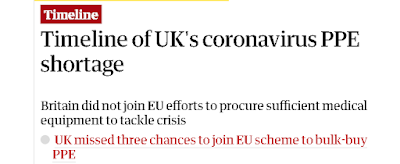


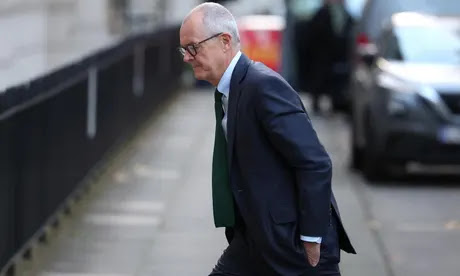


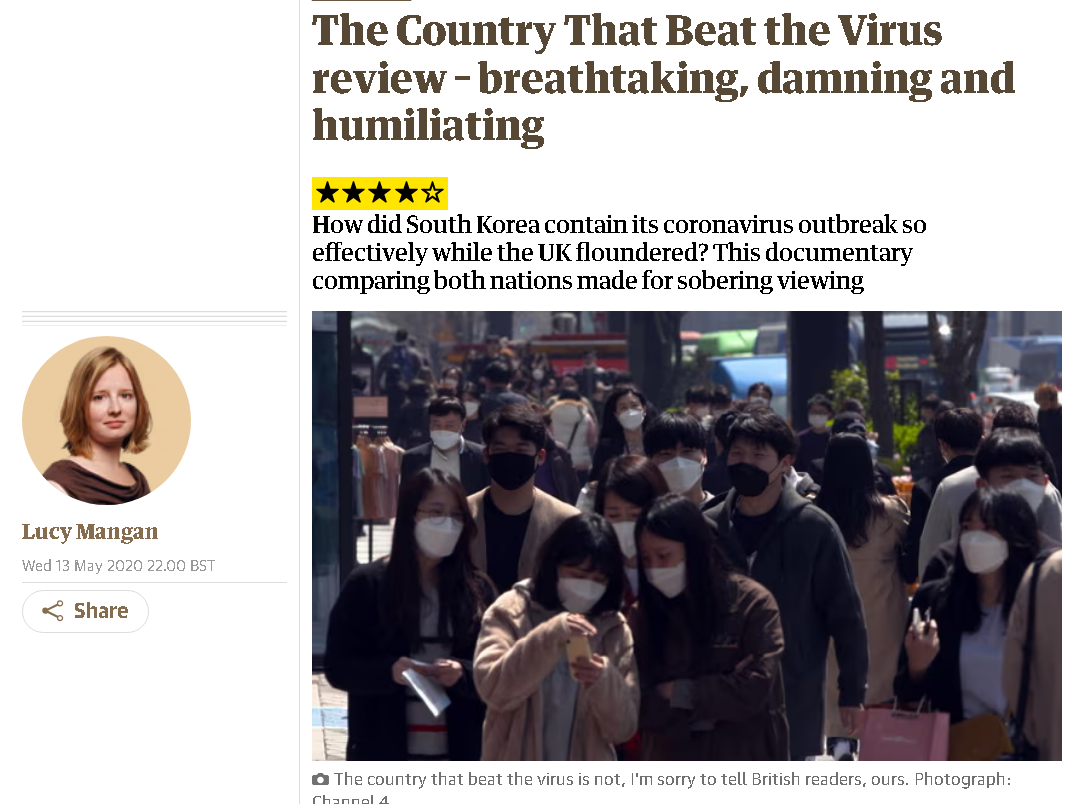


 , the WHO shared China's message in a more 'technically-worded' way: There was, apparently, "no clear evidence of human-to-human transmission": tweet. After another week (on 22 January), the WHO's Mission to China was quoted, "data suggests that human-to-human transmission is taking place in Wuhan but more investigation is needed to understand the disease's transmission": Time. (See more about China's concealment of information at Bloo.)


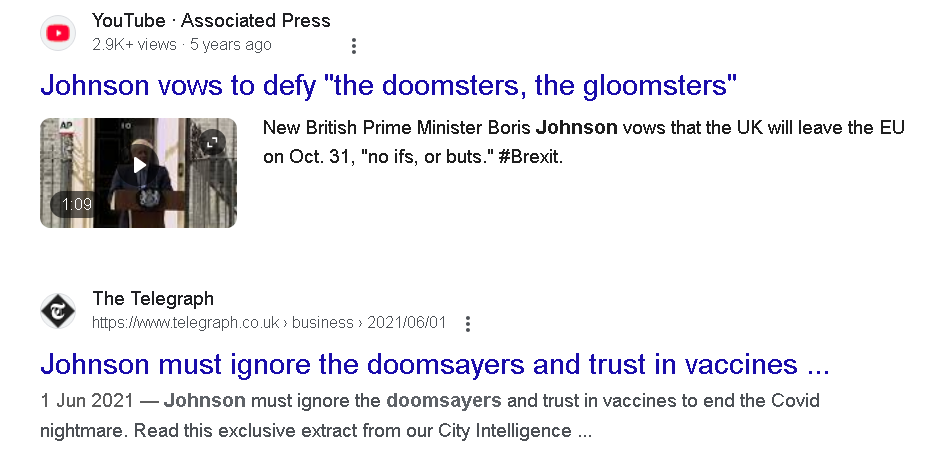


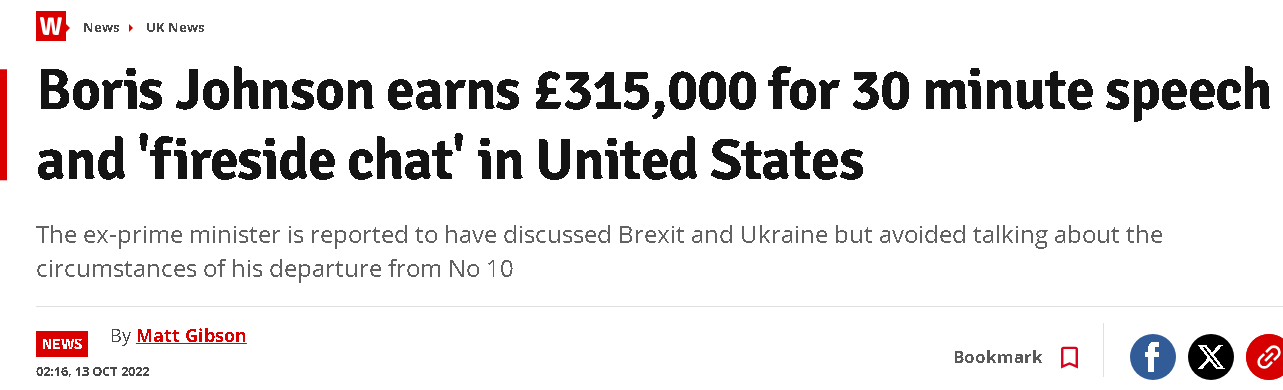


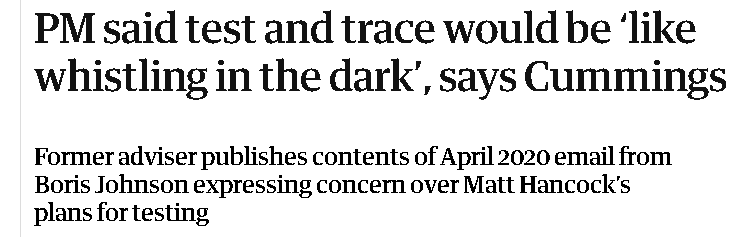


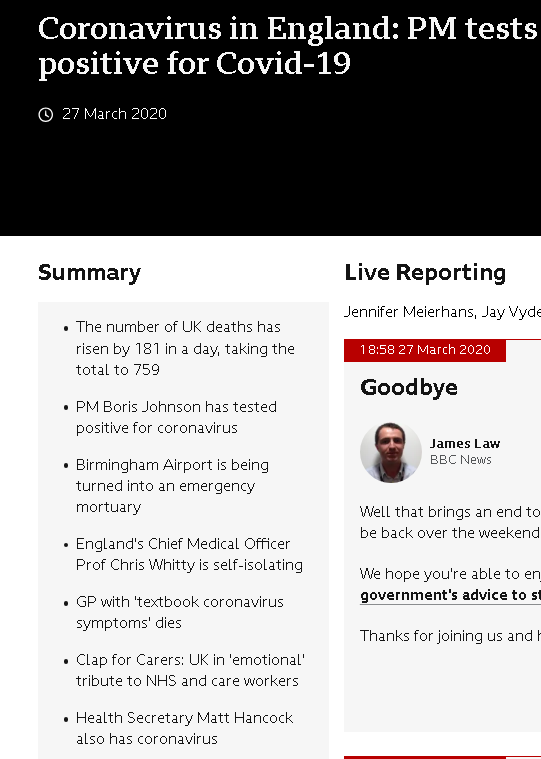


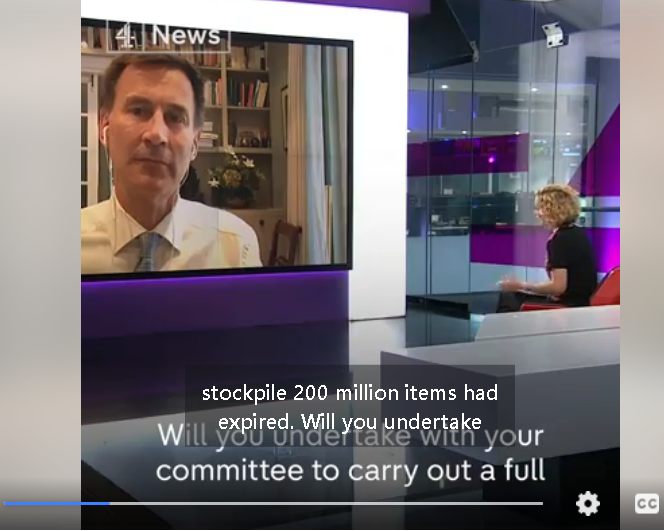



.jpg)


 1. Mr Cummings said that our national border should have been closed "immediately, as in Taiwan" but he didn't mention the Eurotunnel and what its closure would have done to life in the UK. (The Eurotunnel was closed briefly just once, by the French when they feared ingression of the UK variant in December 2020: TheStan) 2. Why, like all of the people Cummings talks about, does he still never mention South Korea, a country which is comparable with the UK in size and demography? It's practically an island with its northern border sealed against North Korean aggression.
 3. Until now, we never heard Mr Cummings complain about British care homes being wide open to the virus when everybody else had been sent to the safety of their own homes (bbc.)


Comments
Post a Comment